

More than 166 million stones thrown at the Jamarat in Hajj ritual

1 / 4
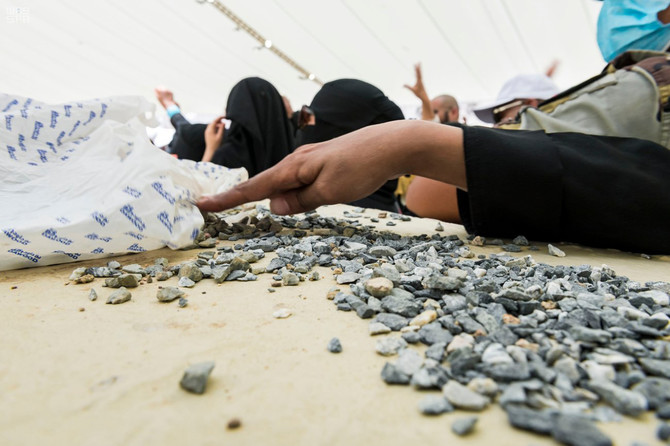
Pilgrims participate in the "stoning of the devil" ritual at the Jamarat in Makkah for the third and final day on Aug. 23, 2018. (AN photo)
2 / 4
Pilgrims participate in the "stoning of the devil" ritual at the Jamarat in Makkah for the third and final day on Aug. 23, 2018. (AN photo)
3 / 4
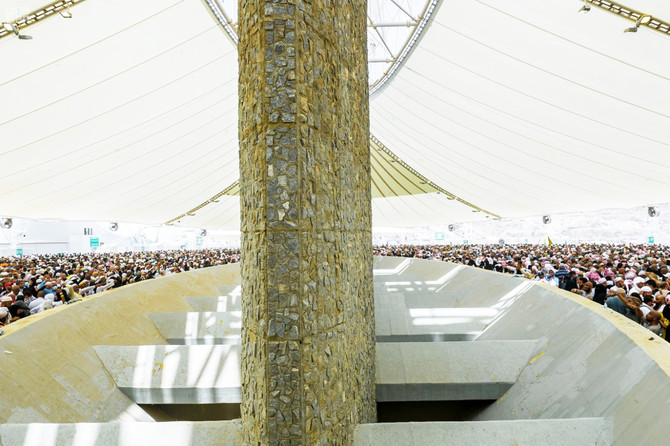
A view of the Jamarat in Makkah, where pilgrims perform the symbolic "stoning of the devil" ritual at the Jamarat in Makkah. (AN photo)
4 / 4
A man participates in the "stoning of the devil" ritual at the Jamarat in Makkah for the third and final day on Aug. 23, 2018. (AN photo)
Updated 23 August 2018
Follow

More than 166 million stones thrown at the Jamarat in Hajj ritual

  • Some 2,371,675 pilgrims performed Hajj this year, according to the General Authority for Statistics

MINA: As sunset came to Mina on Thursday, the second day of Tashreeq, some 166,017,250 stones had been thrown at the Jamarat during the ritual ‘Stoning of the Devil’ over Eid-Al-Adha and the first two days of Tashreeq. 

Thursday saw “huge numbers of pilgrims” —  around 1.6 million —  stoning the three pillars and performing Tawaaf prayers in the Grand Mosque, according to Col. Tariq Al-Ghabban, director of the Command and Control Center.

The General Authority for Statistics has announced that there are 2,371,675 pilgrims performing Hajj this year — 1,758,722 from outside the Kingdom and 612,953 from inside.

Al-Ghabban said that plans had been put in place to ensure the mosque was able to accommodate the massive influx of pilgrims and to safely and quickly guide them to the Jamarat.

Pilgrims who threw stones at the Jamarat on the first and second days of Tashreeq (the days that follow the Eid day) need not repeat the ritual on the third day provided that they leave Mina before sunset.

On the third day of Tahsreeq, the remaining pilgrims will stone the Jamarat before heading to Makkah to perform prayers at the Grand Mosque.


Saudi Scouts Association unveils environmental protection program

Updated 13 February 2026
Follow

Saudi Scouts Association unveils environmental protection program

  • Public service and education program to encourage responsible behavior among young people, says SASA leader

RIYADH: The Saudi Arabian Scouts Association has launched a new environmental protection program at King Salman Wildlife Park in Banban, north of Riyadh, marking a renewed commitment to conservation and youth engagement in sustainability efforts.

The SASA initiative, unveiled in the presence of role players from various scouting sectors, brought together partners from government agencies and private-sector organizations, the Saudi Press Agency reported recently.

The program reflects growing collaboration between civic groups and national institutions to advance environmental protection goals across the Kingdom.

Abdulrahman Al-Mudaris, the SASA’s secretary-general, said the initiative underscores the scouts’ active role in supporting national strategies to preserve natural resources and promote sustainable development.

The program reflects growing collaboration between civic groups and national institutions to advance environmental protection goals across the Kingdom. (SPA)

He said environmental scouting was a public service activity and educational approach designed to instill environmental awareness and encourage responsible behavior among young people.

The launch event featured the sowing of seeds and planting of seedlings throughout the park to support vegetation growth and enhance biodiversity, the SPA reported.

Founded in 1961, the SASA is a member of the World Organization of the Scout Movement and operates under the umbrella of the Ministry of Education.

Over the decades, Saudi scouts have played a visible role in community service, disaster response, and public event organization, including supporting pilgrim services during Hajj and Umrah seasons.