

Millions of pilgrims walk to Mina to perform Jamarat, Eid Al-Adha prayers

1 / 3
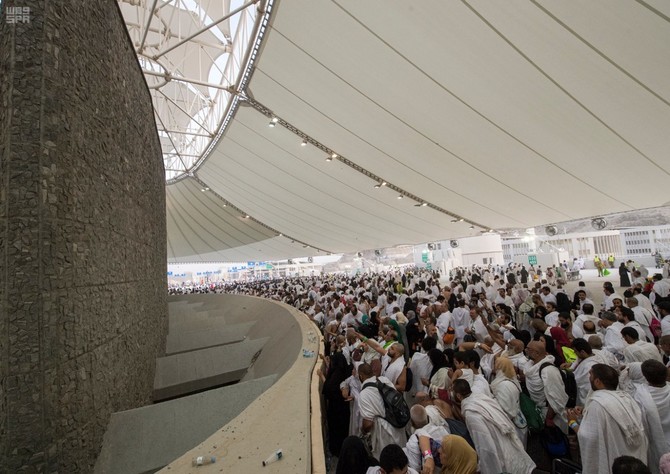
The pilgrims walked to the site where they queued in the baking heat to perform the "stoning of the devil" ritual. (SPA)
2 / 3
Men and women, side-by-side threw their three stones at the large pillars. (SPA)
3 / 3
The site has multi-level walkways under screens, to protect them from the sun. (SPA)
Updated 21 August 2018
Follow

Millions of pilgrims walk to Mina to perform Jamarat, Eid Al-Adha prayers

  • They had spent the previous night camped out after having been to Mount Arafat
  • Tuesday also marked the start of Eid Al-Adha

MAKKAH: Muslims celebrated the first day of Eid Al-Adha on Tuesday, which marks the closing parts of the Hajj pilgrimage.

The massive crowds had spent the previous night camped out in Muzdalifah, having performed the most important of the Hajj rituals, visiting mount Arafat, where they believe the Prophet Muhammad gave his last sermon.

They had also endured poor weather conditions, which ranged from the intense heat of the summer sun, rain and sandstorms.
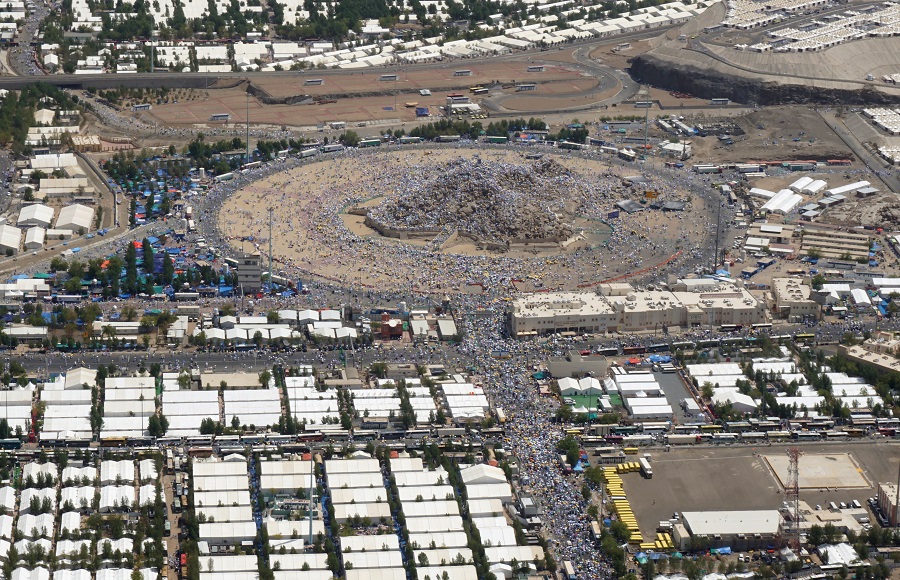


Millions of pilgrims gathered at Mount Arafat on Monday. (AFP)

On Tuesday, clad in white robes, shaded only by umbrellas, the 2.4 million pilgrims from 165 countries walked to the complex at Jamarat to throw pebbles at three columns.

It is here that Muslims believe the devil tried to talk the Prophet Ibrahim out of submitting to God’s will.

Muslims believe Ibrahim's faith was tested when God commanded him to sacrifice his only son Ismail.

“The Feast of Sacrifice”

The pilgrims perform the stoning ritual, where they gather at three pillars that represent the Devil.

They throw three stones, each bringing them closer to God as they repent the Devil.

The stoning ritual area is on a multi-level structure that surrounds the pillars with a walkway to and away the site to ensure the safety of the millions of pilgrims.

The final days of Hajj coincide with the Eid al-Adha holiday, or "Feast of Sacrifice."

They traditionally slaughter sheep for the three-day festival, a tribute to the Prophet Ibrahim’s sacrifice of a lamb after God spared Ishmael, his son.


They will consume some of the meat and give the rest to poor people unable to buy food.

The Saudi authorities have deployed more than 130,000 security forces and medics as well as modern technology including surveillance drones to maintain order.

“The police assistance and the services were all extraordinary. Praise God, I am very happy and God willing our Lord will provide for us again,” said Jordanian Firas Al-Khashani, 33.

“A beautiful feeling“

The once in a lifetime pilgrimage last five days and sees people travel from all over the world and while the intense heat and vast crowds might seem testing to many, the pilgrims seem to bask in that same test of faith.

“It is a beautiful feeling,” said Egyptian Hazem Darweesk, 31. “The beauty of it is in the difficulty of performing it. It brings you closer to God.”

King Salman arrived in Mina, east of Makkah, on Monday evening ahead of Eid Al-Adha, or the feast of sacrifice.
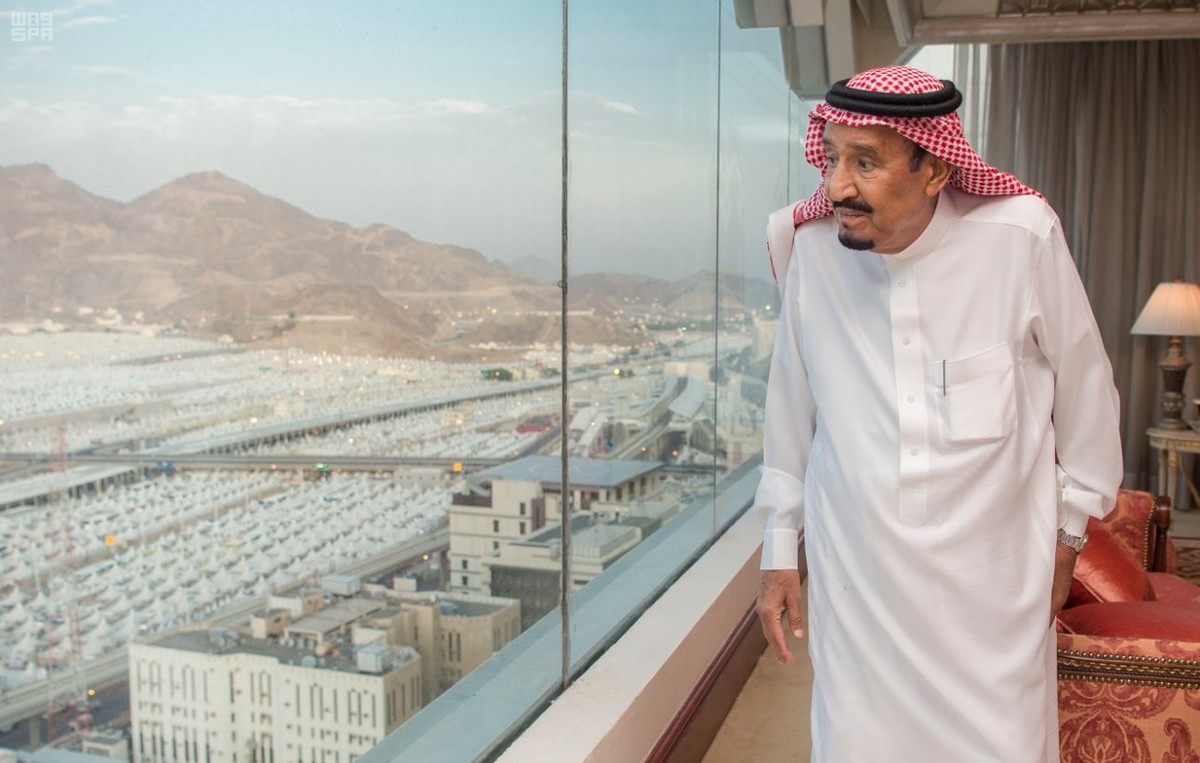


King Salman arrived in on Monday, he said it was a privilage for Saudi Arabia to serve the pilgrimage. (SPA)


Economic growth and resilience at heart of 2nd AlUla Emerging Market Economies Conference

Updated 03 February 2026
Follow

Economic growth and resilience at heart of 2nd AlUla Emerging Market Economies Conference

  • Event on Feb. 8 and 9 will bring together ministers, governors of central banks, policymakers, economic experts and international financial institutions
  • Emerging-market economies a ‘pivotal element’ in global economic system due to effect they have on growth and stability, says Saudi Finance Minister Mohammed Al-Jadaan

RIYADH: The second annual AlUla Conference for Emerging Market Economies, which Saudi Arabia will host next week, offers a platform to exchange views on global developments and discuss policies and reforms that support inclusive growth and strengthen economic resilience, the Kingdom’s finance minister said.

The event on Feb. 8 and 9 will bring together finance ministers, governors of central banks and policymakers, alongside economic experts and representatives of international financial institutions.

Organized by the Saudi Ministry of Finance in partnership with the International Monetary Fund, it takes place as emerging-market economies face mounting challenges amid rapid global economic change.

Finance Minister Mohammed Al-Jadaan said the decision to host the conference reflects Saudi Arabia’s ongoing commitment to efforts that support global financial and economic stability, and highlights the growing influence of emerging economies on worldwide growth.

Emerging-market economies represent a “pivotal element” in the global economic system due to the direct impact they have on economic growth and stability, he added.

“The AlUla Conference for Emerging Market Economies provides a unique platform for exchanging views on global economic developments, and discussing policies and reforms that will support inclusive growth and enhance economic resilience, in light of broader international cooperation that contributes to confronting common challenges,” Al-Jadaan said.

Kristalina Georgieva, managing director of the IMF, said the event would help emerging economies deal with growing uncertainty driven by technological change, demographic shifts and geopolitical tensions.

“The AlUla conference provides a vital platform for emerging economies to discuss how they can navigate the risks and embrace the opportunities ahead,” she said.

“In these times of sweeping transformations in the global economy, policymakers face a more challenging and uncertain environment. Countries should work together to strengthen resilience through sound macroeconomic and financial policies.”