JEDDAH: The use of holy water is seen in many religions and ethnicities. Christians and Sikhs often use their versions of holy water to bring luck to the household or protect it against evil.
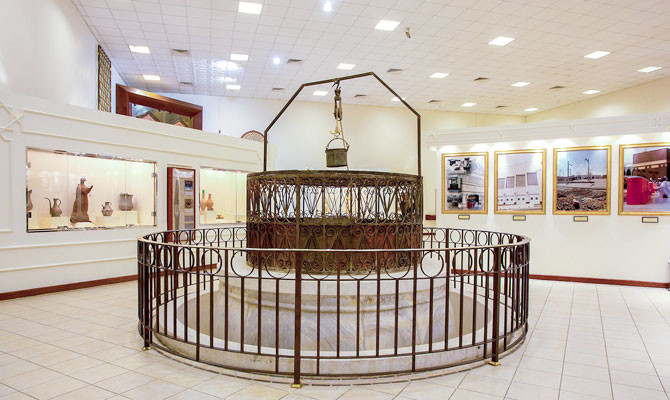
Muslims, too, have their own very special holy water called “Zamzam.” This is found in a 30-meter-deep well in the basement of the Holy Mosque about 20 meters east of the Kaaba. The water is believed to possess healing qualities and is treated with respect by all Muslims.
The well originated when Hagar, the mother of Ismail, son of Prophet Abraham, desperately searched for water in the lonely dunes of Makkah, under the scorching sun. She ran between the two hillocks of Safa and Marwa before the infant Ismail scraped the earth, and from his feet burst out a flow of water.
The name originates from “Zome zome,” which means “Stop flowing,” a phrase Hagar used repeatedly to stop the water.
The scraping of Ismail’s feet not only produced the water, it also restored life on the land of Makkah. As Zamzam was discovered, many wells were dug around the area, but most of them either became dry or were buried under the sand because of tribal wars.
One of the most recognized wells around the Kaaba was the Al-Ajoul well Qusai bin Kilab in the pre-Islamic era. When the prophet came to Makkah he performed the purification ritual with the water from this well.
Zamzam today
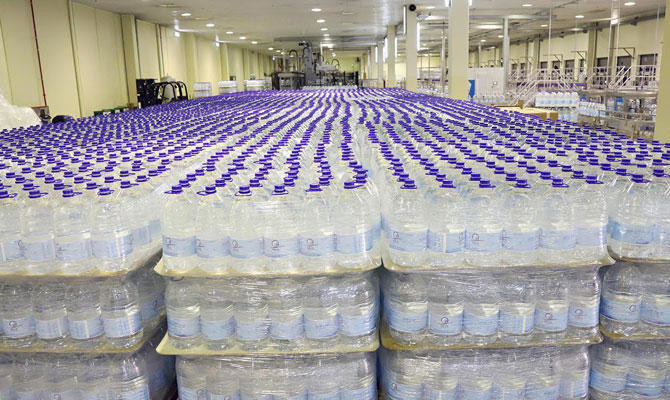
Zamzam is stationed throughout the holy mosques, including cold and hot water dispensing containers and fountains for the visitors. A bottling plant and public distribution center has also been established right outside the mosque for those who wish to carry it home.
Zamzam well, except for a few periods when it became dry or buried in sand, has been in use for about 400 years. The Zamzam well pumps 11-19 liters of water every second.
The Saudi Geological Survey has set up a Zamzam studies and research center which is responsible for keeping the water clean and suitable for consumption.
Electric pumps are used to draw water from the well. Every week water samples are collected from the Zamzam well and various dispensers. In addition, Zamzam water is filtered through a series of sand filters and cartridge filters and then sterilized by ultraviolet radiation at these treatment plants.


![]()
![]()
![]()
![]()

Zamzam that transformed Makkah’s arid landscape


Zamzam that transformed Makkah’s arid landscape
- Zamzam is stationed throughout the holy mosques, including cold and hot water dispensing containers
- Every week water samples are collected from the Zamzam well and various dispensers


Latest updates





© 2026 SAUDI RESEARCH & PUBLISHING COMPANY, All Rights Reserved And subject to Terms of Use Agreement.