

Saudi Commission for Tourism completes training for Hajj guides

Muslim worshippers perform prayers around the Kaaba, Islam's holiest shrine, at the Grand Mosque in Saudi Arabia's holy city of Makkah on August 15, 2018, prior to the start of the annual Hajj pilgrimage in the holy city. (AFP)
Updated 17 August 2018
Follow

Saudi Commission for Tourism completes training for Hajj guides

  • A license takes any traditional work to a professional level, and hosting pilgrims must be included in this initiative, as part of Vision 2030
  • We must look at tourism as an industry through which we present our vision, our goals and our ambitions

MAKKH: In a breakthrough initiative for Tawafa institutions, the Saudi Commission for Tourism and National Heritage (SCTH) has completed the training of 135 male and female Tawafa guides — religious guides for Hajj pilgrims — who have obtained tour guide licenses.
The training is the first step in a program that will enable national Tawafa establishments to obtain tour guide licenses. The ceremony for the first of the tour guides to graduate from the training course took place in Makkah on Tuesday, at the National Tawafa Establishment for Pilgrims of Arab Countries (ARBHAJ).
SCTH Director-General Dr. Hisham bin Mohammed Madani said the commission has honored more than 135 male and female “Mutawwifs,” or guides, from ARBHAJ under the partnership between the SCTH and the ARBHAJ to train Tawafa guides to obtain tour guide licenses.
Madani said this is the first phase of an initiative to train guides at all Tawafa establishments, introducing pilgrims to a new concept by helping them visit all historical and archaeological sites and museums in Makkah after performing Hajj rituals.

“Tour guides are more and more dynamic and effective in the tourism industry, and have become an important and effective source of historical information,” he said and added that the tour guide now also functions as an ambassador for the authentic culture of the Kingdom, reflecting its cultural, natural and historical heritage.
Licensing Tawaf guides as tour guides, Madani said, will enrich the tourist experience in the holy capital.
The SCTH chief noted that the city is rich with myriad cultural treasures that need someone to showcase them for tourists.
“We at SCTH presented our experience in qualifying accredited tour guides and we look forward to improving tourism outputs to match the reality and requirements of the new phase,” he said. “In order to reach this goal, we are collaborating with all partners to reach satisfactory results to deal with all nationalities, tongues and cultural backgrounds from all parts of the world with satisfaction, love and positivity.”
“We must look at tourism as an industry through which we present our vision, our goals and our ambitions. Makkah is the holy city that every Muslim looks forward to visiting after hearing about its great heritage. Our role is to provide knowledge and keep abreast of the tourist vision by qualifying and training tour guides, equipping them with the necessary skills and qualifications and honing their skills through required training programs. To this end, all partners must join their efforts and collaborate together to reach the desired goals.”

Initiative
Dr. Abdul Fattah bin Suleiman Mashat, deputy minister of Hajj and Umrah, said that the ministry is implementing an initiative to provide a professional license for everyone working at Hajj, not just in Tawaf.
He said: “A license takes any traditional work to a professional level, and hosting pilgrims must be included in this initiative, as part of Vision 2030, to focus on enriching the pilgrims’ experience, and not only on increasing their numbers.”
Mashat said it was important for pilgrims’ journeys to be coupled with trips to historical and archaeological sites. “We rely on male and female Tawaf guides to organize well-thought-out trips for the pilgrims so that they can enjoy all the historical and archaeological sites and landmarks in Makkah,” he added.

Hafez Galley’s exhibition pays tribute to two Egyptian artists who shaped a visual era

Both artists emerged in an era when newspapers and magazines played a central role in shaping Egypt’s visual culture. (Supplied)
Updated 6 sec ago
Follow

Hafez Galley’s exhibition pays tribute to two Egyptian artists who shaped a visual era

  • Artworks by Attyat Sayed and El Dessouki Fahmi will be on display until Feb. 28

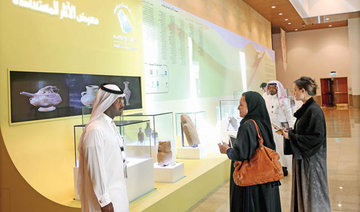
JEDDAH: Hafez Gallery in Jeddah has opened an exhibition showcasing the works of influential Egyptian artists Attyat Sayed and El Dessouki Fahmi. The exhibition runs until Feb. 28.

Kenza Zouari, international art fairs manager at the gallery, said the exhibition offers important context for Saudi audiences who are becoming increasingly engaged with Arab art histories.

Artworks by Attyat Sayed and El Dessouki Fahmi will be on display at Hafez Gallery until Feb. 28. (Supplied)

“Attyat Sayed and El Dessouki Fahmi’s decades-long practice in Cairo established foundational models for how artists across the region approach archives, press, and ultimately collective memory,” Zouari told Arab News. 

Both artists emerged in an era when newspapers and magazines played a central role in shaping Egypt’s visual culture. Their early work in press illustration “demanded speed, clarity, the ability to distill complex realities into a single, charged image,” the gallery’s website states.

Seeing the works of both artists side-by-side is breathtaking. It’s fascinating to witness how press illustration shaped such profound and lasting artistic voices.

Lina Al-Mutairi, Local art enthusias

Heba El-Moaz, director of artist liaison at Hafez Gallery, said that this is the second time that the exhibition — a posthumous tribute to the artists —has been shown, following its debut in Cairo.

“By placing their works side by side, it highlights how press illustration, often considered ephemeral, became a formative ground for artistic depth, narrative power, and lasting influence, while revealing two distinct yet deeply interconnected artistic paths within modern Egyptian visual culture,” she told Arab News. 

Artworks by Attyat Sayed and El Dessouki Fahmi will be on display at Hafez Gallery until Feb. 28. (Supplied)

Sayed’s work evolved from black-and-white illustration into “layered, dynamic compositions that translate lived emotion into physical gesture, echoing an ongoing negotiation between the inner world and its outward form,” the website states. Viewed together, the works of Sayed and Fahmi “reveal two distinct yet deeply interconnected artistic paths that contributed significantly to modern Egyptian visual culture.”

The exhibition “invites visitors into a compelling dialogue between instinct and intellect, emotion and structure, spontaneity and reflection; highlighting how artistic rigor, cultural memory, and sustained creative exploration were transformed into enduring visual languages that continue to resonate beyond their time,” the gallery states.

Lina Al-Mutairi, a Jeddah-based art enthusiast, said: “Seeing the works of both artists side-by-side is breathtaking. It’s fascinating to witness how press illustration shaped such profound and lasting artistic voices. The exhibition really brings their vision and influence to life.”