Pakistan, India change gates at Wahga-Attari border on Independence Days

1 / 7
Pakistan Rangers performing ‘Retreat Parade’ at the Wahga-Attari border, which links Pakistani and Indian Punjab, where the two countries are installing new gates on the occasion of their Independence Days. (AN photo by Malik Shafiq)
2 / 7
Friendship Coach (Dosti Bus) passing through the gates at the Wahga-Attari border. (AN photo by Malik Shafiq)
3 / 7
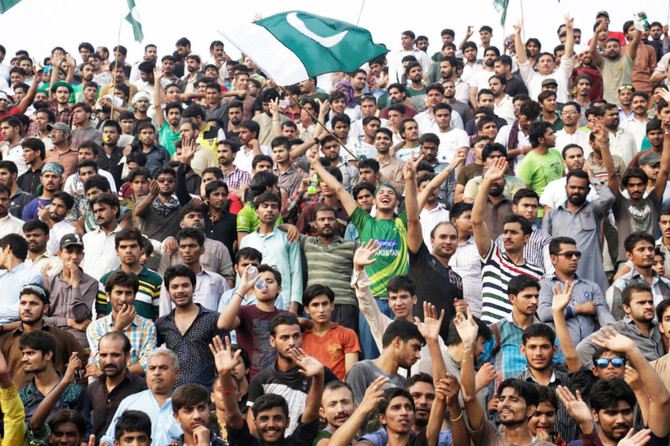
Several hundred people from the two sides observe the parade every day at dusk as the paramilitary forces of Pakistan and India perform a flag-lowering ceremony before closing their gates. (AN photo by Malik Shafiq)
4 / 7
Pakistan Rangers performing ‘Retreat Parade’ at the Wahga-Attari border, which links Pakistani and Indian Punjab, where the two countries are installing new gates on the occasion of their Independence days. (AN photo by Malik Shafiq)
5 / 7
Several hundred people from the two sides observe the parade every day at dusk as the paramilitary forces of Pakistan and India perform a flag-lowering ceremony before closing their gates. (AN photo by Malik Shafiq)
6 / 7
Several hundred people from the two sides observe the parade every day at dusk as the paramilitary forces of Pakistan and India perform a flag-lowering ceremony before closing their gates. (AN photo by Malik Shafiq)
7 / 7
Friendship Coach (Dosti Bus) passing through the gates at the Wahga-Attari border. (AN photo by Malik Shafiq)
Updated 13 August 2018
Follow

Pakistan, India change gates at Wahga-Attari border on Independence Days

  • The aim of changing gates is to provide the people on both sides with a clearer view of the “Retreat Ceremony”
  • The Wahga-Attari border is one of the three places where several hundred people from the two countries — Pakistan and India — witness the lowering of flags every day

LAHORE, Pakistan: Nuclear neighbors and rivals Pakistan and India will be replacing the gates on the Zero Line between the bordering towns of Wahga and Attari on their independence days on Aug. 14 and 15.
The days mark the transfer of power to the two countries as separate dominions with a gap of 24 hours in between.
The Wahga-Attari border, which links Pakistani Punjab’s city of Lahore and Indian Punjab’s city of Amritsar, is one of the three places where several hundred people from the two sides witness the lowering of flags every day.
The security forces from the two countries — the Border Security Force (BSF) of India and Pakistan Rangers — have jointly performed the military drill in the evening while lowering their national flags since 1959.
The other two points where similar parades are held daily are Mahavir/ Sadqi (in India) — Fazilka (in Pakistan), and Hussainiwala (in Ferozpur, India) — Ganda Singh Wala (in Kasur, Pakistan). The gates were installed between the two countries after the separation in 1947.
The exercise is known as the “Beating Retreat drill.” The paramilitary forces of the two countries, the BSF and the Rangers, shut the heavy gates for the night at the joint check post amid a synchronized display of aggression.
The drill is a symbol of the two countries’ rivalry, as well as brotherhood and cooperation with each other.
The Wahga-Attari border is the most active land point for transportation of goods between the two countries and citizens with visas cross the border on foot, using this path to enter each other’s country.
The “Friendship Bus” (Dosti Bus), which connects Lahore with the Indian capital, Delhi, also crosses into the neighboring country using this gate for two round trips every week.
The parade is a permanent feature of the border activity and has continued despite security threats — on Nov. 2, 2014, 60 people were killed and another 110 injured in a suicide attack on the Pakistan side of the Wagah border. The Indian side denied the public attendance on the evenings between Sept. 29 and Oct. 8, 2016 owing to the India–Pakistan military confrontation on Sept. 29, 2016.
The gates on the two sides are being changed with the mutual consultation of the two countries with the aim of providing a good view of the parade and seeing the audience sitting on the opposite sides.
The process of removing the old gates and installing the new ones has begun on the two sides and Pakistan will complete it by tomorrow (Aug. 14, Tuesday).
According to media reports the Indian security officials have confirmed the replacement of gates on Wagah Border, saying the countries have agreed on installing similar gates.
The Indian media reported that the new gates will have a similar design on both sides and the earlier gates were unnecessarily big with thick pillars, which hindered the view of spectators from either side to look beyond the Zero line.
Nand Lal Chauhan, former superintending engineer, Central Public Works Department, said the gate was designed by a renowned architect. “We had handed over the design to the BSF. After a discussion with the Pakistan Rangers, some modifications were introduced before final approval from both sides,” he said. The weight of the gate is 5.5 quintals. It is 51ft wide and 11ft high.
JS Oberoi, DIG, BSF, Amritsar sector, said: “It was mutually decided to let the people on both sides have a clearer view of the Retreat Ceremony.”
The officials in Pakistan have confirmed that the inauguration of a new gate on their side will take place on Aug. 14, as a part of Independence Day celebrations.


Cambodia says Thailand still bombing hours after Trump truce call

Updated 3 sec ago
Follow

Cambodia says Thailand still bombing hours after Trump truce call

BANTEAY MEANCHEY, Cambodia: Cambodia’s defense ministry said Saturday that Thailand continued dropping bombs on its territory hours after US President Donald Trump said the neighbors had agreed to stop fighting.
The latest clashes between the Southeast Asian neighbors, which stems from a long-running dispute over the colonial-era demarcation of their 800-kilometer (500-mile) frontier, have displaced around half a million on both sides.
Each side had blamed the other for reigniting the conflict.
“On December 13, 2025, the Thai military used two F-16 fighter jets to drop seven bombs” on a number of targets, the Cambodian defense ministry said in an X post.
“Thai military aircraft have not stopped bombing yet,” it said.
It came after US President Donald Trump said Friday that Thailand and Cambodia had agreed to halt fighting along their disputed border, which has killed at least 20 people this week.
“I had a very good conversation this morning with the Prime Minister of Thailand, Anutin Charnvirakul, and the Prime Minister of Cambodia, Hun Manet, concerning the very unfortunate reawakening of their long-running War,” Trump said on his Truth Social platform.
“They have agreed to CEASE all shooting effective this evening, and go back to the original Peace Accord made with me, and them, with the help of the Great Prime Minister of Malaysia, Anwar Ibrahim,” he said, referring to a deal made in July.
“Both Countries are ready for PEACE and continued Trade with the United States of America,” Trump noted, thanking Anwar for his assistance.
Anutin had said earlier, after his call with Trump: “It needs to be announced to the world that Cambodia is going to comply with the ceasefire.”
“The one who violated the agreement needs to fix (the situation) — not the one that got violated,” Anutin said, adding that the call with Trump “went well.”
The United States, China and Malaysia, as chair of the regional bloc ASEAN, brokered a ceasefire in July after an initial five-day spate of violence.

‘Peaceful means’

In October, Trump backed a follow-on joint declaration between Thailand and Cambodia, touting new trade deals after they agreed to prolong their truce.
But Thailand suspended the agreement the following month after Thai soldiers were wounded by land mines at the border.
“Cambodia has always been adhering to peaceful means for dispute resolutions,” Hun Manet said in a Facebook post Saturday after his call with Trump.
He added that he had suggested the US and Malaysia could use their information gathering capabilities “to verify which side opened fire first” on December 7.
Anutin said there were “no signs” Trump would connect further trade talks with the border conflict, but that he had guaranteed Thailand would get “better benefits than other countries.”
Anutin dissolved Thailand’s parliament on Friday after three months in office, paving the way for general elections early next year.