Pakistan independence celebrations cause surge in economic activity

1 / 33
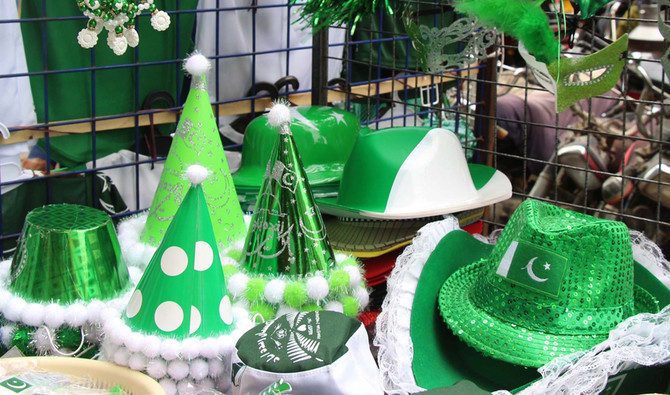
Merchandise displayed at a local market in Karachi. (Photo by Khurshid Ahmed)
2 / 33
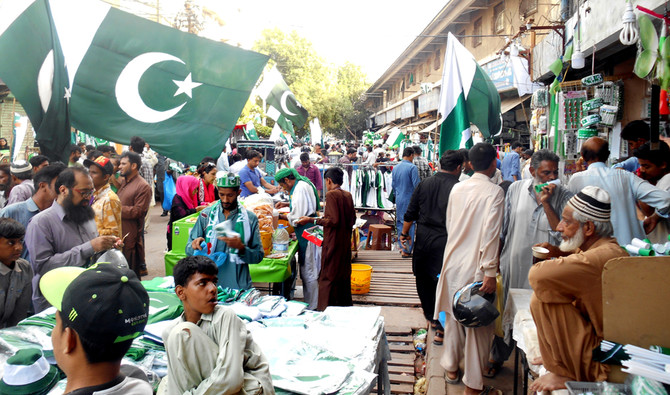
People buying merchandise at a local market in Karachi as part of independence day celebrations. (Photo by Khurshid Ahmed)
3 / 33
People buying merchandise at a local market in Karachi as part of independence day celebrations. (Photo by Khurshid Ahmed)
4 / 33
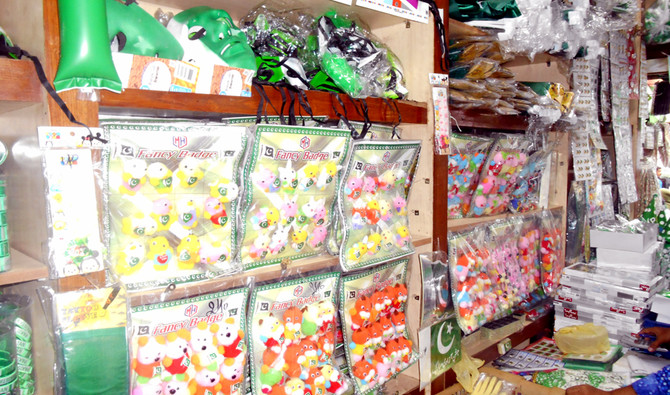
Products displayed at a local shop for independence day celebrations. (Photo by Khurshid Ahmed)
5 / 33
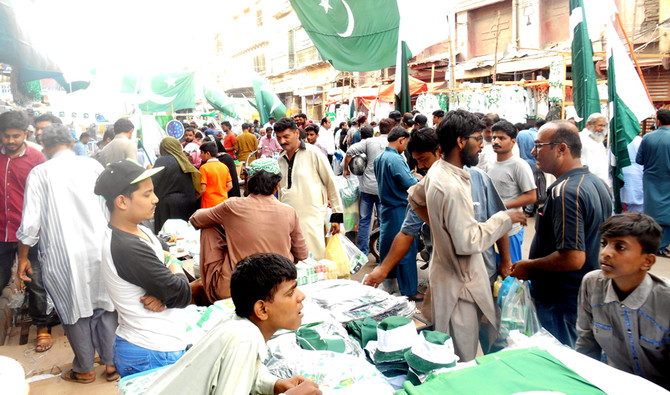
People buying merchandise at a local market in Karachi as part of independence day celebrations. (Photo by Khurshid Ahmed)
6 / 33
People buying merchandise at a local market in Karachi as part of independence day celebrations. (Photo by Khurshid Ahmed)
7 / 33
A vendor selling national flags at a local market ahead of independence day. (Photo by Khurshid Ahmed)
8 / 33
People buying merchandise at a local market in Karachi as part of independence day celebrations. (Photo by Khurshid Ahmed)
9 / 33
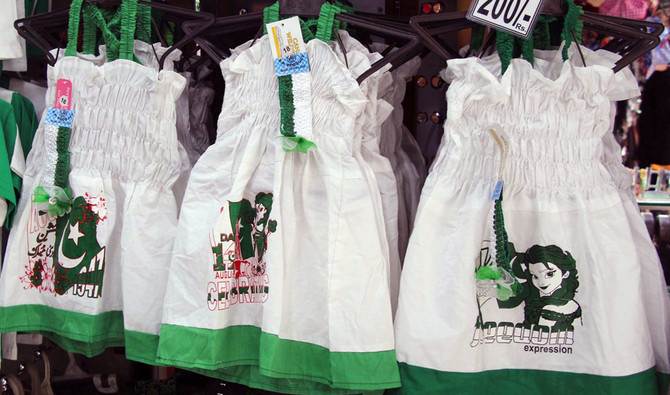
Ladies’ garments in Pakistan’s national colors, green and white, displayed at a local market in Karachi ahead of independence day. (Photo by Khurshid Ahmed)
10 / 33
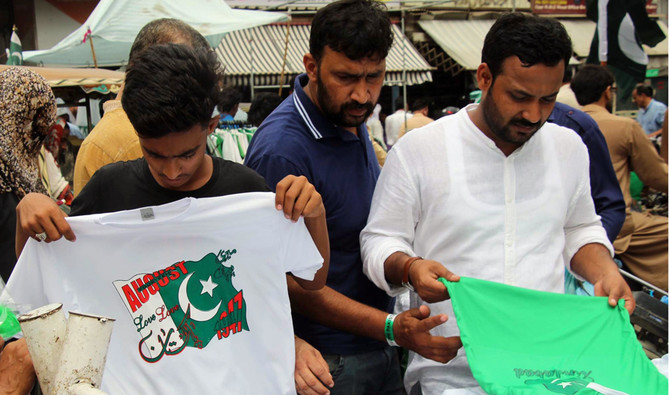
Customers buying T-shirts ahead of independence day celebrations. (Photo by Khurshid Ahmed)
11 / 33
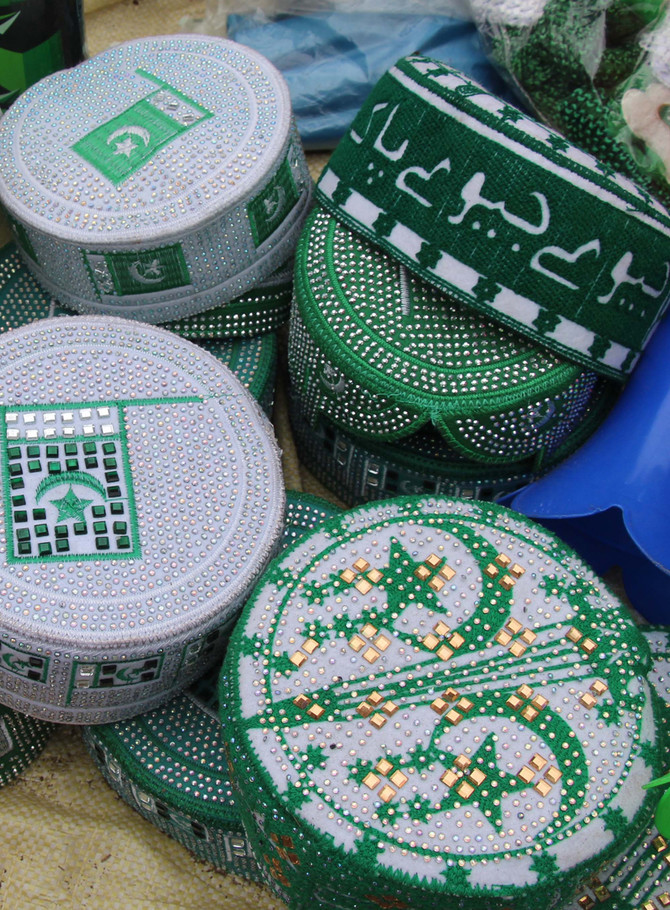
Specially designed caps sold at a local market for independence day celebrations. (Photo by Khurshid Ahmed)
12 / 33
Bands, badges and bracelets displayed at a local market in Karachi. (Photo by Khurshid Ahmed)
13 / 33
Bands, badges, bunting and bracelets displayed at a local market in Karachi. (Photo by Khurshid Ahmed)
14 / 33
Kids’ wear for independence day celebrations displayed at a local market in Karachi. (Photo by Khurshid Ahmed)
15 / 33
Kids’ wear displayed at a local market. (Photo by Khurshid Ahmed)
16 / 33
Green frocks with a crescent displayed at a local market. (Photo by Khurshid Ahmed)
17 / 33
Ladies’ wear for independence day celebrations displayed at a local market. (Photo by Khurshid Ahmed)
18 / 33
Bands, badges and bracelets displayed at a local market in Karachi.
19 / 33
Pakistan’s national flag and badges displayed at a local market. (Photo by Khurshid Ahmed)
20 / 33
Green and white frocks, representing the national colors, displayed at a local market ahead of independence day. (Photo by Khurshid Ahmed)
21 / 33
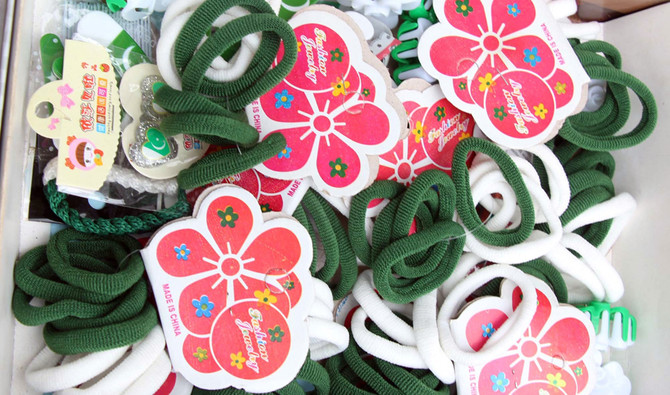
Hairbands displayed at a local market. (Photo by Khurshid Ahmed)
22 / 33
Garments for women and children for independence day displayed at a local market. (Photo by Khurshid Ahmed)
23 / 33
Bands displayed at a local market. (Photo by Khurshid Ahmed)
24 / 33
Caps sold at a roadside stall ahead of independence day. (Photo by Khurshid Ahmed)
25 / 33
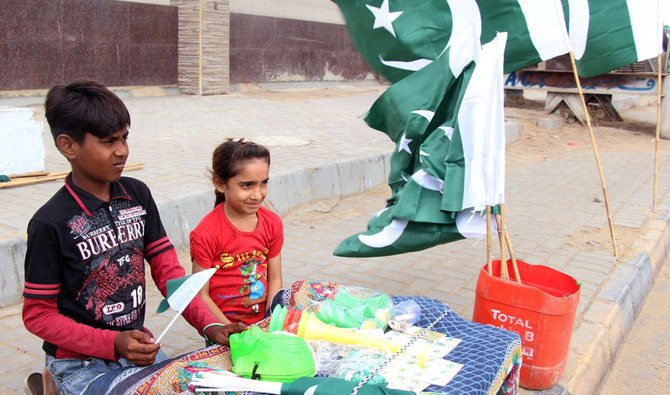
A young boy sells national flags and bunting at a roadside stall. (Photo by Khurshid Ahmed)
26 / 33
A brother and sister selling flags and bunting at a roadside stall. (Photo by Khurshid Ahmed)
27 / 33
A young girl selling flags and badges. (Photo by Khurshid Ahmed)
28 / 33
A brother and sister selling flags and bunting at a roadside stall. (Photo by Khurshid Ahmed)
29 / 33
An old lady selling flags, badges and bunting at a roadside stall. (Photo by Khurshid Ahmed)
30 / 33
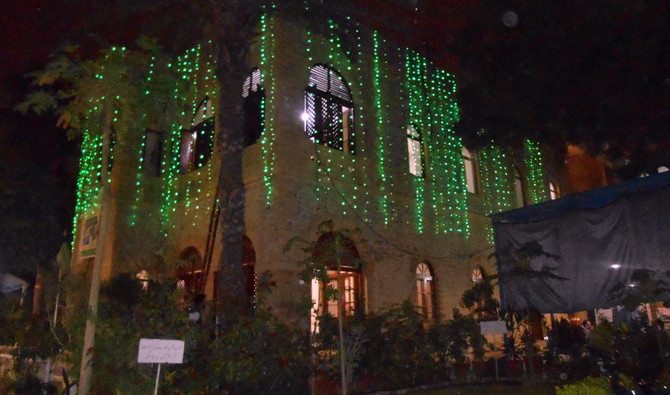
The historic Karachi Press Club building illuminated as part of independence day celebrations. (Photo by Khurshid Ahmed)
31 / 33
Photos of Pakistan’s founder Muhammad Ali Jinnah, Prime Minister-in-waiting Imran Khan and former army chief Gen. Raheel Sharif sold at a local market. (Photo by Khurshid Ahmed)
32 / 33
33 / 33
People buying merchandise at a local market in Karachi as part of independence day celebrations.
Updated 12 August 2018
Follow

Pakistan independence celebrations cause surge in economic activity

  • Pakistan meets 75-80 percent of demand for celebratory merchandise — such as flags, badges, bunting and hats — by importing them from neighboring China
  • Online shopping websites are also offering incentive packages and special ‘freedom discounts’ to internet users

KARACHI: As Pakistan gears up to celebrate its independence day on Aug. 14, national festivities have generated economic activity worth billions of rupees.
But according to importers and dealers, the country meets 75-80 percent of demand for celebratory merchandise — such as flags, badges, bunting and hats — by importing them from neighboring China.
“Although there’s no official data available, we estimate economic activities spurred by independence day festivities at between 10 billion ($81 million) and 20 billion rupees,” Atiq Mir, chairman of All Karachi Tajir Ittehad — an umbrella organization of nearly 100 market associations in the port city of Karachi — told Arab News on Sunday.
Importer Abdullah Abdul Habib told Arab News: “This year, demand for stuff required for independence day celebrations has increased by 30-40 percent.”
He said: “The growing demand has been met by importing the required products from China since the local industry is unable to meet such high demand.”
He added: “The variety of products and the ability to supply them are among the main reasons why Chinese goods are in such great demand.”
He said: “The number of importers has increased, not only in Karachi but also in Lahore, Quetta and Peshawar.”
As independence day approaches, the number of temporary vending stalls has increased. “I run a paper business nearby, but due to the high profit margin I’ve set up this stall at the main market,” said Sarfraz, a vendor at the famous Pakistan Chowk.
Purchases of clothes in green and white, Pakistan’s national colors, are surging, and websites are offering “freedom discounts.”
Pakistan came into existence on Aug. 14, 1947, with the partition of the Indian subcontinent, which had been a British colony since 1849.


FASTFACTS

Pakistan came into existence on Aug. 14, 1947, with the partition of the Indian subcontinent, which had been a British colony since 1849.


Pakistan says $50 million meat export deal with Tajikistan nearing finalization

Updated 09 December 2025
Follow

Pakistan says $50 million meat export deal with Tajikistan nearing finalization

  • Islamabad expects to finalize agreement soon after Dushanbe signals demand for 100,000 tons
  • Pakistan is seeking to expand agricultural trade beyond rice, citrus and mango exports

ISLAMABAD: Tajikistan has expressed interest in importing 100,000 tons of Pakistani meat worth more than $50 million, with both governments expected to finalize a supply agreement soon, Pakistan’s food security ministry said on Tuesday.

Pakistan is trying to grow agriculture-based exports as it seeks regional markets for livestock and food commodities, while Tajikistan, a landlocked Central Asian state, has been expanding food imports to support domestic demand. Pakistan currently exports rice, citrus and mangoes to Dushanbe, though volumes remain small compared to national production, according to official figures.

The development came during a meeting in Islamabad between Pakistan’s Federal Minister for National Food Security and Research Rana Tanveer Hussain and Ambassador of Tajikistan Yusuf Sharifzoda, where agricultural trade, livestock supply and food-security cooperation were discussed.

“Tajikistan intends to purchase 100,000 tons of meat from Pakistan, an import valued at over USD 50 million,” the ambassador said, according to the ministry’s statement, assuring full facilitation and that Islamabad was prepared to meet the demand.

The statement said the two sides agreed to expand cooperation in meat and livestock, fresh fruit, vegetables, staple crops, agricultural research, pest management and standards compliance. Pakistan also proposed strengthening coordination on phytosanitary rules and establishing pest-free production zones to support long-term exports.

Pakistan and Tajikistan have long maintained political ties but bilateral food trade remains below potential: Pakistan produces 1.8 million tons of mangoes annually but exported just 0.7 metric tons to Tajikistan in 2024, while rice exports amounted to only 240 metric tons in 2022 out of national output of 9.3 million tons. Pakistan imports mainly ginned cotton from Tajikistan.