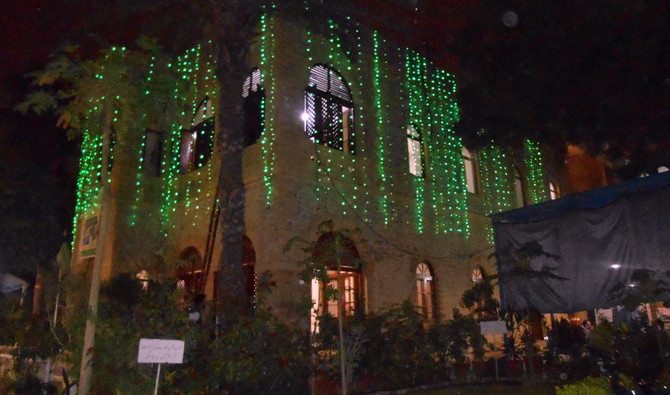
KARACHI: As Pakistan gears up to celebrate its independence day on Aug. 14, national festivities have generated economic activity worth billions of rupees.
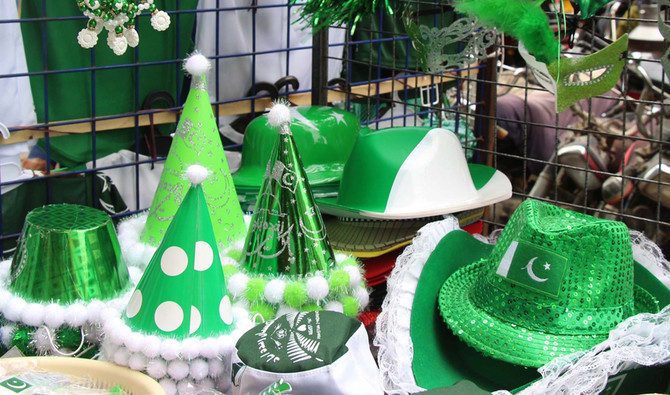
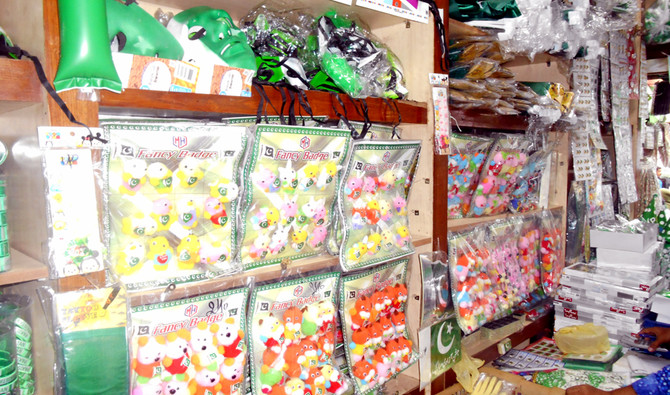
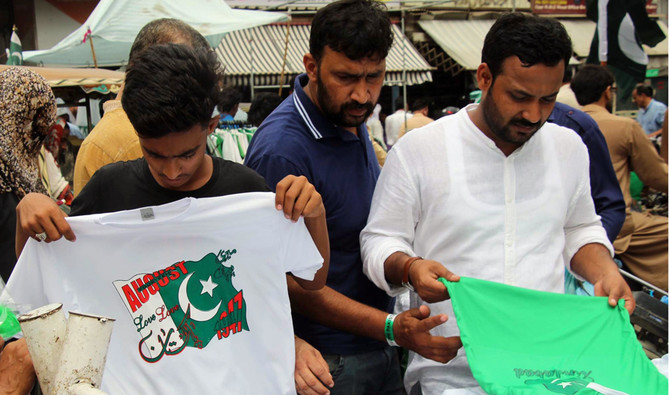
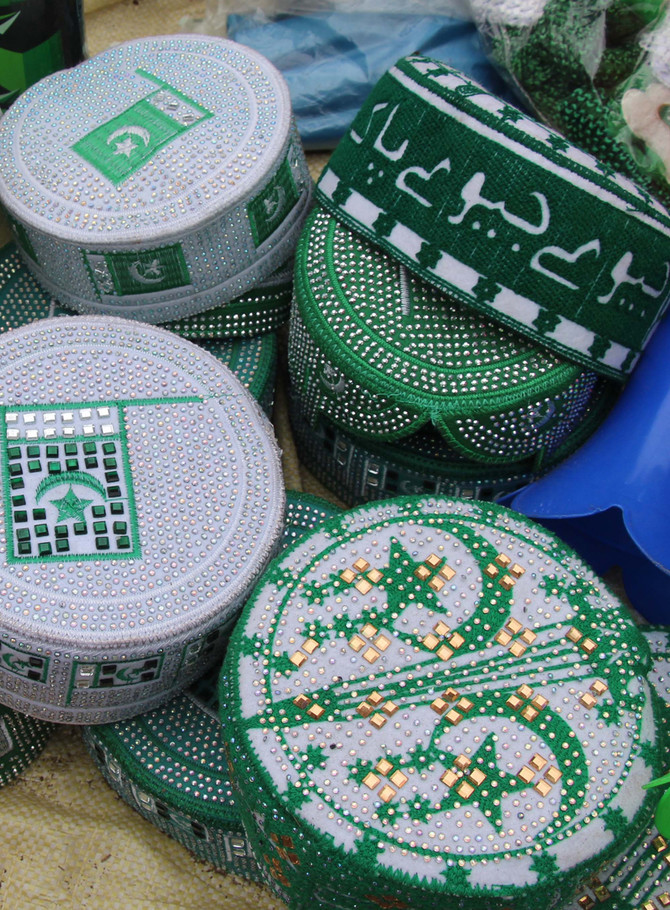
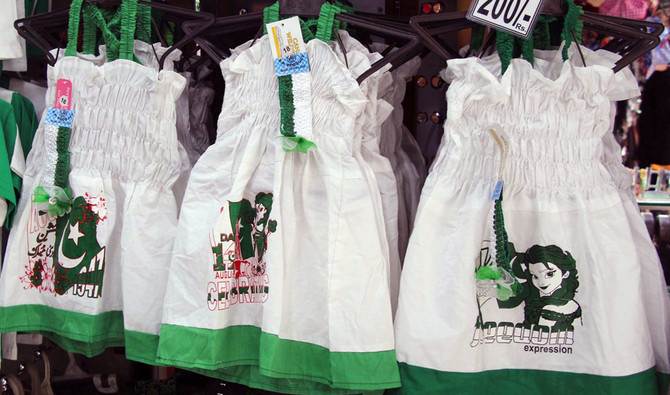
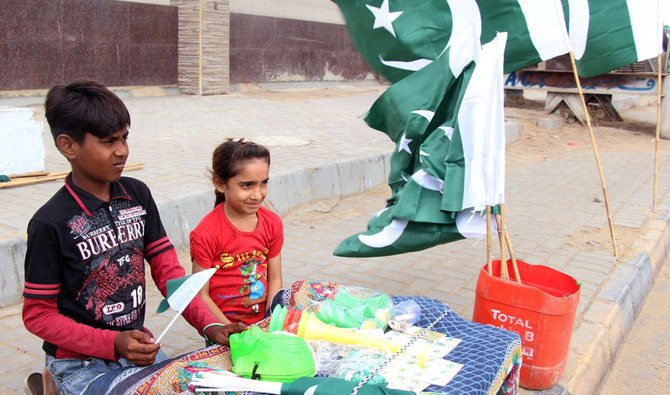
But according to importers and dealers, the country meets 75-80 percent of demand for celebratory merchandise — such as flags, badges, bunting and hats — by importing them from neighboring China.
“Although there’s no official data available, we estimate economic activities spurred by independence day festivities at between 10 billion ($81 million) and 20 billion rupees,” Atiq Mir, chairman of All Karachi Tajir Ittehad — an umbrella organization of nearly 100 market associations in the port city of Karachi — told Arab News on Sunday.
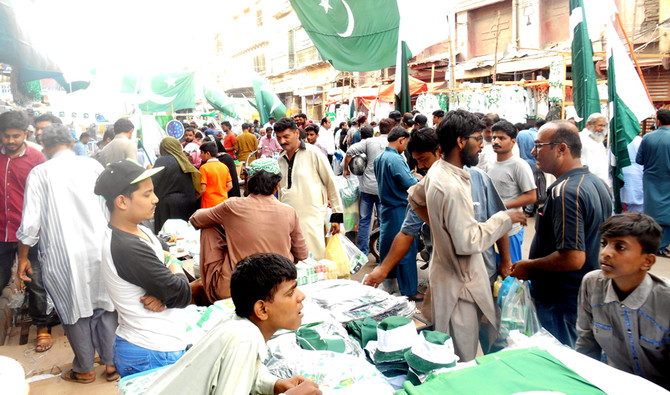
Importer Abdullah Abdul Habib told Arab News: “This year, demand for stuff required for independence day celebrations has increased by 30-40 percent.”
He said: “The growing demand has been met by importing the required products from China since the local industry is unable to meet such high demand.”
He added: “The variety of products and the ability to supply them are among the main reasons why Chinese goods are in such great demand.”
He said: “The number of importers has increased, not only in Karachi but also in Lahore, Quetta and Peshawar.”
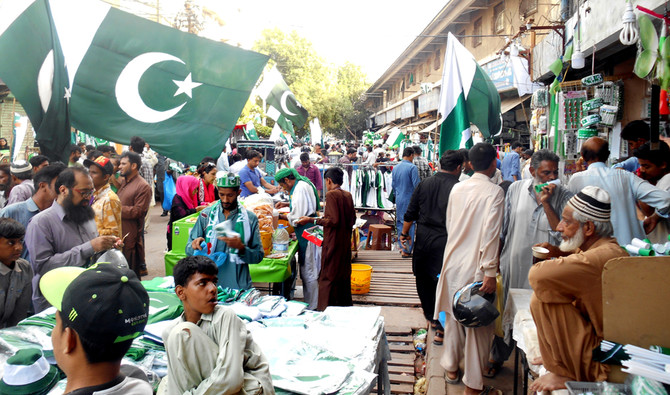
As independence day approaches, the number of temporary vending stalls has increased. “I run a paper business nearby, but due to the high profit margin I’ve set up this stall at the main market,” said Sarfraz, a vendor at the famous Pakistan Chowk.
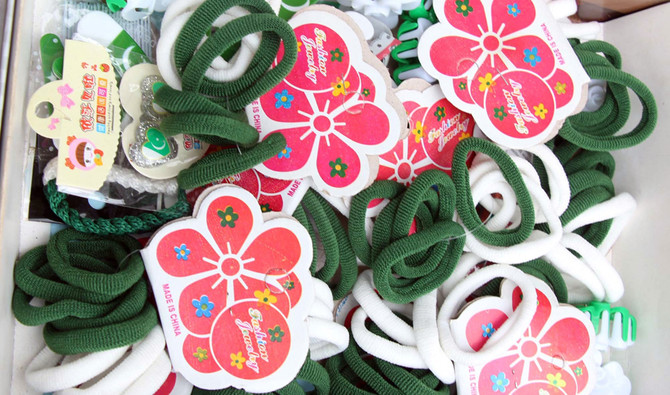
Purchases of clothes in green and white, Pakistan’s national colors, are surging, and websites are offering “freedom discounts.”
Pakistan came into existence on Aug. 14, 1947, with the partition of the Indian subcontinent, which had been a British colony since 1849.


![]()
![]()
![]()
![]()
![]()
![]()
![]()
![]()
![]()
![]()
![]()
![]()
![]()
![]()
![]()
![]()
![]()
![]()
![]()
![]()
![]()
![]()
![]()
![]()
![]()
![]()
![]()
![]()
![]()
![]()
![]()
![]()
![]()

Pakistan independence celebrations cause surge in economic activity















Pakistan independence celebrations cause surge in economic activity
- Pakistan meets 75-80 percent of demand for celebratory merchandise — such as flags, badges, bunting and hats — by importing them from neighboring China
- Online shopping websites are also offering incentive packages and special ‘freedom discounts’ to internet users

Latest updates



© 2026 SAUDI RESEARCH & PUBLISHING COMPANY, All Rights Reserved And subject to Terms of Use Agreement.