



JEDDAH: Take a minute and imagine all the images you’ve seen of travel destinations on your social media feed disappear. Now, why not turn that dream of visiting them into reality? One Saudi traveler decided to do just that on a backpacker’s budget, traveling to 120 cities across four continents.
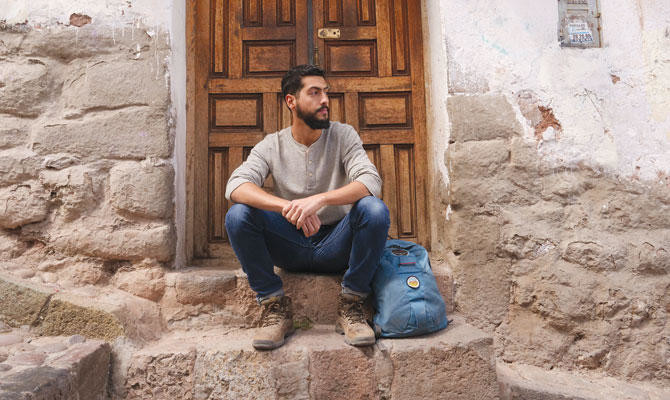
Rayyan Abdulwahed, a 29-year-old dentist from Alkhobar, has always sought to challenge himself by breaking out of his comfort zone. Speaking exclusively to Arab News from his hometown, he told stories of his experiences, including a recent 15-month journey to Europe’s Balkan states and South America.
“I was a shy and timid child, and went to Jordan to study dentistry after high school,” he said. “I tried my take on traveling alone for the first time during that freshman year — and I haven’t been able to stop since.”
Spain was Abdulwahed’s first destination. Staying with a family and learning Spanish at a nearby institute helped him feel independent, and he got a taste of what it’s like to travel alone.
For a couple of years, Abdulwahed traveled to countries such as Kenya and Cambodia as a volunteer, visited France to live with another family and improve his French, and took his brothers hiking up Mount Kilimanjaro in Tanzania.
“Kenya was hard to grasp at first,” he said. “I volunteered in an orphanage for two weeks, and it was difficult to see whole families and communities living in slums on mountains of garbage. At some point, it hit me that we’re very blessed; it hit hard. I understood then and there that I would be selfish if I didn’t try to bring a significant change in a life.”
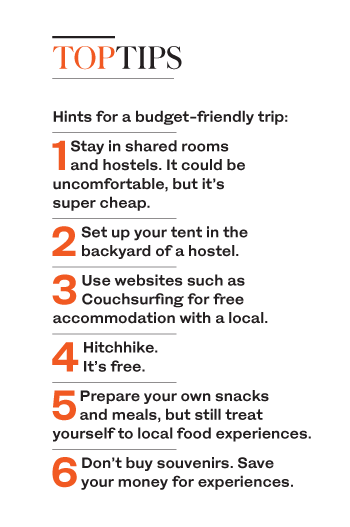
Abdulwahed spent time volunteering in Cambodia as a dentist and teacher. Giving back to a less privileged community is as satisfying as going on a beach vacation, he said; it’s just how you choose to look at it. He believes that the key to traveling the world is self-exploration and pushing your limits, while keeping a tight budget and living the moment.
Case in point: His stay at a Buddhist temple in China. “I had just finished a residency program in Riyadh and I had been working non-stop for months,” he said.
“I was given forced vacation leave and found myself booking a stay at a Buddhist temple. There was nothing spiritual or religious about it. I just wanted to experience what it’s like to stay there. We did tai-chi every day and kung-fu, cleaned, meditated from early sunrise to sunset. Rumor has it that the shifu (master) of the famous movie “Kung-Fu Panda” is based on the monastery’s shifu.”
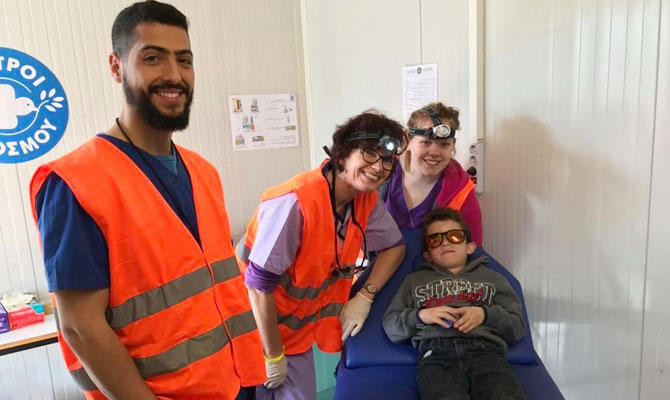
At the same time, a plan was brewing in the young traveler’s mind. “The plan was simple: A cultural experience on the smallest budget ever. I would start volunteering at a refugee camp in Thessaloniki, Greece, for three weeks, then I had a one-way ticket to Colombia. What happened next was unexpected,” he said.
“Instead of my three weeks as a volunteer dentist, it turned into three months. It was a demanding and an addictive job. You just couldn’t stop. I was performing dental procedures for people who hadn’t seen a dentist in years. It was a surreal experience, difficult at times, too.
“Dealing with teenagers was the hardest. They were traumatized from their war-stricken homelands and just seeing the dental tools could freak them out. Some might have been tortured; you never knew who you were dealing with. I was empathetic and numbed, which helped with my stay at the camps.”
Abdulwahed canceled his flight to Colombia and found a budget-friendly flight to Romania. “The only catch was that it was five weeks away, so I did what any rational person would do — couch-surfed my way through the Balkans, of course, before reaching Romania,” he said.
His months-long journey through South America began in Bogota, Colombia. “I couch-surfed and stayed in hostels, getting to meet people and communicate. We don’t do that often, as far as I could see. We don’t know much about the world and neither does the world know much about us,” Abdulwahed said.
“Take this example: I met a German girl at one of the hostels, and she asked me where I came from. I said Saudi Arabia. She said that her dad worked there, and I felt excited — finally, someone knew where my country was. I asked her where her dad worked. She said Dubai. I face-palmed then and there. Sorry, another country.”
Meeting different people from across the world was fascinating, but for someone who thought he was proficient in Spanish, Abdulwahed soon found that was far from the case.
 “From the first day I stepped on to Colombian soil, I knew my Spanish was not as good as I thought it would be. It was time to learn the proper way, by traveling. I stayed in Medellin, fasting during Ramadan and studying during the day. Things started to look up.”
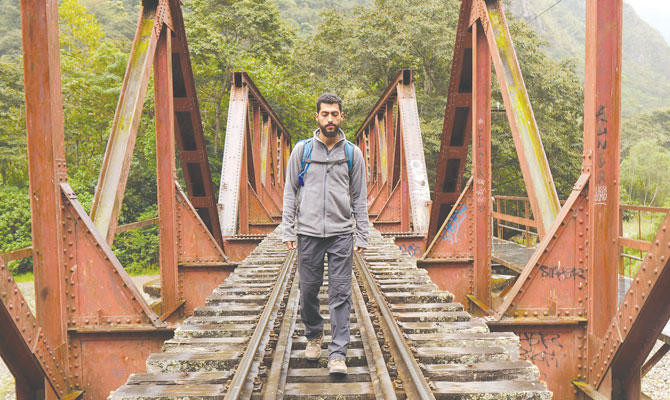
So many cities, so many memorable experiences. He improved on his Spanish while traveling through Colombia, hitchhiked his way through Chile for three months, hiked up Machu Picchu in Peru, worked in the Amazon rainforest in Bolivia, watched the Carnival in Rio de Janeiro, tasted the famous steaks of Argentina, and even took an “expensive” flight to Easter Island to see the Moai statues.
South America had a lot to offer: Indigenous tribes, ancient civilizations, superb food — and even better people.
“One of the most adventurous things I’ve done would be in Iquique, Chile. I took a paragliding course, but I haggled with the instructor, wanting only five days instead of 10 and ignoring the certificate for a lower price. I should have realized the red flags, but I ignored them. So, I took the necessary course, and my instructor and I headed out to the top of a hill about 500 meters above sea level to run, fly and land on the beach. That was the plan. But it didn’t go so well.”
“A million questions ran through my mind, and I was already on the edge of my seat. I ran off the hill and off I flew. The cars and people looked like ants from up above. I was flying and relishing every moment. The instructor was guiding me on which direction I should take to gain elevation through a mic in my ear. The only problem was I was supposed to be going up, but instead I was dropping fast. I could only see the highway by now and the cars were getting closer.
He paused, recalling his brush with danger. “I calculated where I was going to land, and found a small dirt bend that had a hill drop on the side of the highway. Miraculously, I landed safely, with only a few scratches, and people ran to check if I was
OK. Thankfully, I was. With the adrenaline still high, I hitchhiked back up the hill again and took another turn, flying over the whole city, and landing on the strip of sandy beach just as I wanted. The feeling was indescribable.”
Now that’s an exclusive even his mother didn’t know about.
Abdulwahed’s journey ended back where it started: Greece. He spent the final two months of his 15-month journey volunteering at camp Moria, on the island of Lesbos, where refugees and asylum-seekers arrived each day in search of a better life.
Exploring the world is one of the most invigorating and life-changing experiences. Abdulwahed’s journeys confirm that. “It could sound a bit cliched, but it’s true: Traveling does make you a better person.”