LONDON: Twitter CEO Jack Dorsey defended his company’s decision not to ban right-wing conspiracy theorist Alex Jones and his “Infowars” show, as many other social media platforms have done, saying he did not break any rules.
Facebook, Apple, YouTube and Spotify took down over the past week material published by Jones, reflecting more aggressive enforcement of their hate speech policies after rising online backlash and raising pressure on Twitter to do the same.
Jones’ Facebook account has also been suspended for 30 days but he still has a “verified” Twitter account. A separate Twitter account for “Infowars” is also still running.
“We didn’t suspend Alex Jones or Infowars yesterday,” Dorsey said in a series of tweets late Tuesday . “We know that’s hard for many but the reason is simple: he hasn’t violated our rules. We’ll enforce if he does.”
Dorsey said Twitter did not want to take “one-off actions to make us feel good in the short term, and adding fuel to new conspiracy theories.”
He said he wanted the company to avoid succumbing to outside pressure but instead impartially enforce straightforward principles “regardless of political viewpoints.” He also linked to a blog post Tuesday by the company’s vice president for trust and safety, Del Harvey, outlining the company’s policies.
“Twitter is reflective of real conversations happening in the world and that sometimes includes perspectives that may be offensive, controversial, and/or bigoted,” she said. “While we welcome everyone to express themselves on our service, we prohibit targeted behavior that harasses, threatens, or uses fear to silence the voices of others.”
Jones, who has 858,000 followers on Twitter, has built up his profile while promulgating conspiracy theories, including the claim that the 9/11 terror attacks were carried out by the government. He is perhaps most notorious for claiming that the 2012 Sandy Hook mass school shooting, which left 26 children and adults dead, was a hoax and that the surviving relatives are paid actors. Family members of some of the victims are suing Jones for defamation.
Dorsey said that it’s up to journalists to “document, validate, and refute” rumors and sensationalized issues spread by accounts like Jones’s so “people can form their own opinions.”
Twitter is taking other steps besides account deletions to combat misuse in its battle to rein in hate and abuse even as it tries to stay true to its roots as a bastion of free expression. Dorsey acknowledged last year that the company hasn’t done enough to curb such abuse and protect users.
Jones says his shows, which are broadcast on radio and online platforms and had been available on YouTube, reached at least 70 million people a week. It’s unclear how big his audience is now after the latest bans.


Twitter CEO defends decision not to ban Alex Jones, Infowars

Twitter CEO defends decision not to ban Alex Jones, Infowars

- Facebook, Apple, YouTube and Spotify took down over the past week material published by Jones
- Twitter did not want to take “one-off actions to make us feel good in the short term, and adding fuel to new conspiracy theories”


To infinity and beyond: Grendizer’s 50 years of inspiring Arabs
- 50 years after its creation, the Grendizer anime series continues to capture Arab imagination
- Arab News Japan speaks to creator Go Nagai, Middle Eastern fans and retells the story behind the UFO Robot tasked with protecting our planet
LONDON: Few cultural imports have crossed borders as unexpectedly, or as powerfully, as Grendizer, the Japanese giant robot that half a century ago became a childhood hero across the Arab world, nowhere more so than in Saudi Arabia.
Created in Japan in the mid-1970s by manga artist Go Nagai, Grendizer was part of the “mecha” tradition of giant robots. The genre was shaped by Japan’s experience during the Second World War, and explored themes of invasion, resistance and loss through the medium of science fiction.
But while the series enjoyed moderate success in Japan, its true legacy was established thousands of kilometers away in the Middle East.

The anime “UFO Robot Grendizer” arrived on television in the region in 1979, dubbed into Arabic and initially broadcast in Lebanon during the Lebanese civil war. The story it told of the heroic Duke Fleed, a displaced prince whose planet had been destroyed by alien invaders, struck a chord with children growing up amid regional conflict and occupation by Israel.
Its themes of defending one’s homeland, standing up to aggression and protecting the innocent were painfully relevant in the region, transforming the series from mere entertainment into a kind of emotional refuge.
Much of the show’s impact came from its successful Arabization. The powerful Arabic dubbing and emotionally charged voice-acting, especially by Lebanese actor Jihad El-Atrash as Duke Fleed, lent the show a moral gravity unmatched by other cartoons of the era.

The theme song for the series, performed by Sami Clark, became an anthem that the Lebanese singer continued to perform at concerts and festivals right up until his death in 2022.
By the early 1980s, “Grendizer” had spread across the Middle East, inspiring fandoms in Saudi Arabia, Kuwait, Iraq and beyond. For many, it was not only their first exposure to anime, it also delivered lessons on values such as justice and honor.
Grendizer was so influential in the region that it became the subject of scholarly research, which in addition to recognizing the ways in which the plight of the show’s characters resonated with the audience in the Middle East, also linked the show’s popularity to generational memories of displacement, particularly the Palestinian Nakba.
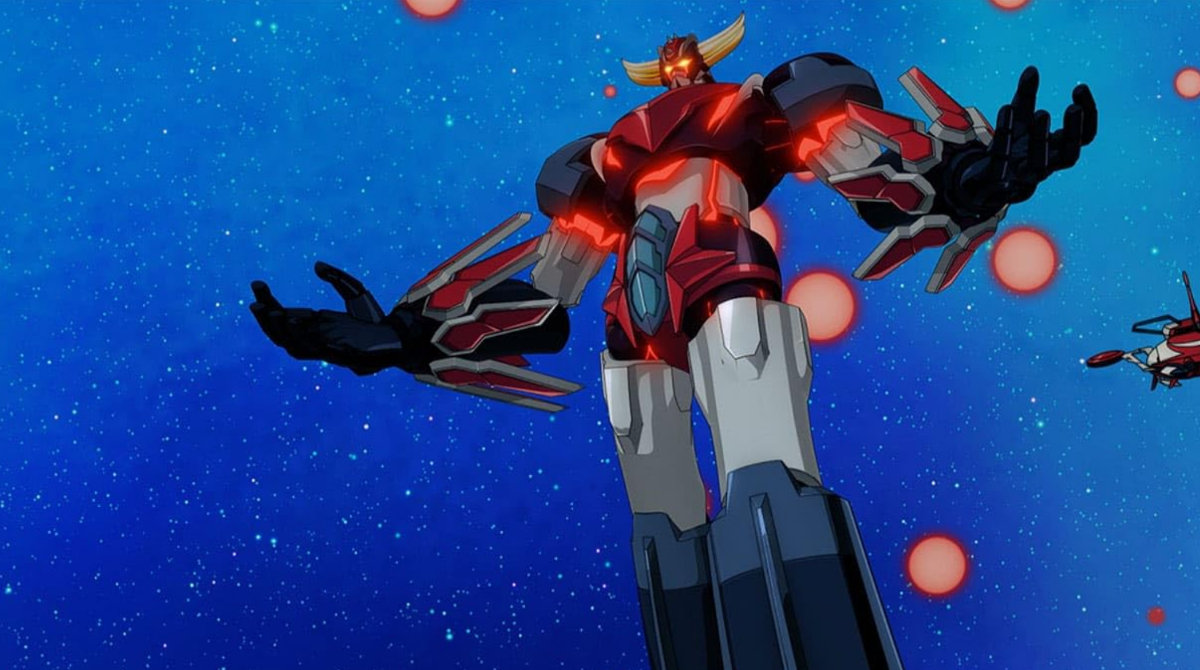
Half a century later, “Grendizer” remains culturally alive and relevant in the region. In Saudi Arabia, which embraced the original version of the show wholeheartedly, Manga Productions is now introducing a new generation of fans to a modernized version of the character, through a video game, The Feast of The Wolves, which is available in Arabic and eight other languages on platforms including PlayStation, Xbox and Nintendo Switch, and a new Arabic-language anime series, “Grendizer U,” which was broadcast last year.
Fifty years after the debut of the show, “Grendizer” is back — although to a generation of fans of the original series, their shelves still full of merchandise and memorabilia, it never really went away.


