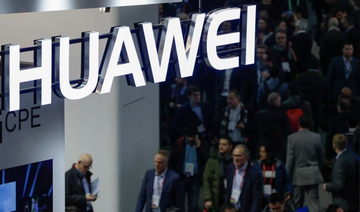
SAN FRANCISCO: China-based Huawei took the second-place spot from Apple in a tightening global smartphone during the second quarter of this year, according to figures released Tuesday by International Data Corporation.
South Korean consumer electronics titan Samsung remained the top smartphone maker, shipping 71.5 million handsets, but Huawei moved into second position with shipments of 54.2 million, according to IDC Worldwide Quarterly Mobile Phone Tracker.
Silicon Valley-based Apple shipped 41.3 million iPhones, claiming 12.1 percent of the global market compared to 20.9 percent for Samsung and 15.8 percent for Huawei.
It was the first time since early 2010 that Apple wasn’t in one of the top two spots in the smartphone market, according to IDC.
“The continued growth of Huawei is impressive, to say the least, as is its ability to move into markets where, until recently, the brand was largely unknown,” said Ryan Reith, program vice president with IDC’s Worldwide Mobile Device Trackers.
The iPhone did well, with the top-of-the-line iPhone X model a big seller in many markets, according to IDC. Apple was expected to wrest back control of the market with the release of new iPhone models in the fall.
Apple, Huawei and Samsung were the main contenders when it came to competition for high-end smartphones priced at $700 or more, according to Reith.
Preliminary findings by IDC indicated a total of 342 million smartphones were shipped during the second quarter in a 1.8 percent decline from the same period a year earlier.
The drop marked the third consecutive quarter of year-over-year declines in the global smartphone shipments, according to IDC.
Market saturation and climbing average selling prices were among factors curbing growth in the smartphone market, said Worldwide Quarterly Mobile Phone Tracker research manager Anthony Scarsella.
“Consumers remain willing to pay more for premium offerings in numerous markets and they now expect their device to outlast and outperform previous generations of that device which cost considerably less a few years ago,” Scarsella said.

Huawei tops Apple in tightening smartphone market
Middle East war economic impact to depend on duration, damage, energy costs, IMF official says
- Katz: Prolonged increase in energy prices could unanchor inflation expectations
- IMF: 2026 global GDP outlook was solid, too early to judge war’s impact on growth
WASHINGTON: The Middle East war’s impact on the global economy will depend on its duration and damage to infrastructure and industries in the region, particularly whether energy price increases are short-lived or persistent, the International Monetary Fund’s number two official said on Tuesday.
IMF First Deputy Managing Director Dan Katz told the Milken Institute Future of Finance conference in Washington that if there is prolonged uncertainty from the conflict and a prolonged impact on energy prices, “I would expect central banks to be cautious and respond to the situation as it materializes.”
He said the conflict could be “very impactful on the global economy across a range of across a range of metrics, whether it’s inflation, growth and so on” but it was still early to have a firm conviction.
Prior to the US and Israeli air strikes on Iran and counterattacks across the region, the IMF had forecast solid global GDP growth of 3.3 percent in 2026, powering through tariff disruptions due in part to the continued AI investment boom and expectations of productivity gains.
Katz said that the economic impact from the Middle East conflict would be influenced by its duration and further geopolitical developments.
Earlier, the IMF said it was monitoring the conflict’s disruptions to trade and economic activity, surging energy prices and increased financial market volatility.
“The situation remains highly fluid and adds to an already uncertain global economic environment,” the Fund said in a statement issued from Washington. Katz said the IMF will look at the conflict’s direct impacts on the region, including damage to infrastructure, and disruptions to key sectors.
“Tourism is an important one. Air travel. Is there physical damage to infrastructure, production facilities, and the big industry in particular that everyone will be focused on is, of course, the energy industry,” he said.
Oil rose further on Tuesday as Iran vowed to attack ships passing through the Strait of Hormuz. Brent crude oil , the global benchmark, surged to $83 per barrel, up 15 percent from its level on Friday.
Katz said he expected central banks to “look through” a temporary rise in energy prices, given their focus on core inflation. But central banks could respond if a more persistent energy shock results in “a destabilizing of inflation expectations.”
He said the post-COVID inflation spike of 2022 was influenced by energy impacts from Russia’s invasion of Ukraine, with more pass-through from headline inflation to core inflation.
“And so I’m sure central banks, as they are thinking about how the geopolitical situation is translating into energy markets, will be looking at the lessons of the pandemic and seeing if they can apply any of those lessons in setting monetary policy,” Katz said.


