MANILA: Philippine President Rodrigo Duterte on Monday vowed to sustain the momentum of his bloody war on drugs, telling the nation in an annual address that the fight would be as "relentless and chilling" as during his first two years in power.
Duterte told a joint session of Congress the anti-narcotics campaign, which has earned him international notoriety, was "far from over," taking a swipe at activists and political opponents who seek to bring him to book for thousands of killings.
"Your concern is human rights, mine is human lives" he said, adding that his fierce campaign aimed to protect the public from illicit drugs, as the "lives of our youth are being wasted" and families destroyed.

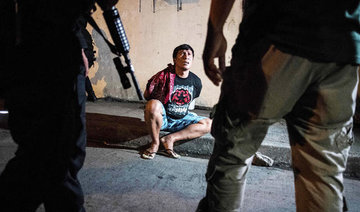
Since Duterte came to power, police have killed more than 4,500 people they say were suspected drug pushers who resisted arrest. Police say several thousand other deaths are believed to be drug related, and at the hands of vigilantes or rival gang members.
Human rights groups alarmed by the bloodshed say many of the killings were summary executions by police who were systematically exterminating drug users in the poorest communities. Police vigorously rebut those allegations.
Duterte reiterated that his foreign policy would not ally with any one power, but that ties with historic foe China had been "re-energized,” bringing unprecedented cooperation in the battle on transnational crime and dismantling clandestine drug laboratories.
But those warmer relations would not come at the expense of the Philippines' territorial integrity and economic interests in the South China Sea, he added.
Duterte read his prepared 50-minute speech in full, unlike his two previous addresses, when he eventually ditched his script to improvise and ramble.
He asked Congress to pass a law to give proper labor contracts to millions of people in short-term employment, to protect the environment and grant the Muslim minority the right to self-rule.

Philippines’ leader to keep up ‘relentless and chilling’ drugs war
- Since Duterte came to power, police have killed more than 4,500 people they say were suspected drug pushers who resisted arrest
- Human rights groups alarmed by the bloodshed say many of the killings were summary executions by police who were systematically exterminating drug users in the poorest communities
At least 25 killed in militant attacks in northeast Nigeria
- Attacks in the towns of Madagali and Hong in the border region with Cameroon, were attributed to Boko Haram militants
- Since 2009, the militant insurgency in Nigeria has left more than 40,000 dead and two million displaced
MAIDUGURI, Nigeria: At least 25 people were killed in two separate militant attacks in northeastern Nigeria’s Adamawa state, local sources said on Thursday.
The attacks in the towns of Madagali and Hong in the border region with Cameroon, were attributed to Boko Haram militants, whose fighters have been active in the area since the group began its violent insurgency in 2009.
“Gunmen we believed to be Boko Haram on many motorcycles … attacked the market. They opened fire on people and killed 21,” a Madagali local government official said about the Tuesday evening attack, on the condition of anonymity.
“We are still searching for more bodies as some might have died in the bush from gunshot wounds while trying to find safety.”
The attackers also looted a market and stole food items and motorcycles, the source said.
Four others, including three troops, were killed in neighboring Hong, resident Ezekiel Musa said.
“Boko Haram attacked us after they left the town. We saw the corpses of three soldiers and one woman was killed,” Musa said.
“Now the town has security personnel but some of us have already started leaving the town because of fear of what happened.”
State governor Adamu Umaru Fintiri condemned the attack without providing an official toll in a statement.
“We will not let terrorists undermine our efforts to restore peace and stability,” the statement said. “I warn perpetrators: desist from these senseless attacks or face the full weight of our collective resolve.”
Since 2009, the militant insurgency in Nigeria, led primarily by Boko Haram and its rival faction, the Islamic State West Africa Province (ISWAP), has left more than 40,000 dead and two million displaced in the northeast of the country, according to the UN.
The conflict has spread to neighboring Niger, Chad, and Cameroon, prompting the formation of a regional military coalition to fight these groups.
The attacks in the towns of Madagali and Hong in the border region with Cameroon, were attributed to Boko Haram militants, whose fighters have been active in the area since the group began its violent insurgency in 2009.
“Gunmen we believed to be Boko Haram on many motorcycles … attacked the market. They opened fire on people and killed 21,” a Madagali local government official said about the Tuesday evening attack, on the condition of anonymity.
“We are still searching for more bodies as some might have died in the bush from gunshot wounds while trying to find safety.”
The attackers also looted a market and stole food items and motorcycles, the source said.
Four others, including three troops, were killed in neighboring Hong, resident Ezekiel Musa said.
“Boko Haram attacked us after they left the town. We saw the corpses of three soldiers and one woman was killed,” Musa said.
“Now the town has security personnel but some of us have already started leaving the town because of fear of what happened.”
State governor Adamu Umaru Fintiri condemned the attack without providing an official toll in a statement.
“We will not let terrorists undermine our efforts to restore peace and stability,” the statement said. “I warn perpetrators: desist from these senseless attacks or face the full weight of our collective resolve.”
Since 2009, the militant insurgency in Nigeria, led primarily by Boko Haram and its rival faction, the Islamic State West Africa Province (ISWAP), has left more than 40,000 dead and two million displaced in the northeast of the country, according to the UN.
The conflict has spread to neighboring Niger, Chad, and Cameroon, prompting the formation of a regional military coalition to fight these groups.
© 2026 SAUDI RESEARCH & PUBLISHING COMPANY, All Rights Reserved And subject to Terms of Use Agreement.


