

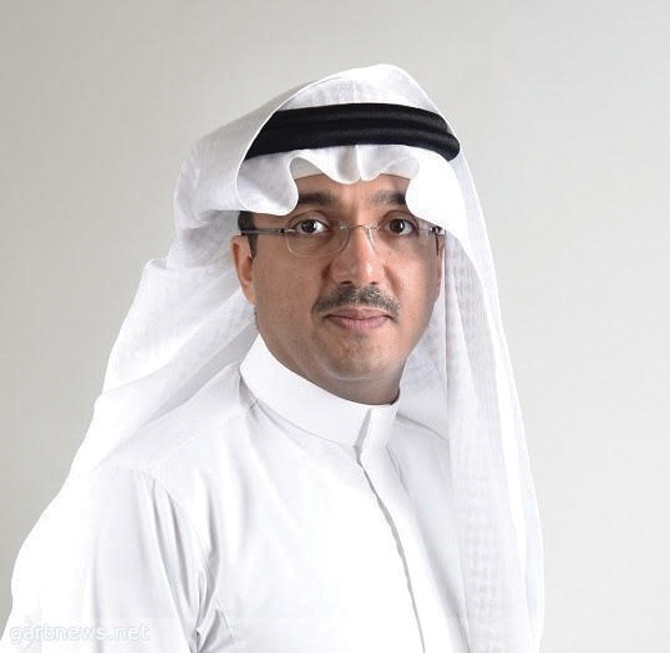
FaceOf: Hisham bin Mohammed Kaaki, chairman of the Makkah Chamber of Commerce and Industry

Hisham bin Mohammed Kaaki
Updated 20 July 2018
Follow

FaceOf: Hisham bin Mohammed Kaaki, chairman of the Makkah Chamber of Commerce and Industry

Hisham bin Mohammed Kaaki is the chairman of the board of directors at Makkah Chamber of Commerce and Industry (MCCI), an organization that operates and regulates businesses in Makkah.

Its latest project was the signing for a smart food city with a specialized office in real estate development and investment.

The chairman said that such projects increased career opportunities due to the millions of pilgrims and visitors that Makkah receives each year. Smart food cities are developed to cope with population growth and gain resources to deal with climate change and socioeconomic strife.

Hisham Kaaki was born in Makkah in 1977 and spent his younger years there until he graduated from King Faisal School. He moved to the US for five years to pursue a bachelor’s degree from California State University in San Diego.

After marrying, Kaaki moved to Jeddah, where he worked as a page editor for the local and then cultural page at Okaz newspaper, before he pursued his master’s degree in media administration from King Abdul Aziz University.

He was appointed editor-in-chief of Al-Nadwa newspaper, before serving as editor-in-chief of both Al-Nadwa and Stars of the Football Stadium for three years.

Kaaki was then accepted into the official media delegation accompanying the then-crown King Abdullah, and then crown prince, Sultan bin Abdul Aziz, to 15 European and Arab capitals, meeting kings as well as presidents including Hosni Mubarak and Recep Tayyip Erdogan.

He then moved to start as editor-in-chief of Al-Hayat newspaper in the western region, establishing his own business in trade and real estate after 10 years in journalism.

Kaaki is a board member of the Council of Saudi Chambers, and on the board of directors of Makkah Media, Kaaki Industries and Hills of Development.


Saudi wildlife center records rare sighting of critically endangered leatherback turtle in Red Sea

Updated 05 February 2026
Follow

Saudi wildlife center records rare sighting of critically endangered leatherback turtle in Red Sea

  • NCW says the leatherback traveled thousands of kilometers to reach the Red Sea
  • The closest known nesting grounds are located in India’s Andaman Islands, some 6,500 km distant

RIYADH: Saudi Arabia's National Center for Wildlife (NCW) has documented a rare sighting of a leatherback sea turtle in the Red Sea, marking a significant biological record for one of the planet's most critically endangered marine species.

The sighting occurred approximately 30 kilometers off the coast of Al-Qunfudhah within the Blue Holes Protected Area, a newly established marine reserve, according to the Saudi Press Agency.

The NCW confirmed that the presence of a leatherback in these waters is an exceptional event. Recognized as the largest turtle species on Earth, the leatherback can weigh up to 900 kilograms. It is easily identified by its unique leathery, black carapace—distinguished by five longitudinal ridges rather than a hard bony shell—and its ability to dive to depths exceeding 1,000 meters.

Shutterstock image

Noting the species' migratory nature, the center explained that leatherbacks travel thousands of kilometers foraging for jellyfish. The specimen likely navigated through the Bab el-Mandeb Strait in search of food. 

This is considered a remarkable journey, the NCW said, noting that the nearest known populations reside in the Indian Ocean, spanning waters from South Africa to Sri Lanka (roughly 7,000 to 8,000 kilometers away). The closest known nesting grounds are located in India’s Andaman Islands, approximately 6,500 kilometers distant. No nesting activity has been recorded in the Red Sea.

According to the IUCN Red List, the leatherback is Critically Endangered in the Indian Ocean. While data for the Red Sea and Arabian Gulf is scarce, recent isolated sightings include a juvenile recorded in Jordan in December 2025 and another off Djibouti in 2019.

The NCW emphasized that these rare appearances highlight the ecological importance of the Kingdom's marine conservation efforts in the Red Sea. The center pointed to the Farasan Islands Marine Protected Area, along with the new Blue Holes and Ras Hatiba reserves, as critical sanctuaries that could support the potential expansion of such endangered species' ranges.