

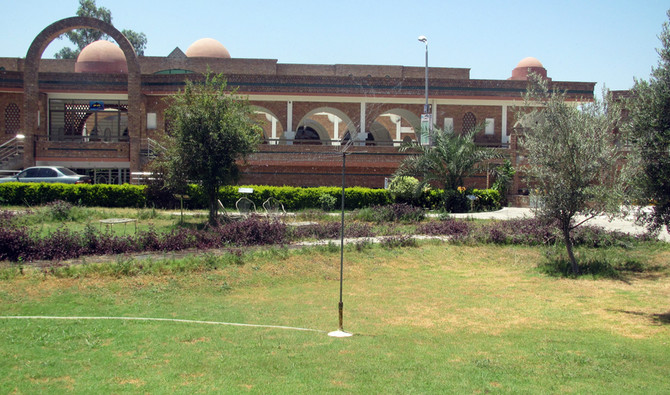
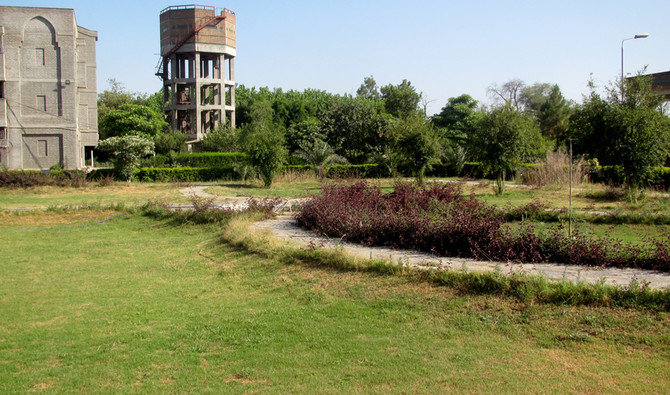
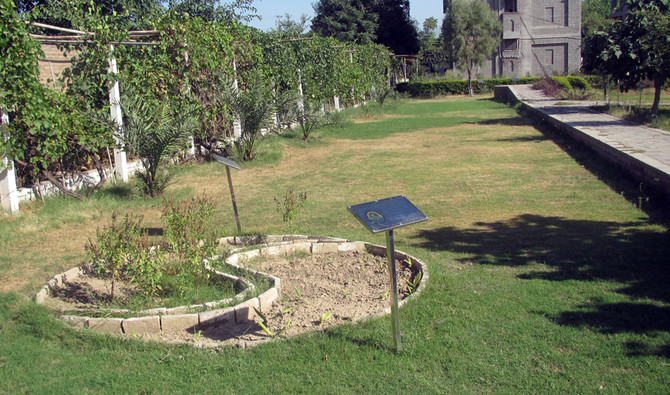
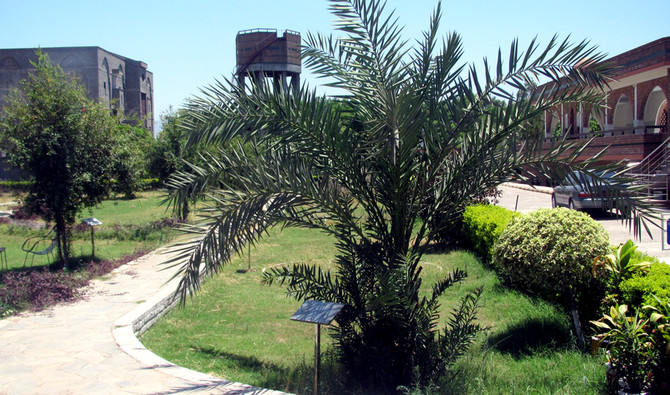




PESHAWAR: A decade ago, Mufti Ghulam al Rehman tried to do a rare thing— produce a project that was fulfilling and awe-inspiring all at once. This desire, in 2009, finally led to him establishing what is today referred to as the ‘Qur’an Garden’ or the ‘Hadeeqatul Qur’an.’
Conceptually unique, no one in Pakistan had ever before heard of anything like it. “It was a huge challenge for us,” said Hussain Ahmad, “especially with no precedent, of that nature, available in our country.”
Explaining the concept, Ahmad said: “Every year the government introduces plantation drives and campaigns in our country; we just extended that idea with a different approach.
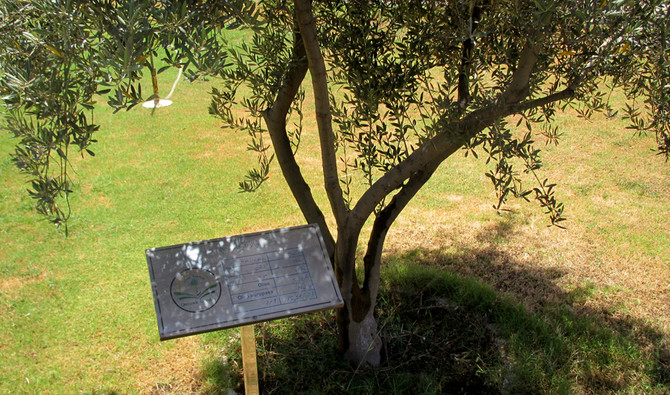
“In 2009, the first meeting of our body was conducted where we decided to set up a garden in which all the plants and trees named in the Holy Qur’an were to be planted,” he told Arab News.
Rehman has always enjoyed a good challenge. In the Nineties he established a huge religious complex, the Jamia Uthmania, in the center of Peshawar.
“The seminary is built upon four kanals and has 60 teaching staff,” added Ahmad. When it began, the institute was just a couple of rooms and three teachers. Now, after 26 years, the seminary hosts around 2,000 people and has 60 members of teaching staff delivering religious education.
By August 21, 2009 Rehman’s vision, to make religious education easily accessible for people in the more suburban and rural areas of Peshawar and to bring to Pakistan its first ever Qur’an Garden, translated itself into a 64-kanal mansion dubbed the Gulshan-e-Omer.
The seminary entails a research department, where groundwork done by students is printed in ‘Al-Asar’, a magazine published by the institute. “We also set up four kanals of land for the Qur’anic garden here,” he said.
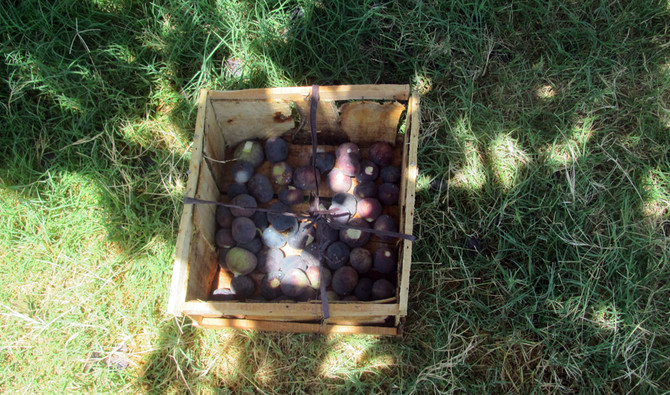
“The names of 21 plants and trees have been mentioned in the Holy Qur’an. The number of trees planted in the garden is according to the tally mentioned in the Qur’an,” said Ahmad. Aiming to spread the message of the Holy Qur’an, trees planted in the garden include pomegranates, figs, dates, grapes and bananas.
While some claim that the Dubai Holy Qur’an garden has 51 of the 54 varieties of plants and trees mentioned in the Qur’an, Ahmad disagrees with that data. “They might have planted some additional plants and trees mentioned in hadith. But we went for those only mentioned in the Qur’an,” added Ahmed. “We have planted high-quality plants and brought them over from across the world.”
While dates are brought in from Dera Ismail Khan, grapes are acquired from Afghanistan. “We are trying to bring in ‘Kafoor’ but it isn’t available in Pakistan due to unfavorable weather conditions.” He added that the team was negotiating with environmentalists over this as it would be a great addition to the garden.
The seminary has been looking after the Qur’an garden itself, said coordinator of the seminary, Muhammad Sirajul Hasan while speaking to Arab News.
“We aren’t receiving any additional funds from the government or the private sector.” The staff and students, added Hasan, offer their services voluntarily.
“At the moment we have allocated four kanals of land to this garden. Our aim here was to bring awareness among the people and we are happy that it is yielding results.” He added that the garden also offered students a short reprieve from studying the whole day. “The greenery of the garden has a very soothing effect on the students and gives them peace of mind,” he said.
Beaming with pride, Hasan explained to Arab News that the garden attracts people from far-flung areas and the lush greenery has added beauty to the seminary and the area around it. But there are no plans for follow-up to this initiative. “We took the first step. Now, it is the responsibility of others to invest in such projects within their areas,” said Hasan.
Visitor Farhan Khan described the garden to Arab News as “utterly unique”. “It is a valuable lesson and experience to see all the plants and trees, mentioned in our religious book, in one place.” Khan admitted he had read about fig and seen dried figs in the market, but had never hanging on a tree.
The students have been looking after the garden — planting, watering, preparing soil for the plants.
Fazal Khaliq, who has been studying at the seminary for the past two years, told Arab News he is learning Arabic and English here, but also plantation. “Basically I am studying religion, however, we are also learning contemporary education at the seminary,” he said. “What I feel most proud about is caring for the plants, and studying their growth.”
Maintaining the Qur’anic garden has been no easy feat, especially with global warming and other environmental challenges to its survival. Doctor Abdur Rashid, a retired professor and chairman of Hadeeqa tul Qur’an garden, told Arab News that the Peshawar Agriculture University extended its support, and has given an award to the seminary in recognition for its efforts in making the environment green and healthy.
“This is an excellent example of community service for which no grant has been allocated. It is due to the struggle of common people that such a unique garden was possible,” said Rashid. “We make visits to the garden. We observe the atmosphere, land and issue necessary instructions and also suggest medicines for the plants if they are required.”
Different universities have different botanical gardens for their students, explained Rashid. Peshawar University has its own botanical garden and similarly Islamia College and University also has its own. “This garden is a living laboratory for students to explore,” said Rashid.
Rashid added that small gardens such as this one are important as they could prevent big floods like those that took place 2010 and damaged agriculture and infrastructure across the country.
“Our message is to make our country green, plant more trees, stop people from cutting trees and to work to improve the environment. This is the need of the day,” said the chairman of the garden.


