UKHIYA, Bangladesh: The hill on which the young woman’s shelter is being built is so unstable that the earth crumbles under your feet. The threat of landslides is so dire that her neighbors have evacuated. Though living here could spell doom as the monsoon rains fall, she will live here anyway.
For Mustawkima, a Rohingya woman who fled Myanmar for the refugee camps of neighboring Bangladesh, there is no other option.
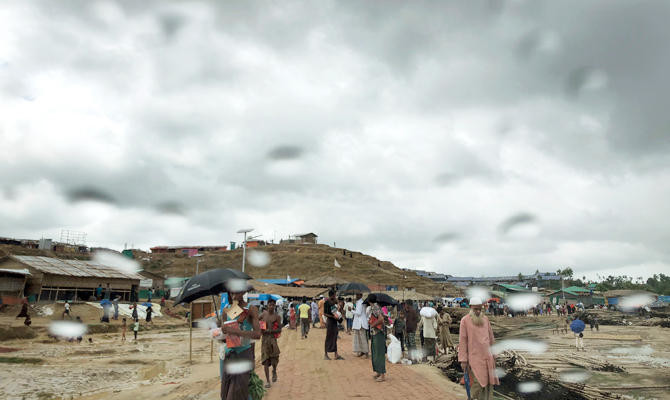
Hers is a dilemma repeated over and over for many of the 900,000 Rohingya refugees living in ramshackle huts across this unsteady landscape: With the long-dreaded monsoon season now upon them, they have run out of places to run.
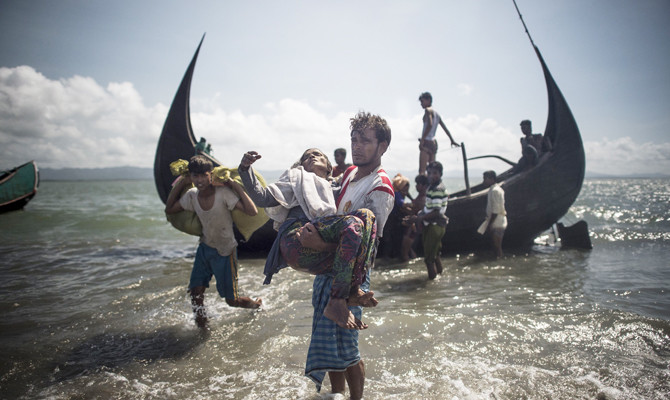
For months, officials raced to relocate the most at-risk families to safer areas that had been bulldozed flat, but there simply isn’t enough available land. Most refugees believe it is too dangerous to return to Myanmar, where the military launched a brutal campaign of violence against the minority Rohingya Muslims last year. And so, as the rains begin to flood parts of the camps, many Rohingya find themselves trapped — by geography, by poverty and by fear.
The bamboo shelter on the crumbling hillside will be Mustawkima’s third attempt at finding a home in the camps. She has had to do everything on her own; Her husband was killed when the military stormed their village in August 2017.
Mustawkima, who like some Rohingya uses only one name, abandoned her first shelter when the soil washed away. With five children under the age of 8, she wanted her new home to be close to relatives living at the base of the hill, so she erected a flimsy tarp halfway up. But when the rains began in June, the water quickly poured in, transforming her dirt floor into a muddy mess.
Frightened, she sold off some of her donated rations of rice, lentils and oil so she could hire men to build her a sturdier shelter in the same spot. The bamboo and sandbags were donated by aid agencies. She fears there isn’t enough material, but she has no money to buy extra bamboo.
Families living in five shelters on the hill recently evacuated, she says. She can only hope that her relatives will protect her and her children when the worst of the rains arrive.
The most intense rains are expected over the next few months, though heavy downpours began pummeling the camps in June. There have already been more than 160 landslides, 30 people injured and one toddler killed, according to the Inter Sector Coordination Group, or ISCG, which oversees the aid agencies in the camps.
“Within 24 hours of the first rains falling, we were seeing small landslides and we were seeing flooding everywhere,” says Daphnee Cook, a spokeswoman for Save the Children. “I’ve been here for seven months and I was appalled at how quickly things started to fall apart.”
The ferocity of the rains and the swiftness with which they can wreak havoc is stunning. On a recent day, it took just minutes for a downpour to transform the face of another hill into a waterfall, with torrents of muddy water cascading down dirt steps.
Beyond the landslides and flooding, there are worries about waterborne diseases like cholera. Some of the latrines are piled high with fly-riddled excrement, which seeps out the sides during downpours. Water pumps are generally just a few meters away — worse, some are located downhill.
Aid workers have cleaned out thousands of latrines. Children are receiving identity bracelets in case they are separated from parents in the flooding. Families have received extra materials to fortify their shelters. Trenches have been dug to try and redirect floodwaters.
Ultimately, though, the topography of the camps is the biggest problem. The trees that once covered the hills have been cut down to make room for shelters, and the roots dug up for firewood. That process has dramatically loosened the soil, which the rains turn into heavy mud that slips down the hillsides, burying anything in its path.
The jagged scar on Mohamed Alom’s head is a grim reminder of the dangers of those landslides. The 27-year-old was asleep in his shelter last month when a torrent of mud crashed through the plastic wall next to him. A tree root slammed into his head, slicing open his skin. His agonized screams awakened his wife and two young children, who rushed him to a doctor.
Now, he and his family are among 13 people living in a one-room schoolhouse. Alom is hoping officials will help him build a new shelter, but he has no idea how long that will take.
More than 200,000 people are living in areas considered at risk of landslides and flooding, according to the ISCG. Around 34,000 refugees have been relocated to other areas, with some moving into sturdier shelters further away from the hills.
Hotiza Begum, 25, recently moved into one of the new shelters with her husband and five children after mud crashed through the roof of her old one. She likes her relatively spacious new home. But it is hard to find firewood, she says, because they now live far from the mountains. And the markets can only be reached by tuk tuk, which costs about $1 — more than they can afford.
Yet at least her family is safe, for now. Abu Bakker’s family lives at the base of a hill where a landslide destroyed eight shelters. A few weeks ago, Bakker’s 60-year-old mother was trying to scoop a bit of soil out of their shelter when a deluge of mud crashed through their tarp wall, knocking her to the ground and burying her up to her thighs.
Bakker dug his terrified mother out and knew he had to get his family away. An aid group promised him supplies to rebuild, but they still haven’t arrived. And even if they do, he asks, where will he rebuild?
He is scared whenever it rains, which is often. He prays every day for Allah to protect them.
Still, for many Rohingya refugees who have made it through mass killings, rapes and other abuse in a military crackdown, the fear of the monsoon is relative.
“In Myanmar, it’s scary because there’s no guarantee for our lives,” says Alom, as the rain begins to fall on the roof. “Here, even if there’s a landslide, at least we don’t have to worry about the military.”


![]()
![]()
![]()
![]()
![]()

Nowhere to run: Rohingya hunker down as monsoon arrives


Nowhere to run: Rohingya hunker down as monsoon arrives
- More than 200,000 people are living in areas considered at risk of landslides and flooding, according to the ISCG
- Still, for many Rohingya refugees who have made it through mass killings, rapes and other abuse in a military crackdown, the fear of the monsoon is relative


Latest updates


Recommended


© 2026 SAUDI RESEARCH & PUBLISHING COMPANY, All Rights Reserved And subject to Terms of Use Agreement.