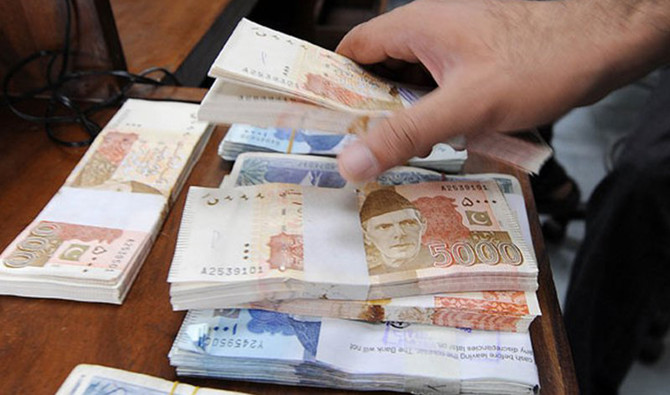
ISLAMABAD: The Auditor General of Pakistan (AGP) on Thursday refused to accept the exemption certificate issued by two former finance ministers to the civilian secret service Intelligence Bureau (IB).
AGP Javaid Jehangir said section 17, used to exempt the institution, is “prima facie in conflict with the constitutional provisions and decisions of the Supreme Court,” seeking its removal from the AGP’s Ordinance 2001, local media reported.
Under section 17, former finance ministers Ishaq Dar and Shahid Khaqan Abbasi had given audit exemptions to the IB.
While section 17 empowers the federal government to give out the exemption certificate due to funds being used for national security, the AGP said the certificate needs to be issued by the federal Cabinet, not the finance minister.
In June 2016, then-Finance Minister Dar told the National Assembly that the Inter-Services Intelligence (ISI) and the IB were the only two departments still using secret service funds.
Upon acquiring legal powers to exempt the secret service expenses from audits, he amended section 17 through the Finance Act 2013.
But in 2013, the Supreme Court ruled that the AGP is not only authorized but obliged to see access to all federal and provincial government records, as well as all entities established by, or under the control of, the federal and provincial governments, “regardless of the designation of such records as secret or otherwise.”
The most recent exemption certificate was issued in February 2018, when Abbasi exempted the IB from the audit of 1.93 billion Pakistani rupees ($15.89 million) in secret service expenditures for the fiscal year 2016-17. He also certified that the IB has 2.3 billion rupees in balance until the end of the fiscal year.

Auditor general rejects spy agencies’ exemption certificates
- Under section 17, former finance ministers had given audit exemptions to the IB

Afghan polio survivor’s sock factory provides hope by employing disabled workers
HERAT: In a tiny room in the center of Herat, Afghanistan’s westernmost city, Shahabuddin uses his hands to propel himself along the floor to a freshly-made pile of socks waiting to be sorted and packaged.
A double amputee since a roadside bomb took both his legs a decade ago, when Afghanistan was mired in conflict between US-led forces and Taliban insurgents, the 36-year-old father of four had struggled to find work. Unemployed for the last decade, he had been forced to rely on relatives for his family’s survival.
But a new sock production workshop in Herat employing only disabled workers has given him new hope.
“I became disabled due to the explosion. Both my legs were amputated,” Shahabuddin, who like many Afghans goes by only one name, said during a brief pause in his work in early December. “Now I work here in a sock factory, and I am very happy that I have been given a job here.”
The workshop is the brainchild of Mohammad Amiri, 35, a former grocery shop worker who started the business about a month ago. Amiri, himself disabled by childhood polio, wanted to create jobs and help provide income for other people with disabilities, particularly as many of them were injured during the conflict and have no other means of income.
He teamed up with another polio survivor to start the sock factory with a workforce of men disabled either through traumatic injuries or because of congenital issues or other reasons. They make four types of socks: long and short, for winter and summer.
“The factory, which is funded and supported by people with disabilities, began operations last month and currently employs around 50 people with disabilities,” Amiri said. “They are busy in the production, packaging and sale of socks in the city.”
A combination of decades of conflict, a weak health care system and struggling economy have contributed to high levels of disability in Afghanistan. Data from a 2019 Model Disability Survey conducted by The Asia Foundation nonprofit organization indicates that nearly 25 percent of adults live with a mild disability, while 40 percent have moderate and about 14 percent have severe disabilities.
“These figures compel us to act with greater urgency and commitment,” the UN Assistance Mission in Afghanistan said in a statement released on the International Day of Persons with Disabilities on Dec. 3, quoting the same figures. “Persons with disabilities must not be treated as an afterthought; they must be fully integrated into every stage of planning, decision-making, and service delivery.”
Meanwhile, Afghanistan is one of only two countries — along with neighboring Pakistan — where wild poliovirus remains endemic. The infectious disease can cause flu-like symptoms, but can also cause severe reactions, including paralysis, disability and death.
The Afghan Ministry of Martyrs and Disabled Affairs says 189,635 disabled people across the country are registered and receiving financial support from the government.
Amiri said his business faces serious competition from cheap imports of textiles, and expressed the hope that the government would stop imports from abroad. He has hopes of getting a contract to provide the Afghan security forces with socks, and wants to expand his workforce to 2,000 people.
His current employees include former refugees who have recently returned to Afghanistan after spending years abroad.
One such man is Mohammad Arif Jafari, 40, an economics graduate and polio survivor who lived in Iran for years. Returning to Afghanistan has been hard, he said.
“I suffered a lot due to unemployment. But fortunately, now I produce several types of socks,” he said while selling his wares from a stall on the streets of Herat. “I am happy that I am working here and earning an income.”
A double amputee since a roadside bomb took both his legs a decade ago, when Afghanistan was mired in conflict between US-led forces and Taliban insurgents, the 36-year-old father of four had struggled to find work. Unemployed for the last decade, he had been forced to rely on relatives for his family’s survival.
But a new sock production workshop in Herat employing only disabled workers has given him new hope.
“I became disabled due to the explosion. Both my legs were amputated,” Shahabuddin, who like many Afghans goes by only one name, said during a brief pause in his work in early December. “Now I work here in a sock factory, and I am very happy that I have been given a job here.”
The workshop is the brainchild of Mohammad Amiri, 35, a former grocery shop worker who started the business about a month ago. Amiri, himself disabled by childhood polio, wanted to create jobs and help provide income for other people with disabilities, particularly as many of them were injured during the conflict and have no other means of income.
He teamed up with another polio survivor to start the sock factory with a workforce of men disabled either through traumatic injuries or because of congenital issues or other reasons. They make four types of socks: long and short, for winter and summer.
“The factory, which is funded and supported by people with disabilities, began operations last month and currently employs around 50 people with disabilities,” Amiri said. “They are busy in the production, packaging and sale of socks in the city.”
A combination of decades of conflict, a weak health care system and struggling economy have contributed to high levels of disability in Afghanistan. Data from a 2019 Model Disability Survey conducted by The Asia Foundation nonprofit organization indicates that nearly 25 percent of adults live with a mild disability, while 40 percent have moderate and about 14 percent have severe disabilities.
“These figures compel us to act with greater urgency and commitment,” the UN Assistance Mission in Afghanistan said in a statement released on the International Day of Persons with Disabilities on Dec. 3, quoting the same figures. “Persons with disabilities must not be treated as an afterthought; they must be fully integrated into every stage of planning, decision-making, and service delivery.”
Meanwhile, Afghanistan is one of only two countries — along with neighboring Pakistan — where wild poliovirus remains endemic. The infectious disease can cause flu-like symptoms, but can also cause severe reactions, including paralysis, disability and death.
The Afghan Ministry of Martyrs and Disabled Affairs says 189,635 disabled people across the country are registered and receiving financial support from the government.
Amiri said his business faces serious competition from cheap imports of textiles, and expressed the hope that the government would stop imports from abroad. He has hopes of getting a contract to provide the Afghan security forces with socks, and wants to expand his workforce to 2,000 people.
His current employees include former refugees who have recently returned to Afghanistan after spending years abroad.
One such man is Mohammad Arif Jafari, 40, an economics graduate and polio survivor who lived in Iran for years. Returning to Afghanistan has been hard, he said.
“I suffered a lot due to unemployment. But fortunately, now I produce several types of socks,” he said while selling his wares from a stall on the streets of Herat. “I am happy that I am working here and earning an income.”
© 2025 SAUDI RESEARCH & PUBLISHING COMPANY, All Rights Reserved And subject to Terms of Use Agreement.