BRUSSELS: The European Union is enforcing tariffs on $3.4 billion in US products as of Friday in retaliation to duties the Trump administration has put on European steel and aluminum.
The goods targeted include typical American products like bourbon, peanut butter, and orange juice, in a way that seems designed to create political pressure on US President Donald Trump and senior US politicians.
"This response by the European Union is adequate, it is proportionate and it is reasonable. Needless to say, it is in full respect of EU and WTO rules," European Commission Alexander Winterstein.
Trump imposed tariffs of 25 percent on EU steel and 10 percent on aluminum on June 1. Europeans claim that breaks global trade rules.
The spat is part of a wider tussle over global trade. In two weeks, the United States will start taxing $34 billion in Chinese goods. Beijing has vowed to immediately retaliate with its own tariffs on US soybeans and other farm products.
Customs agents across Europe’s colossal market of 500 million people will now impose the duty, hiking prices on US-made products in supermarkets and across factory floors.
“These measures are the logical consequence of the US decision,” French Finance Minister Bruno Le Maire said.
“They reflect a Europe that is resolute and principled,” he said.
EU Trade Commissioner Cecilia Malmstrom said this week that the 28-nation bloc was “left with no other choice” but to impose tariffs of its own after the “unilateral and unjustified decision of the US.”
Together with US tariffs against Mexico and Canada, the trade battles have raised the spectre of a global trade war, spooking financial markets that fear major consequences to the global economy.
“We have a trade war — and it’s an escalating trade war,” SEB chief economist Robert Bergqvist said in an interview.
Brussels first drew up the list in March when Trump initially floated the 25 percent tariffs on steel imports and 10 percent on aluminum, which also target Canada, Mexico and other close allies.
The list does not specifically name brands but European Commission chief Jean-Claude Juncker spelled out in March that the bloc would target “Harley-Davidson, bourbon and Levi’s jeans.”
Cranberries, cranberry juice, orange juice, sweetcorn and peanut butter are among the other food products targeted.
Juncker said on Thursday that the US decision to impose tariffs “goes against all logic and history.”
“Our response must be clear but measured. We will do what we have to do to rebalance and safeguard,” he said.
European consumers would be able to find “alternatives,” European Commission Vice President for trade Jyrki Katainen said.
“If we chose products like Harley Davidson, peanut butter and bourbon, it’s because there are alternatives on the market. We don’t want to do anything that would harm consumers,” he said on Thursday.
“What’s more, these products will have a strong symbolic political impact.”
International Monetary Fund (IMF) chief Christine Lagarde warned on Thursday that trade war, as well as Brexit, were the key risks to the eurozone economy.
While she didn’t see a serious “direct impact of tariff increases... it’s a trend that is worrying, the breach of confidence that undermines confidence,” she said on the sidelines of eurozone minister talks in Luxembourg.
Transatlantic ties are at their lowest level for many years due to rows over a host of issues including the Paris climate agreement and the Iran nuclear deal.
Relations plumbed new depths at the recent G7 summit when Trump abruptly rejected the joint statement and bitterly insulted his Canadian host, Prime Minister Justin Trudeau.
Trump claimed America had been obliged to levy the metals tariffs as it has been exploited as the world’s “piggy bank.” He is also targeting EU auto imports with a US probe now underway.
Trump’s outbursts were the latest in which he has clashed with America’s closest allies, even as he has had warm words for autocrats like North Korean leader Kim Jong Un, with whom he had a historic meeting earlier this month, and Russia’s Vladimir Putin.
But US Assistant Secretary of State for European and Eurasian affairs Wess Mitchell said on Thursday that Trump’s approach toward his allies was about “strategic renovation.”
“Strengthening the West means making hard decisions today when we initially disagree, rather than continuing to accept the appearance of transatlantic unity,” he told the Carnegie Europe think-tank in Brussels.


![]()
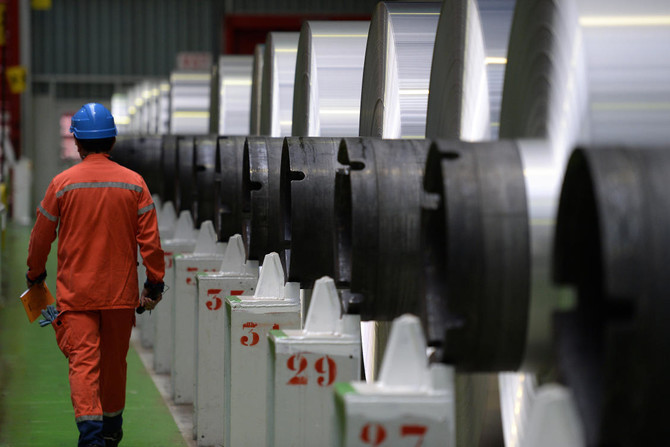
EU retaliatory tariffs on raft of US goods go into force
EU retaliatory tariffs on raft of US goods go into force
- Customs agents across Europe’s colossal market of 500 million people will now impose the duty, hiking prices on US-made products in supermarkets and across factory floors
- Donald Trump claimed America had been obliged to levy the metals tariffs as it has been exploited as the world’s “piggy bank”


Latest updates





© 2026 SAUDI RESEARCH & PUBLISHING COMPANY, All Rights Reserved And subject to Terms of Use Agreement.