ROME: Italy’s anti-immigrant interior minister accused a German charity on Thursday of ignoring coast guard orders when its Dutch-flagged ship picked up 226 migrants off Libya’s coast and he said they should be taken to the Netherlands not Italy.
Earlier this month Matteo Salvini pledged to no longer let charity ships offload rescued migrants in Italy, leaving the Gibraltar-flagged Aquarius stranded at sea for several days with more than 600 migrants until Spain offered them safe haven.
On Thursday, Mission Lifeline, a charity based in Dresden, Germany, pulled migrants off two rubber boats in international waters even though it was told by Italy that Libya’s coast guard was coming to get them, a spokesman for the charity said. They would not have been safe if taken back to Libya, he said.
Salvini, also leader of the anti-immigrant League party, addressed the charity in a Facebook video: “You have intentionally not listened to Italian or Libyan authorities. Good. Then take this load of human beings to the Netherlands.”
International maritime guidelines say that people rescued at sea should be taken to the nearest “place of safety.”
The United Nations and other humanitarian agencies do not deem Libya “a place of safety” because they say migrants there are subject to indefinite detention, physical abuse, forced labor and extortion.
A Lifeline statement indicated its vessel was heading northwards with the 226 migrants and called on “the competent authorities to swiftly react according to their obligation to designate a place of safety.”
“They have a Dutch flag, but they are not registered in the Netherlands, and therefore are not under Dutch state flag responsibility,” Dutch Foreign Ministry spokesman Lennart Wegewijs said in response, without elaborating.
Italian Transport Minister Danilo Toninelli said he had asked the coast guard to investigate state flag issue.
Lifeline spokesman Axel Steier said the migrants aboard its boat included 14 women and four small children. “We didn’t want to wait for the Libyan coast guard because people were in danger,” Steier told Reuters.
Waiting for the Libyans would have constituted allowing “an illegal pushback” of refugees to a country where they are not safe, he added.
With its hard line on rescue boats, Italy’s new populist government has thrust migration back onto the European Union agenda. Italy has seen more than 640,000 land on its shores since 2014 and is currently sheltering 170,000 asylum seekers.
Germany is also seeking to restrict asylum-seekers’ movement in the bloc. An emergency “mini-summit” has been called for Brussels on Sunday to discuss immigration ahead of a full, 28-state EU summit on June 28-29.
Toninelli, who oversees Italy’s ports and coast guard, had called last weekend on the Netherlands to recall Lifeline and another Dutch-flagged ship, Seefuchs. On Thursday, Toninelli said Lifeline was acting “outside of international law.”
“The transport minister is lying,” Steier shot back. “We always act in line with international law. Always.”
Salvini has denounced the charity ships as “deputy traffickers,” suggesting they profit from the rescues.
Earlier this week a tribunal in Palermo shelved an inquiry into whether German charity Sea Watch and Spain’s Proactiva Open Arms were in contact with smugglers, saying no evidence was found.


![]()
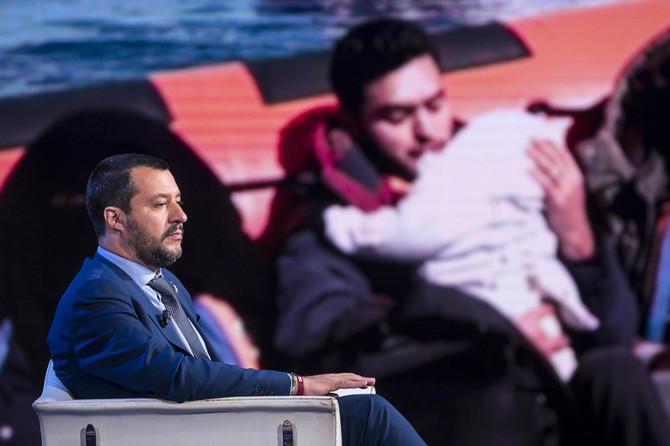
Italy tells rescue ship to take migrants to the Netherlands
Italy tells rescue ship to take migrants to the Netherlands
- Italian Interior Minister Matteo Salvini: “You have intentionally not listened to Italian or Libyan authorities. Good. Then take this load of human beings to the Netherlands.”
- Dutch Foreign Ministry spokesman Lennart Wegewijs: “They have a Dutch flag, but they are not registered in the Netherlands, and therefore are not under Dutch state flag responsibility.”


Latest updates


© 2026 SAUDI RESEARCH & PUBLISHING COMPANY, All Rights Reserved And subject to Terms of Use Agreement.