SANAA: The UN envoy for Yemen carried a plan to halt fighting around the key aid port of Hodeidah where Houthi militia have been battling a regional coalition as he arrived Saturday in the rebel-held capital Sanaa for emergency talks.
Martin Griffiths was expected to propose to militia leaders that they cede control of the Red Sea port to a UN-supervised committee and halt heavy clashes against advancing government troops backed by Saudi Arabia and the United Arab Emirates.
The envoy did not make any statement on his arrival at Sanaa international airport.
More than 70 percent of Yemeni imports pass through Hodeidah’s docks and the fighting has raised UN fears of humanitarian catastrophe in a country already teetering on the brink of famine.
Yemen’s government and its allies launched their offensive on Wednesday, after at least 139 combatants have been killed, according to medical and military sources.
The Iranian-backed Houthi militia have controlled the Hodeidah region with its population of some 600,000 people since 2014.
The capture of Hodeidah would be the coalition’s biggest victory of the war so far, and militia leader Abdel Malek Al-Houthi on Thursday called on his forces to put up fierce resistance and turn the region into a quagmire for coalition troops.
The Yemeni army on Saturday claimed it had seized control of the militia base at Hodeidah’s disused airport, which has been closed since 2014.
An AFP correspondent on the front line could not confirm the report and a spokesman for the coalition, which has troops taking part in the offensive, did not respond to repeated requests for comment.
But military sources later denied that the army had entered the airport.
They told AFP, however, that sporadic clashes were underway at the airport’s southern gate.
The highway between Hodeidah and the government-held port of Mokha was also the scene of fighting, they said, adding that loyalist forces had suffered “losses.”
The United Nations and relief organizations have warned that any all-out assault on Hodeidah would put hundreds of thousands of people at risk.
The fighting is already nearing densely populated residential areas, the Norwegian Refugee Council warned, and aid distributions have been suspended in the west of the city.
The International Committee of the Red Cross said thousands were likely to flee if the fighting continued.
On Thursday, the UN Security Council demanded that Hodeidah port be kept open to vital food shipments but stopped short of backing a Swedish call for a pause in the offensive to allow for talks on a militia withdrawal.


![]()
![]()
![]()

UN envoy in Yemen for Hodeidah crisis talks

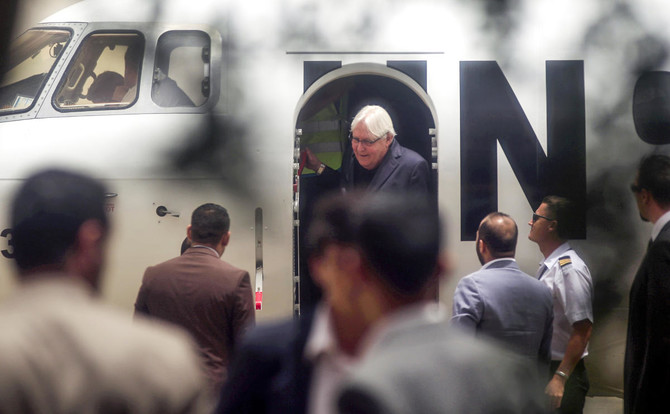
UN envoy in Yemen for Hodeidah crisis talks
- UN envoy for Yemen has a plan to halt fighting around the key aid port of Hodeidah where Houthi militia have been battling a regional coalition
- Martin Griffiths was expected to propose to militia leaders that they cede control of the Red Sea port to a UN-supervised committee


Latest updates


© 2026 SAUDI RESEARCH & PUBLISHING COMPANY, All Rights Reserved And subject to Terms of Use Agreement.