LONDON: The ashes of Stephen Hawking were buried Friday in a corner of Westminster Abbey that honors some of Britain’s greatest scientists, between the graves of Charles Darwin and Isaac Newton.
More than 1,000 people attended a service of thanksgiving in the ancient abbey for the physicist, who died in March at age 76 after decades of living with motor neuron disease. When he was diagnosed, aged 22, he was given only a few years to live.
Hawking conducted groundbreaking research into black holes and the origins of the universe, and gained global fame as a popularizer and communicator of science. His book “A Brief History of Time” sold 9 million copies — even if many readers didn’t finish it — and he appeared on “Star Trek: The Next Generation,” “The Big Bang Theory” and “The Simpsons.”
“His name will live in the annals of science,” Astronomer Royal Martin Rees told the memorial service. “Nobody else since Einstein has done more to deepen our understanding of space and time.
“Millions have had their horizons widened by his books and lectures, and even more worldwide have been inspired by a unique example of achievement against all the odds,” Rees said.
Hawking’s first wife Jane and daughter Lucy were among an eclectic crowd that included scientists and schoolchildren; politicians including UK Culture Secretary Matt Hancock and Labour Party leader Jeremy Corbyn; Chic guitarist Nile Rogers; actress Lily Cole; comedian David Walliams; and talk-show host Piers Morgan.
Guests also included 1,000 members of the public selected by ballot from 25,000 applicants. A private funeral service was held in March in Cambridge, where Hawking lived and worked for decades.
The service included biblical readings by actor Benedict Cumberbatch, who played Hawking in a BBC drama, and Hawking’s daughter Lucy. Astronaut Tim Peake read from “Queen Mab” by poet Percy Bysshe Shelley, which evokes the wonders of the universe.
Kip Thorne, a Nobel prize-winning American physicist, paid tribute to “by far the most stubborn friend I ever had.
“He absolutely refused to let his physical disability get in the way of doing great science or get in the way of having great fun,” Thorne said.
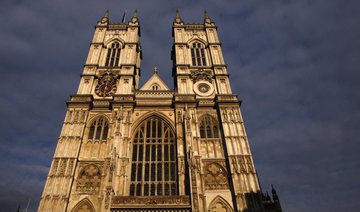
The 900-year-old abbey is the resting place of a pantheon of British historical figures, including kings and queens, political leaders and writers including Geoffrey Chaucer and Charles Dickens.
Hawking was interred in the abbey’s Scientists’ Corner, beneath a stone inscribed: “Here lies what was mortal of Stephen Hawking” — an English translation of the Latin words on the nearby grave of Newton, the 17th-century scientist who discovered the laws of gravity. The stone is also inscribed with one of Hawking’s equations describing the entropy of a black hole.
After the service, Hawking’s words, set to music by Greek composer Vangelis, were being beamed into space from a European Space Agency satellite dish in Spain. Hawking’s daughter, Lucy, said the music would be aimed at “the nearest black hole, 1A 0620-00,” more than 3,000 light years from Earth.


Stephen Hawking’s ashes buried in Westminster Abbey

Stephen Hawking’s ashes buried in Westminster Abbey
- Hawking was interred in the abbey’s Scientists’ Corner, beneath a stone inscribed: “Here lies what was mortal of Stephen Hawking”
- The 900-year-old abbey is the resting place of a pantheon of British historical figures


Congressional Black Caucus and civil rights leaders unite to counter Trump administration’s agenda
- Rep. Yvette Clarke of New York, caucus chair, lamented the concerted effort to roll back civil rights underlying voting access and dismantling of social programs
- Civil rights leaders and Democratic lawmakers have already filed dozens of lawsuits against the administration’s anti-DEI policies
WASHINGTON: The Congressional Black Caucus and major civil rights groups on Tuesday marked Black History Month by relaunching a national plan to mobilize against what they say are the Trump administration’s efforts to weaken legal protections for minority communities.
The assembled leaders voiced outrage over the series of policy actions President Donald Trump has implemented since his return to the White House, as well as the president’s personal conduct, but offered few concrete details about what they’re prepared to do in response to the administration.
“Over the past year, we have seen a concerted effort to roll back civil rights underlying voting access, dismantle social programs and concentrate power in the hands of the wealthy and well-connected, at the expense of our community,” said Rep. Yvette Clarke, D-N.Y., chair of the Congressional Black Caucus.
Clarke, who spoke in front of leaders from major civil rights organizations and her Democratic colleagues, promised the caucus would “legislate, organize, mobilize our communities.” The coalition, which spoke privately before the press conference, discussed how to protect voters ahead of the fall midterms and how to build a policy agenda for Democrats should the party win back power in either chamber of Congress next year.
“It’s an all-hands-on-deck moment, and every tool available to the leadership collectively has got to be deployed to get this thing turned around,” House Minority Leader Hakeem Jeffries, D-N.Y., told The Associated Press after the press conference.
Jeffries did not rule out mass protests, organizing boycotts and further legal action as potential steps organizers may take.
The leaders’ warnings come at a moment when the Trump administration has continued its crusade against diversity, equity and inclusion across the US government, in higher education and the private sector.
At the start of his second term, Trump signed multiple executive orders banning the use of “illegal DEI” in government agencies, as well as organizations that interact with the federal government. Trump has threatened to withhold funds from major companies, non-profit groups and state governments as part of the administration’s efforts to upend DEI.
The administration has also sought to redefine the nation’s culture and how history is taught in museums, classrooms and other educational settings. It also prioritized investigating and prosecuting civil rights cases of potential discrimination against white people through both the Justice Department’s civil rights division and the Equal Employment Opportunity Commission, among other agencies.
Civil rights leaders and Democratic lawmakers have already filed dozens of lawsuits against the administration’s anti-DEI policies.
Locked out of power in both chambers of Congress, Democrats have fewer ways to conduct oversight or limit the actions of the Trump administration. And civil rights leaders, who were largely knocked on the back foot by a deluge of policy changes over the last year, are attempting to regroup ahead of this year’s midterm elections.
Progressive civil rights leaders, who are broadly unhappy with the administration’s entire agenda, have argued that the president’s agenda on immigration, voting rights, the economy and other issues is exploiting hard-won policies that civil rights leaders had, for decades, used to ensure anti-discrimination and economic advancement for Black communities.
“This is about how this administration is using the tools we built as a Black community to ensure that all of our people are protected,” said Maya Wiley, president and CEO of the Leadership Conference on Civil and Human Rights.
Progressive state leaders and civil rights groups have also stepped up their efforts elsewhere. A coalition of state attorneys general and civil rights groups this month launched a coalition to promote DEI and accessibility policies through more aggressive legal action.
“State attorneys general are in a unique position to defend these fundamental rights, and this campaign will ensure everyone is heard and shielded from those who aim to weaken civil rights,” Illinois Attorney General Kwame Raoul said in a statement on Monday announcing the initiative.
The initiative includes Democratic attorneys general from fourteen states District of Columbia, as well as over a dozen civil rights groups from across the country. The group intends to launch inquiries and file lawsuits across the country into instances where, the leaders argue, organizations may be violating anti-discrimination laws in response to the rollback of DEI policies by major companies and the Trump administration.
The effort faces an uncertain and shifting legal landscape.
Federal courts remain divided over the use of race in hiring and anti-discrimination in the workplace. And the conservative-majority on the Supreme Court has ruled against the use of race in college admissions. Several justices have voiced skepticism about how race and other characteristics can be used by government agencies and private institutions, even if a policy was meant to combat discrimination.
On Tuesday, the assembled civil rights leaders repeatedly acknowledged the uphill battle that their movement faced on multiple fronts. Some said that the administration’s policy decisions may set up stark political battles in the coming years.
Marc Morial, president of the National Urban League, said: “We commit today to fight and fight and fight until hell freezes over, and then, I can assure you, we will fight on the ice.”


