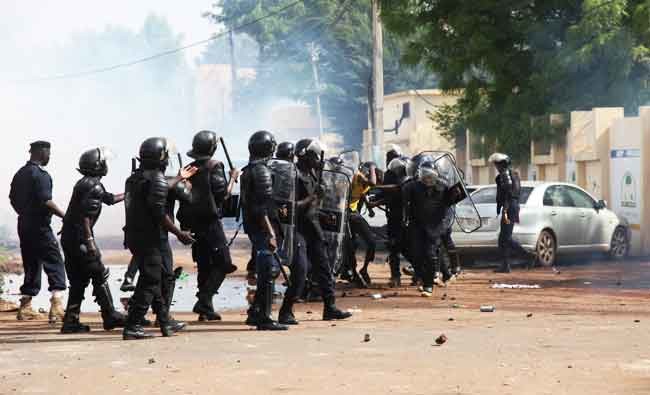
JEDDAH: The Organization of Islamic Cooperation (OIC) expressed its concern over the latest political developments in Mali following the violent events in the capital Bamako, which resulted in the injury of dozens of citizens.
The secretary-general of the OIC, Dr. Yousef bin Ahmed Al-Othaimeen, called on the Malian government and all political components to show restraint.
He called on all the stakeholders to take measures to calm the situation. The OIC chief said peaceful dialogue is the only way to achieve social harmony.
Following the violent incident, UN Secretary-General Antonio Guterres also called for “calm and restraint by all parties,” AFP reported.
Mali is one of the so-called “G5 Sahel” states — along with Burkina Faso, Chad, Mauritania and Niger — which have launched joint operations against militant groups.
Most protests are banned as the nation has lived under a near-constant state of emergency since an attack on a hotel in Bamako in November 2015 left 20 people dead.


Organization of Islamic Cooperation expresses concern over unrest in Mali
Organization of Islamic Cooperation expresses concern over unrest in Mali

- Most protests are banned as the nation has lived under a near-constant state of emergency since an attack on a hotel in Bamako in November 2015 left 20 people dead
- Peaceful dialogue is the only way to achieve social harmony


Saudi defense chief rallies international support amid escalating Iranian strikes
- Iran unleashes wave of drone strikes on Kingdom’s Eastern Province
- Missiles fired at Prince Sultan Air Base intercepted, destroyed
RIYADH: Saudi Defense Minister Prince Khalid bin Salman held separate phone calls with his Turkish, Romanian, and South Korean counterparts as Iranian attacks on Gulf facilities continued on Thursday.
Iran escalated strikes on its Gulf neighbors in retaliation for ongoing US-Israeli attacks on Iranian territory.
After a brief pause Wednesday, drone attacks on Saudi Arabia resumed at 9 p.m., targeting the Eastern Province and the Shaybah oil field in the Empty Quarter. All the drones were stopped, the Saudi Ministry of Defense confirmed.
Missiles aimed at Prince Sultan Air Base in Al-Kharj were also intercepted and shot down, the ministry added.
In his call with Turkish Defense Minister Yasar Guler, Prince Khalid reaffirmed commitment to joint security measures and condemned Iranian aggression.
His conversation with Romanian counterpart Radu Miruta covered regional threats to global stability.
A call with South Korea’s Ahn Gyu-back similarly focused on condemning Iran’s actions and reviewing the broader regional picture.
The crisis traces back to February 28, when US and Israeli forces struck Iran. Tehran has since targeted Gulf states and US-Israeli assets across the region.
Iran has also declared a blockade on energy shipments through the Strait of Hormuz — a critical chokepoint for global oil and gas flows — sending commodity prices surging.