The Islamic Development Bank (ISDB) is rebranding itself as a uniting force in the Muslim world, looking to support students, scientists and entrepreneurs anywhere from Egypt to Malaysia.
The Jeddah-headquartered bank revealed its new green-blue logo on Wednesday — the first rebranding the institution has gone through in its 44-year history — as it looks to modernize its international image and fulfil the sustainable development goals set out by the UN in 2015.
The semi-circle logo is said to be inspired by a Qubba dome, in reference to the Islamic tradition of the bank’s member countries as well as symbolizing a rising sun or “new dawn” for the bank, according to a statement from the ISDB.
“The Islamic Development Bank has been a symbol of trust, credibility, strength and stability for over 44 years, with a proud heritage of providing resources, fighting poverty and restoring dignity in our member countries. As we build on the successes of the past, we must also look to the future,” said Bandar Hajjjar, president of the Islamic Development Bank,in a statement.
Investment in science, technology and education are to play a central part in ISDB’s new focus as the bank looks to equip its member states with the means of driving their own sustainable economic growth.
“(ISBD is looking at) how the bank really wants to provide the right tools to make people in charge of own future,” said Hayat Sindi, chief scientific adviser to the bank’s president.
This could include funding education of the young people in the bank’s member states, where access to schooling and universities might be limited and too expensive, potentially barring young people from finding jobs.
Youth unemployment in Egypt, for instance, reached 34.4 percent last year, according to World Bank data, and dissatisfaction among young people is considered one of the factors leading up to the Arab Spring protests in 2011.
“The way we think about education is different now. Think about the challenges. How I am going to produce changeagents, thinkers, leaders of institutions, and reducing brain drain,” she said.
ISDB signed an agreement last year with the Italy-based World Academy of Sciences to collaborate on ways to fund students and researchers from ISDB member states looking to study science or technology.
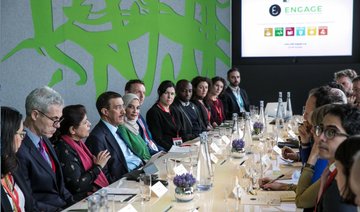
The bank has also launched a digital platform in February — known as Engage — as part of its rebranding process and efforts to support “crucial” new technological and scientific endeavours in the Muslim world, said Sindi.
The platform aims to bring people together from across the world to share ideas and technology know-how in areas such as food security, education, health and water management.
Innovators can be matched up with potential investors and funds, while startups and small companies could use the digital hub to find mentors or access information from universities and policymakers.
Alongside this platform, the bank launched its $500 million Transform Fund in April that will provide seed money for start-ups and SMEs. The bank is currently calling for bids from companies or individuals, with the proposal deadline set for the end of July.
“The whole idea is bringing together the whole scientific community regardless of their nationality. You could be American, you could be from Ghana or Cote D’Ivoire who have have amazing ideas (that are applicable to ISDB member countries),” she said.
The funding can be used to support companies at the very early “proof of concept” stage of development right up to the commercialization of the technology, helping the product or solution to reach the marketplace.
ISDB is also looking to further decentralize its operation away from Jeddah, with plans to officially open a new office in Bangladesh and Egypt in September this year, said Sindi.
The bank works across 57 member countries in four continents. It has operating assets of approximately $16 billion.