LONDON: A British man, who suggested militants should target four-year-old Prince George — destined to be Britain’s future king — pleaded guilty to terrorism offenses on Thursday.
Husnain Rashid, 32, posted information on the Telegram messaging service to encourage extremists to carry out attacks along with information to help them with possible targets such as soccer stadia.
Prosecutors said this included posting a picture of Prince George, son of Queen Elizabeth’s grandson Prince William and his wife Kate and third-in-line to the throne, next to a silhouette of an extremist fighter.
The post included the address of his school in southwest London which he started attending last September and was accompanied with the caption “even the royal family will not be left alone.”
Rashid had initially denied the charges but during his trial at Woolwich Crown Court he changed his plea to guilty, admitting three counts of engaging in conduct in preparation for terrorism and one count of encouraging terrorism, police said.
He will be sentenced on June 28.
Prosecutors said posts by Rashid, from Nelson in northwest England, also included a street map of New York’s Sixth Avenue with the caption “New York Halloween Parade. Have you made your preparations? The Countdown begins.”

Man who encouraged attack on UK’s Prince George admits terrorism charges
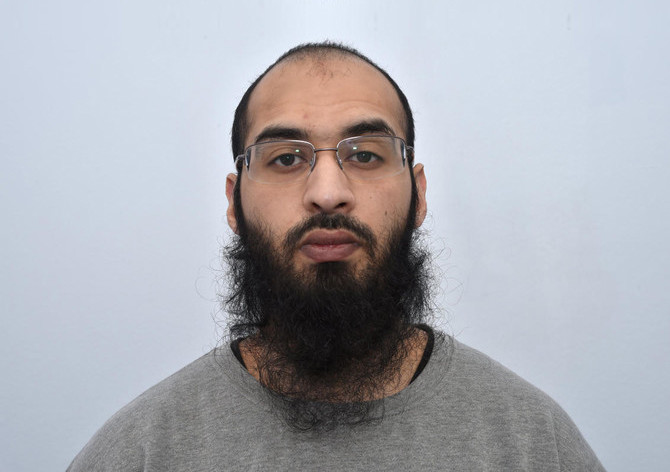
- Husnain Rashid, 32, posted information on the Telegram messaging service to encourage extremists to carry out attacks along with information to help them with possible targets.
- Rashid had initially denied the charges but during his trial at Woolwich Crown Court he changed his plea to guilty.
Pakistan wary of militant attacks after Afghanistan air strikes
- Pakistan boosts security, arrests suspects after air strikes in Afghanistan
- Intelligence warns of potential surge in terror attacks in Pakistan
ISLAMABAD: Pakistan has boosted security and arrested dozens of suspects as it fears rising wave of militant attacks following its air strikes in Afghanistan, Pakistan’s Junior Interior Minister said on Wednesday. “Our forces are on high-alert to combat any attacks,” the minister, Talal Chaudhry, told Reuters. “You know the militants always react whenever we go after their hideouts in Afghanistan.” Pakistan carried out air strikes on targets in Afghanistan over the weekend on what it said were militant targets responsible for a spate of recent suicide bombings on Pakistani soil.
Islamabad blames Kabul for allowing the fighters to use Afghanistan as a safe haven. Kabul denies the charges, saying the militancy is Pakistan’s internal problem.
Pakistani and Afghan forces exchanged fire along their border on Tuesday, with each side accusing the other of initiating the clash.
There have also been a number of militant attacks, including the ambush of a police vehicle in Kohat city in Pakistan’s northwestern Khyber Pakhtunkhwa province in which five officers and two civilians were killed and a suicide bombing at a checkpoint that killed two policemen.
Chaudhry said the retaliatory attacks by militants proved Islamabad’s case that they had linkages in Afghanistan, adding that the forces had averted several attacks in recent weeks and arrested a number of suspects, including Afghans.
Security forces have accelerated search and intelligence based operations and “have arrested dozens of suspected militants, their handlers and their facilitators,” the minister said.
Multiple sources added that Pakistan’s intelligence agencies have issued alerts for a possible surge in terror attacks in Pakistan in coming days.
Urban centers, markets, security forces and places of worship could be possible targets, according to the alerts, the sources said.
“We have been given a strong caution about more terror attacks in our official communications. In this regard, we have almost doubled our search operations across Pakistan,” said an intelligence official.
Another intelligence official added the provinces of Khyber Pakhtunkhwa and Balochistan are already under terror attacks and “we fear that Afghanistan will retaliate against Pakistan through terror networks in Punjab and Sindh as well.”
Militancy is a growing problem for Pakistan with the number of attacks rising every year since 2022, according to Armed Conflict Location & Event Data (ACLED), a global monitoring organization.
Data from ACLED shows attacks in Pakistan rose nearly fourfold to 2,425 in 2025 from 658 in 2022 and over the same period, TTP attacks increased more than seven-fold to 838 from 118.
Islamabad blames Kabul for allowing the fighters to use Afghanistan as a safe haven. Kabul denies the charges, saying the militancy is Pakistan’s internal problem.
Pakistani and Afghan forces exchanged fire along their border on Tuesday, with each side accusing the other of initiating the clash.
There have also been a number of militant attacks, including the ambush of a police vehicle in Kohat city in Pakistan’s northwestern Khyber Pakhtunkhwa province in which five officers and two civilians were killed and a suicide bombing at a checkpoint that killed two policemen.
Chaudhry said the retaliatory attacks by militants proved Islamabad’s case that they had linkages in Afghanistan, adding that the forces had averted several attacks in recent weeks and arrested a number of suspects, including Afghans.
Security forces have accelerated search and intelligence based operations and “have arrested dozens of suspected militants, their handlers and their facilitators,” the minister said.
Multiple sources added that Pakistan’s intelligence agencies have issued alerts for a possible surge in terror attacks in Pakistan in coming days.
Urban centers, markets, security forces and places of worship could be possible targets, according to the alerts, the sources said.
“We have been given a strong caution about more terror attacks in our official communications. In this regard, we have almost doubled our search operations across Pakistan,” said an intelligence official.
Another intelligence official added the provinces of Khyber Pakhtunkhwa and Balochistan are already under terror attacks and “we fear that Afghanistan will retaliate against Pakistan through terror networks in Punjab and Sindh as well.”
Militancy is a growing problem for Pakistan with the number of attacks rising every year since 2022, according to Armed Conflict Location & Event Data (ACLED), a global monitoring organization.
Data from ACLED shows attacks in Pakistan rose nearly fourfold to 2,425 in 2025 from 658 in 2022 and over the same period, TTP attacks increased more than seven-fold to 838 from 118.
© 2026 SAUDI RESEARCH & PUBLISHING COMPANY, All Rights Reserved And subject to Terms of Use Agreement.