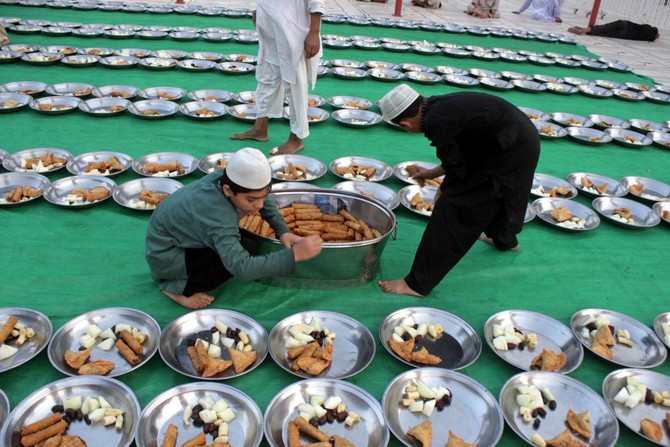
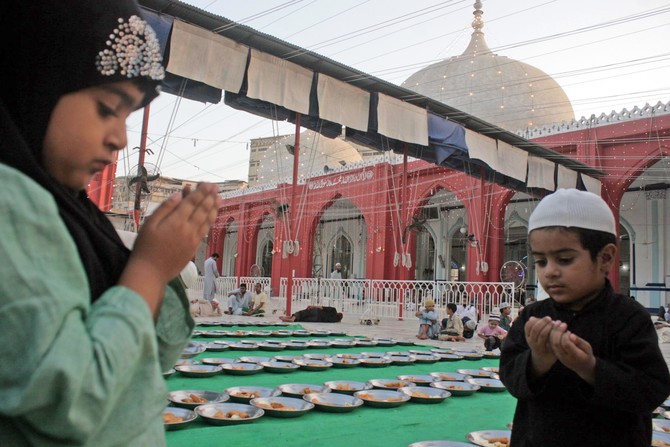
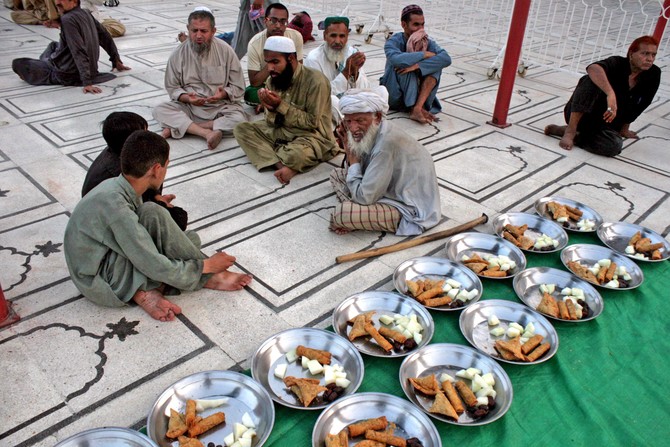
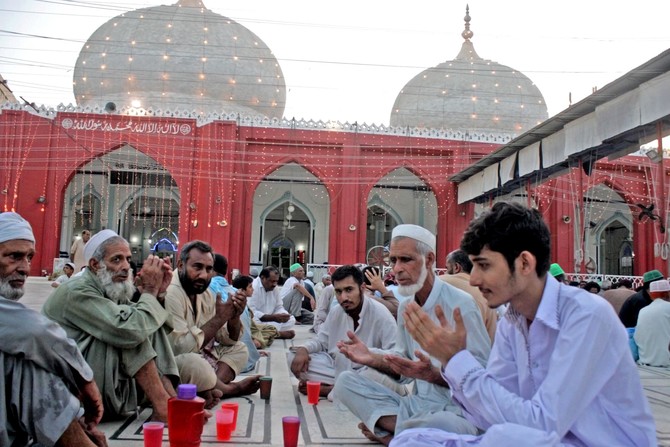
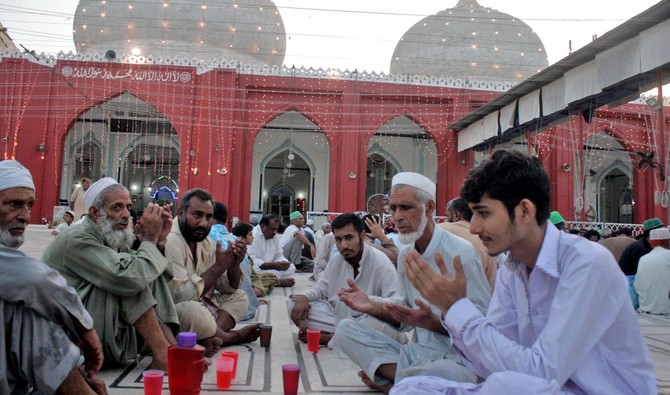
KARACHI: This tradition began 70 years ago. Every year, during the Muslim fasting month of Ramadan, a group of volunteers at Karachi’s Grand Memon Masjid arrange iftar-dinner for nearly 3,000 people every day.
Seven decades ago, this act of generosity was carried out on a more modest scale by people who prayed at the mosque, situated in the Bolton Market area, where dwellers from across the city gather these days to shop.
Riaz Ali Qadri, who is part of the management team that arranges the grand iftar, told Arab News that local shopkeepers, customers, laborers and other passers-by come to the mosque for the end-of-the-day Ramadan feast.
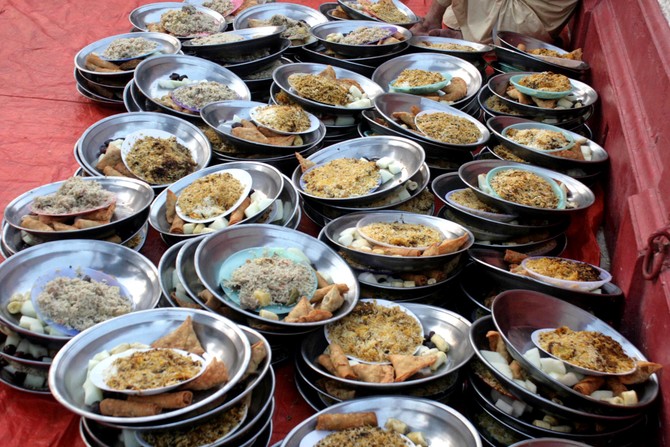
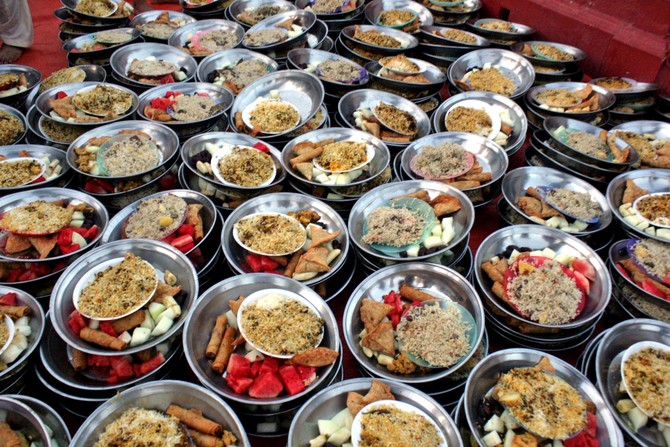
“Some people, who came here to offer their salat (prayers), conceived the idea of collective iftar soon after the independence. They started offering food to others as well,” Qadri said, adding that the gathering grew with the passage of time and more than 450 platters are now prepared and served to people every day.
About 12 people start arranging for the iftar soon after the noon prayer. Qadri said the management of the iftar was separate from the management of the mosque, adding that the former did not accept money from donors.
“Initially, the management used to do it from its own pocket. However, when we need donors now, we ask them to pay the vendors directly,” Qadri said.
He said there used to be a collective prayer before iftar, which was led by an elderly figure who died last year. Now people pray for their well-being individually.
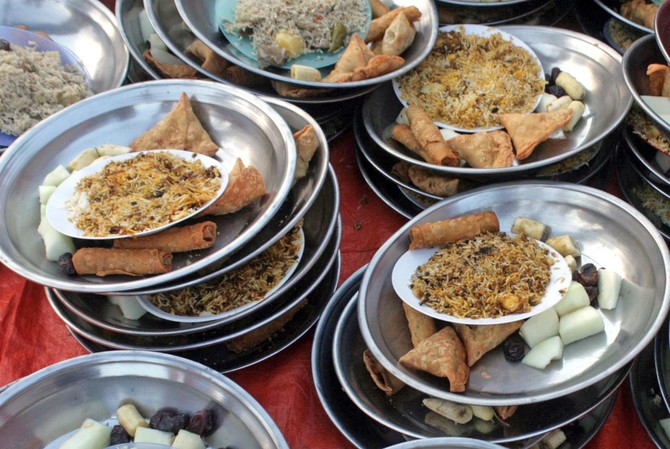
“One platter contains dates, fruits, samosas, chicken rolls and pakoras,” he said. “Water and soft drinks are also served to people, who can choose from different rice dishes as well.”
According to the iftar management, these items are bought from different vendors that guarantee quality and taste.
“Today is my first iftar at this place,” said Dost Muhammad, a resident of Baldia Town, who came to the area for Eid shopping. “The arrangement was good, and I felt totally at home.”


Karachi’s old Memon mosque continues to offer grand iftar

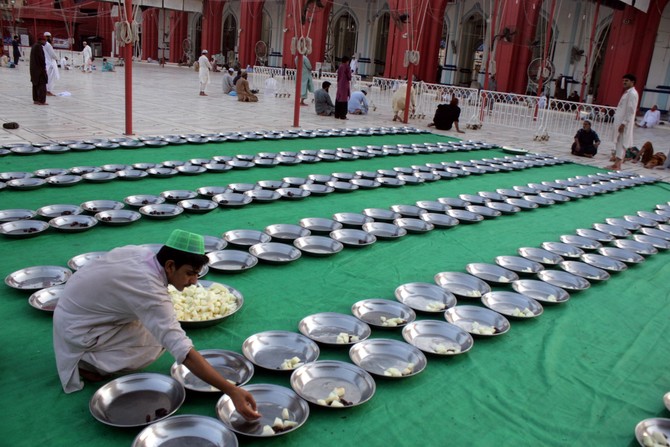
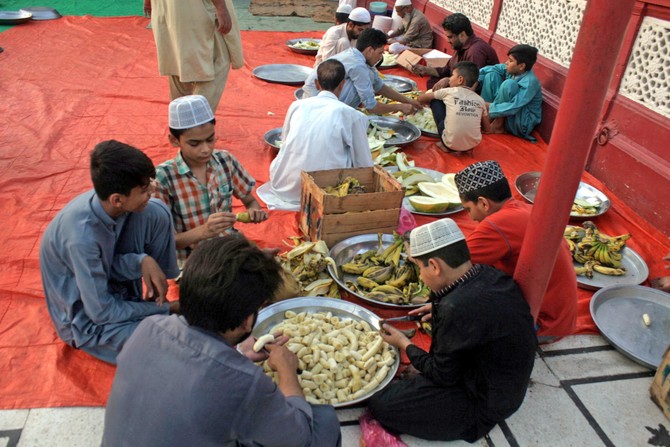
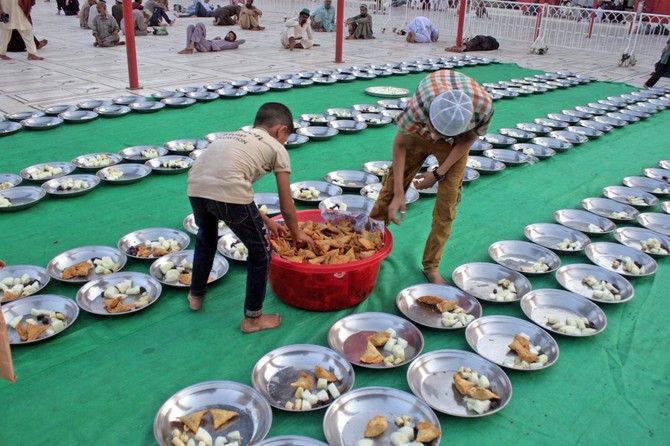
Karachi’s old Memon mosque continues to offer grand iftar

- Seven decades ago, the act of generosity was carried out on a modest scale by people who came to the mosque to offer their prayers
- More than 3,000 people benefit from the end-of-the-day Ramadan feast at the mosque


Where We Are Going Today: Lahori Village
- While it is not a hard-and-fast rule, I often happily find that the simpler a restaurant presents itself to customers, the better the food
RIYADH: Sometimes it seems like the gaudiness of a restaurant’s interior is inversely proportional to the quality of the food.
That is why when I am dragged along to an eatery where the staff are dressed in ill-fitting waistcoats, where oversized chandeliers dangle precariously above diners, where faded tablecloths clash with faux vintage wallpaper, my expectations of enjoying a quality meal plummet.
While it is not a hard-and-fast rule, I often happily find that the simpler a restaurant presents itself to customers, the better the food.
These are my favorite kinds of restaurants, the ones that let the food speak for itself.
Lahori Village in Riyadh’s King Fahd district fits comfortably into this second category.
Though clean and comfortable, it is an unfussy establishment with few frills that does one thing very well: serve hearty, authentic and delicious Pakistani cuisine.
The mutton karahi is swimming in flavor — soft delectable chunks of meat in a rich sauce with a ginger tang.
The freshly baked garlic naan has a perfect hint of crunch giving way to soft dough perfect for soaking up a sauce.
The special fish barbecue is another highlight, with expertly balanced spice and sweetness.
Not every dish is available every day, so if you are after something in particular make sure to check the menu ahead of time.
But that limitation does not seem to put off customers, the place has been bustling with activity every time I have visited.
The cool kheer was a fantastic way to close off the meal — a light, sweet offering that leaves little to be desired.
And in a city rife with eye-watering prices, Lahori Village is a welcome respite, with the bill unlikely to upset most diners.
It is an all-round honest offering to the punters of Riyadh and well worth a visit.