LONDON: Oil prices hit $80 a barrel on Thursday for the first time since November 2014 on concerns Iranian exports could fall, reducing supply in an already tightening market.
Brent crude futures hit $80 and stood up 57 cents at$79.85 per barrel at 0955 GMT.
US West Texas Intermediate (WTI) crude futures were up 64 cents at $72.13 a barrel, also their highest since November 2014.
The prospects of a sharp drop in Iranian oil exports in the coming months due to renewed US sanctions following President Donald Trump’s decision to withdraw from an international nuclear deal with Tehran has lifted oil prices in recent weeks.
France’s Total on Wednesday warned it might abandon a multi-billion-dollar gas project in Iran if it could not secure a waiver from US sanctions, casting further doubt on European-led efforts to salvage the nuclear deal.
“The geo-political noise and escalation fears are here to stay,” said Norbert Rücker, Head of Macro & Commodity Research, at Swiss bank Julius Baer. “Supply concerns are top of mind after the United States left the Iran nuclear deal.”
Global inventories of crude oil and refined products dropped sharply in recent months due to robust demand and production cuts by the world’s top producing countries.
Oil stocks were expected to drop further as peak summer driving season nears, offsetting increases in US shale output, said analysts at Bernstein.
“While the sharp rise in US production and rig count has raised questions on the sustainability of inventory draws through 2018, we believe that inventories will continue to draw as we enter the summer driving season in 2018,” they said.
Several banks have in recent days raised their oil price forecasts, citing tighter supplies and strong demand.
But high oil prices could hit consumption, the International Energy Agency warned on Wednesday, lowering its global oil demand growth forecast for 2018 to 1.4 million from 1.5 million barrels per day (bpd).
Asia’s demand is at record highs and with rising prices its crude could cost $1 trillion this year, about twice what it paid during the market lull of 2015/2016.
The IEA said global oil demand would average 99.2 million bpd in 2018, although US bank Goldman Sachs said consumption would cross 100 million bpd “this summer.”
Leading production increases is the United States, where crude output
Goldman Sachs, though, said even with a slowdown in demand and soaring US output, global oil markets would remain tight.
“US shale cannot solve the current oil supply problems,” it said, arguing that US oil would not be sufficient to offset production losses from Iran, Venezuela and Angola.
Goldman also said the tight market left “room for OPEC to exit (its production cuts) without significant price impact.”


![]()
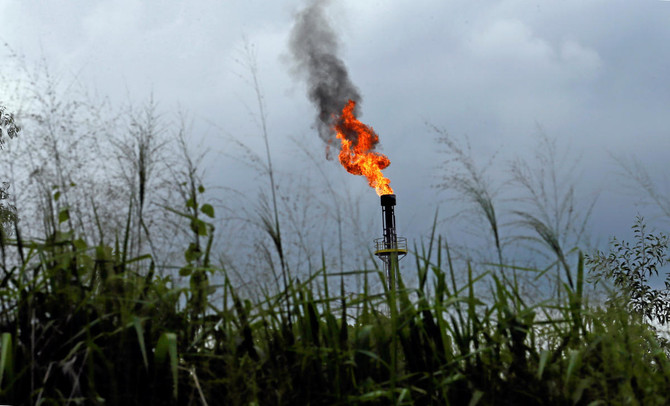
Oil hits $80 a barrel on concerns about Iran supply
Oil hits $80 a barrel on concerns about Iran supply
- As a result of its surging production, US crude is increasingly appearing on global markets
- Commodity brokerage Marex Spectron said that the surge in US supplies was a “strongly price-bearish development”

Latest updates





© 2026 SAUDI RESEARCH & PUBLISHING COMPANY, All Rights Reserved And subject to Terms of Use Agreement.