

Large parts of Pakistan hit by power cut

A man uses battery powered light while working at a shop during a power breakdown in Karachi, Pakistan on May 16, 2018. (REUTERS)
Updated 16 May 2018
Follow

Large parts of Pakistan hit by power cut

ISLAMABAD: A power cut hit large part of Pakistan on Wednesday, suspending work at factories and businesses in its industrial heartland and highlighting the challenges successive governments have faced in getting to grips with chronic power shortages.

The power cut could play into politics in the run-up to a general election, expected in July, given that the ruling Pakistan Muslim League-Nawaz (PML-N) party, had made ending power blackouts a central promise in its last election campaign.

Zafar Yab Khan, a spokesman for the ministry of energy, said the blackout had hit most of eastern and northern Pakistan after a major section of the national grid "tripped," or suddenly shut down. "Due to tripping of a major plant, the north system is off," Khan said.

He said the cause was not known but was being investigated.

Khan said the problem affected Khyber Pakhtunkhwa province in the northwest and Punjab in the east, Pakistan's most populous province and its industrial and agricultural heartland.

Power in the south was not interrupted.

Punjab's capital, Lahore, was among the major cities affected. The power was also out in the national capital, Islamabad.

Khan said it was hoped power would be restored soon with "gradual restoration of grids and feeders."

Media showed pictures of people sweltering at the hottest time of the year in markets and offices.

The ruling party won the last election, in 2013, vowing to end power outages before the next polls.

Power cuts and scheduled outages, known as load shedding, in urban areas have been sharply reduced from about 12 hours a day previously to only occasional outages now.

Pakistan and Morocco plan permanent defense framework, military training cooperation

Updated 5 sec ago
Follow

Pakistan and Morocco plan permanent defense framework, military training cooperation

  • Defense Minister Khawaja Asif is on a two-day official visit to Morocco where he will meet his counterpart
  • Talks come as Muslim countries have expressed growing interest in developing defense ties with Pakistan

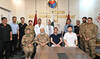
ISLAMABAD: Defense Minister Khawaja Asif on Tuesday said Pakistan and Morocco will establish an institutional framework for permanent defense ties, paving the way for future cooperation in military training.

Asif is undertaking a two-day visit to Morocco from Jan. 12-14 to hold meetings with Morocco’s Minister of State for National Defense Administration Abdel Latif Loudayi. The visit comes as several Muslim nations have expressed interest in defense agreements with Pakistan following its performance in the brief conflict with India last year.

According to a social media post shared by Asif, Pakistan and Morocco are expected to sign a memorandum of understanding (MoU) to enhance defense cooperation during his visit.

“Under the agreement, an institutional framework will be established for permanent defense links,” he announced in a post on Instagram.

“The MoU will also open new avenues for future collaboration across various defense and security sectors, including military training, exchange of experiences, capacity building, and other joint initiatives.”

https://www.instagram.com/reel/DTcZYrwgvVY/? 

Asif added that he would also lead delegation-level talks aimed at enhancing cooperation in areas of mutual interest between Pakistan and Morocco.

Pakistan and Morocco share longstanding friendly relations, with strong diplomatic, defense and economic ties reinforced by periodic high-level visits and bilateral agreements.

In April last year, the Pakistani and Moroccan armies launched the third edition of their joint bilateral military exercise to enhance professional skills of soldiers and strengthen defense ties.

In November 2024, Moroccan Air Force Inspector Major General Mohammed Gadih met Pakistan’s Chief of Air Staff, Air Marshal Zaheer Ahmed Baber Sidhu to express interest in collaborating with the Pakistan Air Force in the aerospace sector.