Iran minister on diplomatic tour to save nuclear deal

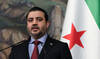
Iran's Foreign Minister Mohammad Javad Zarif. (AP)
Updated 12 May 2018
Follow

Iran minister on diplomatic tour to save nuclear deal

  • The Syrian Observatory of Human Rights said Saturday that 11 Iranians were among the pro-regime fighters killed in strikes by Israel
  • Zarif's delicate diplomatic mission was complicated by reports of clashes between Iranian and Israeli forces in Syria on Thursday

TEHRAN: Iran's foreign minister was due to leave Saturday for a whirlwind diplomatic tour as world leaders scramble to salvage something from the wreckage of a landmark nuclear deal in the wake of Washington's withdrawal.
Mohammad Javad Zarif's tour starts two days after unprecedented Israeli strikes in Syria which a monitor said killed at least 11 Iranian fighters, triggering fears of a broader conflict between the two arch-enemies.
He will visit Beijing, Moscow and Brussels, a spokesman said, holding meetings with all of the remaining parties to the 2015 agreement.
Before leaving, Zarif published a government statement on his Twitter page, slamming the "extremist administration" of US President Donald Trump for abandoning "an accord recognised as a victory of diplomacy by the international community".
It reiterated that Iran was preparing to resume "industrial-scale" uranium enrichment "without any restrictions" unless Europe provided solid guarantees that it could maintain trade ties despite renewed US sanctions.
Zarif's delicate diplomatic mission was complicated by reports of clashes between Iranian and Israeli forces in Syria on Thursday.
The Syrian Observatory of Human Rights said Saturday that 11 Iranians were among the pro-regime fighters killed in strikes by Israel, which has vowed to prevent Iran gaining a military foothold in neighbouring Syria.
"Six Syrian soldiers and 21 foreign fighters, including 11 Iranians" were among the dead, said Observatory director Rami Abdel Rahman.
Tehran, which has sought to avoid an escalation in regional conflict that could alienate its European partners, has not commented on whether its forces were hit.
Israel and its allies have blamed the Iranian Revolutionary Guards for initiating Thursday's exchange by launching missiles into the occupied Golan Heights.
The White House backed Israel's claims, accusing Iran of "reckless actions" that posed a "severe threat" to stability in the Middle East.
Iran denies that version of events, saying the Israeli strikes were launched on "invented pretexts".
Meanwhile, European diplomats in Tehran fumed that Trump's decision to withdraw from the nuclear deal could undermine years of patient work to restore commercial and diplomatic ties with the Islamic Republic.
"Since the signing of the JCPOA (nuclear deal), we have gone from an atmosphere like a gold rush, to one of utter depression," said a Western trade diplomat on condition of anonymity.
"We are waiting now for how the decision-makers in the European Union will react. If the EU leans towards accommodating the US, all the progress we have made since 2015 will be lost."
But she emphasised that many of the problems began long before Trump's move last Tuesday.
"Decisions on the Iranian side took longer than expected, international banks were reluctant to work with Iran and the recent decline in the value of (Iran's currency) made international business even more difficult," she said.
Iranian hardliners -- who have long opposed President Hassan Rouhani's moves to improve ties with the West -- are already mobilising against the efforts to save the nuclear deal.
"Officials shouldn't trust France and Britain. They will never abandon the US for us," said housewife Poormoslem at a protest rally against Trump on Friday.
A photo on the official Instagram site of supreme leader Ayatollah Ali Khamenei showed him reading a Farsi translation of Michael Wolff's scabrous account of the Trump White House, "The Fire and the Fury", quickly picking up more than 100,000 likes.
Khamenei said this week he is highly doubtful that Europe will provide the "real guarantees" needed for Iran to stay in the nuclear deal.
But analysts said Iran was determined to maintain the moral high ground in the coming weeks.
"For the first time, Iran has the chance to show the world they are not the rogue nation they are always presented as, that they negotiated in good faith and keep to their commitments," said Karim Emile Bitar of the Institute for International and Strategic Studies in Paris.
The challenge for Rouhani is to maintain his diplomatic efforts in the face of mounting challenges at home, where Iranians were already suffering high unemployment and inflation before Trump's decision.
Many say sanctions allow the government to blame outsiders for its own bad decisions.
The Western trade diplomat gave the example of Iran's recent restrictions on transferring funds to the EU -- an effort to control the rapid slide of the rial -- that caused huge problems for importers.
"It's really annoying that the Iranian government is never blamed for the really bad decisions they have taken lately concerning business, and only the sanctions are blamed," she said.


Aidarous Al-Zubaidi: Fugitive at large

Updated 6 sec ago
Follow

Aidarous Al-Zubaidi: Fugitive at large

  • Yemen appoints committee to probe allegations against former STC leader after the group’s collapse and his reported flight from the country
  • Preliminary findings accuse Al-Zubaidi of exploiting public office for personal gain, fueling political division and instability in south

LONDON: A special committee formed on presidential authority by Yemen’s public prosecutor’s office has made a series of findings against Maj. Gen. Aidarous Al-Zubaidi, the sacked vice-president of the country’s Presidential Leadership Council (PLC).
Al-Zubaidi, who is accused of high treason and other crimes against the state, is currently on the run.
Arab News has seen a copy of preliminary findings by the committee which reveal that Al-Zubaidi is accused of abuses of power including corruption, land grabbing and oil trading for personal gain.
On Jan. 7, the PLC issued a decree revoking Al-Zubaidi’s membership of the PLC and accusing him of high treason and other serious crimes, including forming an armed gang, killing military officers and soldiers, and undermining the country’s sovereignty.
At the same time it authorized the public prosecutor’s office to form a special committee to investigate allegations against Al-Zubaidi, empowering it to summon and arrest individuals, gather evidence and take necessary actions according to the law, with a mandate to complete the investigation quickly and to provide periodic reports to the PLC.
The committee’s preliminary findings identify a series of serious allegations against Al-Zubaidi, who is said to be responsible for multiple abuses “which have contributed to creating a state of political and popular division in the southern governorates.”
Al-Zubaidi is the leader of the Southern Transitional Council (STC). On Jan. 7, Al-Zubaidi was due to attend talks in Riyadh with a 50-member delegation from the STC, but at the last minute, he fled instead.
The committee’s findings include allegations that Al-Zubaidi is alleged to have seized large plots of land, including in the Aden Free Zone, on Al-Ummal Island, in Bir Fadl and the Ras Omran area.
The committee has also uncovered allegations that pressure was exerted on the Yemen Petroleum Company and its director, Tareq Al-Walidi, to prevent the import of fuel except through a company affiliated with Al-Zubaidi’s brother-in-law, Jihad Al-Shoudhabi, and the Minister of Transport, Abdul Salam Humaid.
For nearly two years, it is claimed, Al-Shoudhabi has been the sole supplier, earning large profits that have gone to Al-Zubaidi’s treasury.
The report also identifies commercial companies owned by Al-Shoudhabi and, “behind him,” it is claimed, Al-Zubaidi. Two are named in the report: Alahlia Exchange &  Transfers Company and Arabian Furniture Center, one of Yemen’s largest furniture companies. Both are headquartered in Aden.
All these and other “deeply regrettable acts of seizure, plunder, and financial and administrative corruption,” the committee says, “have had serious repercussions in southern circles and were a direct cause of southern division and the emergence of many grievances.”
On Thursday, a spokesman for the Saudi-led coalition in Yemen said there was reliable intelligence indicating that on the night of Jan. 7, Al-Zubaidi had departed from Aden on a ship bound for Somaliland — probably the port of Berbera, 260 kilometers south across the Gulf of Aden.
From there he is believed to have been flown on a cargo aircraft to Abu Dhabi, capital of the UAE, via Mogadishu, the coastal capital of Somalia, a flight of about 2,600 km.
Some of the crimes of which Al-Zubaidi is accused relate to the largescale military offensive launched by STC forces across southern Yemen in December.
“We know that the Southern Transitional Council worked to storm the eastern cities militarily,” a source close to the Yemeni government told Arab News.
“The pattern and scale of grave human-rights violations and acts of security and military escalation witnessed by the eastern cities in the south of the homeland — Hadhramout, Al-Mahra and Shabwah — as a result of the military incursion by the forces of the Transitional Council during the monitoring period extending from Dec. 3, are considered heinous crimes against the Yemeni people.”
According to the Yemeni Ministry of Legal Affairs and Human Rights, a total of 2,358 individual offences have been identified, including cases of extrajudicial killing and physical injuries, arbitrary arrests and captivity, enforced disappearance and displacement, and the destruction and looting of public and private property.
Backed by Saudi airstrikes, in the first week of January, the Yemeni government quickly regained the captured territories, Al-Zubaidi was sacked from the PLC and charged with treason, and the UAE announced it would withdraw its remaining troops from the country.
Following Al-Zubaidi’s disappearance on the eve of the planned talks in Riyadh, Saudi Arabia has accused the UAE of helping to smuggle the wanted man out of the country.
The same source told Arab News there is evidence that Al-Zubaidi “was receiving YER 10 billion ($42 million) monthly … deducted from the aid that Yemen was receiving.
“While Al-Zubaidi was receiving those funds, Yemeni citizens had not been receiving their lawful salaries for years, including the diplomatic corps.”
Last Thursday, Mohammed Al-Jaber, the Saudi ambassador to Yemen, announced that the Kingdom would assume responsibility for the salaries of Yemeni state employees, including military personnel, giving $90 million to cover salaries for two months.
On Friday evening, Al-Zubaidi, his whereabouts still unconfirmed, made his first public statement since his disappearance 10 days ago.
“We will no longer accept any solutions that diminish our rights or impose an unacceptable reality upon us,” he wrote in a social media post that left no doubt about his determination to undermine the internationally recognized government of Yemen.
He added: “I pledge to you ... that we will continue together until we achieve the desired national goal.
“With your determination, we will prevail. With your unity, the South will be protected, and with your will, the future state will be established.”