



BEIRUT: Hezbollah supporters ran rampant through the streets of Beirut on Monday evening after the militant group’s leader Hassan Nasrallah hailed a “great victory” in parliamentary elections.
Videos and photographs of supporters of the Iran-backed group, and Lebanon’s other main Shiite party Amal, showed motorbikes and cars parading their flags through the capital.
One image showed a Hezbollah flag attached to a statue of former Prime Minister Rafiq Hariri, who was assassinated in 2005, allegedly by members of the group.
The image sparked outrage on social media. Rafiq Hariri was the father of the current Prime Minister, Saad.
In his speech, Nasrallah declared a “great political and moral victory for the resistance option that protects the sovereignty of the country.”
Supporters chanted “Beirut became Shiite” as they weaved between cars after the rally.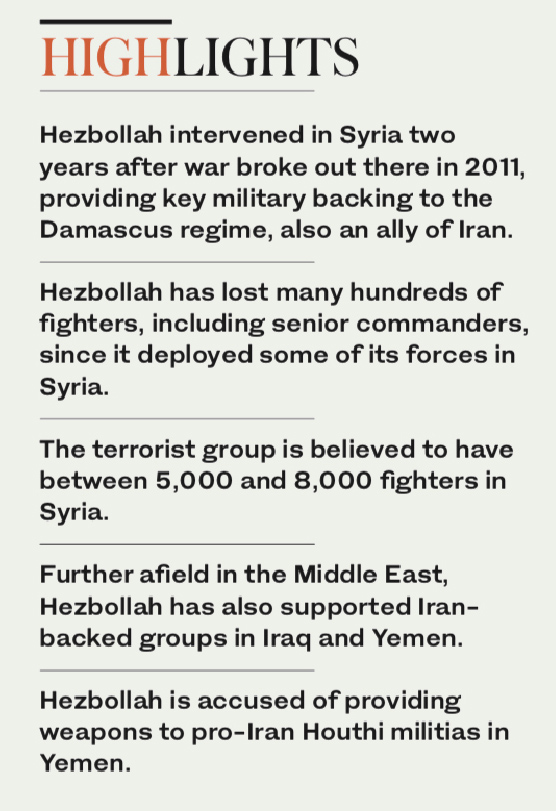
Results announced Monday night revealed the country’s first election in nine years is a strong victory for Hezbollah and its allies.
The opposing coalition, led by Hariri, which has disintegrated in recent years, suffered heavy losses.
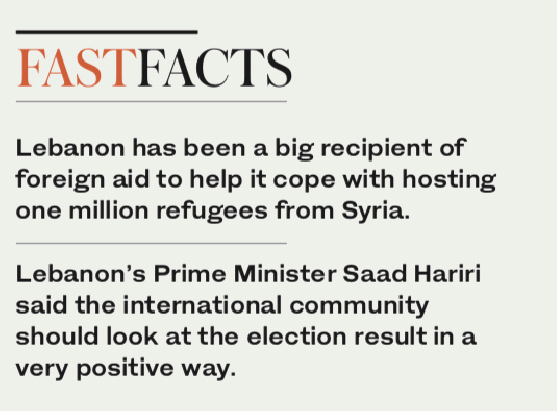
Earlier, Hariri, smarting from the bloody nose handed to his party, the Future Movement, attempted to set out his position for talks to form a government.
He said he would still work with Michel Aoun, the Christian president aligned with Hezbollah, “because this alliance is achieving stability in the country.”
He added: “If the conditions of my nomination to head the government do not suit me, I would certainly decline.”
Hariri’s Sunni bloc won 21 seats, compared with 33 in the 2009 election, leaving him weakened but still likely to hold on to his job which, under Lebanon’s confessional system, is allocated to a Sunni.
“We were hoping to achieve a better result and a bigger bloc but the Future Movement faced a scheme to eliminate it from political life,” Hariri said. “I extend my hand to all those who want stability, the strengthening of the economy…and the improvement of the Lebanese living situation. I am unbreakable, and Lebanon can only be governed by all its components.”
Hezbollah and Amal retained their 27 seats in the 128 member parliament, according to the unofficial results. A coalition that includes the two groups and their allies won more than half of all seats.
Hariri’s forlorn press conference included the revelation that the number of Future Movement seats in Beirut had dropped from 11 to five.
The announcement of official results had been promised in the morning but was delayed for logistical reasons, sparking concern among some political forces over the increased chance of electoral fraud.
Basic services
The turnout was a disappointing 49 percent, down from 54 percent in 2009. Politicians failed to persuade the Lebanese people to go the ballot boxes, with many jaded by the deeply divided political forces, sects and clans that hold sway in the country, and the ineffectiveness of recent administrations in providing the basic services of government.
 A preliminary reading of the results showed the Christian Lebanese Forces, which is anti-Hezbollah, had doubled its number of MPs from eight to 16, making it the party with the biggest gain in seats in the election.
The Christian Free Patriotic Movement, the party of President Aoun, which is allied with Hezbollah, also increased the number of its seats, from 20 to 23.
The Parliament lost some veteran legislators, including Boutros Harb, Nicolas Fattouche and Ghassan Moukheiber.
The fall of Harb, and of another politician, Faris Saeed, were considered major losses for what is left of Hariri’s March 14 coalition.
Hezbollah lost two seats in the Baalbek-Hermel constituency.
The election also resulted in the entry to the Parliament of the president’s sons-in-laws: Gibran Basil and Shamil Roquez.
Of the 62 new MPs expected to enter parliament, 12 were Sunni, nine Shiite and 19 Maronite.
The election also marked the return to Parliament of supporters of the Syrian regime, raising concerns that with Bashar Assad’s position in Damascus now more secure, his government would revert to trying to influence the administration in Lebanon.
The number of elected women increased from four to six, including, for the first time, one from the Shiite community.
On Sunday night, Beirut’s streets experienced two waves of violence as dozens of motorbikes drove through the streets flying Amal and Hezbollah banners. Supporters shouted abusive chants against senior Beirut figures. They also tore up pictures of President Hariri in some areas.
Shooting incidents were also reported in areas popular with supporters of the Future Movement and of the Association of Islamic Charitable Projects.
A young man was killed in Akkar in northern Lebanon by stray bullets fired in the air in celebration. A woman was also hit by a stray bullet in Zgharta.
French Ambassador to Lebanon Bruno Fuchs congratulated the Lebanese “for their performance of the national duty during the parliamentary elections.”
Iranian state television quoted Foreign Ministry spokesman Bahram Ghasemi as saying: “Tehran respects the Lebanese people’s choices in the parliamentary elections and we are ready to work with the government elected by the majority.”
And in a sign that Hezbollah’s strengthened position could raise tensions between powers in the region, Israeli Education Minister Naftali Bennett said: “The gains of Hezbollah show that there is no difference between the state and the Shiite group backed by Iran. Israel should not differentiate between them in any future war.”
On Monday evening, supporters of an independent candidate forecast to win a seat gathered outside the Interior Ministry to protest what they said were clear signs of fraud to deny her victory.
Joumana Haddad, a novelist and candidate on the independent Kulna Watani list was forecast to win but TV channels stopped reporting her victory on Monday, AP reported.


