


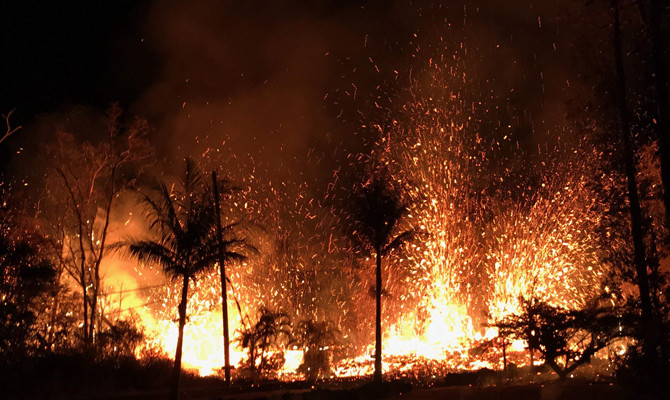
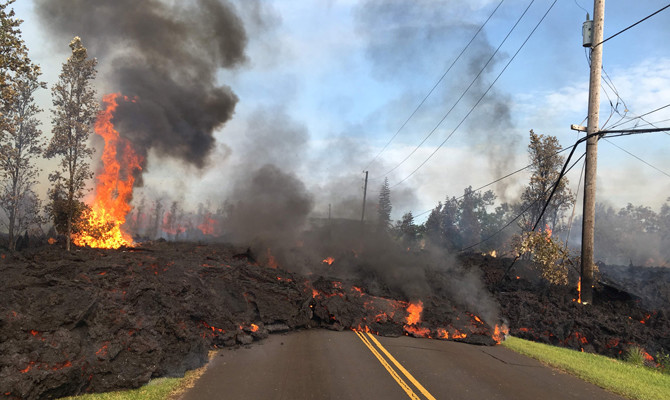
PAHOA, Hawaii: The number of homes destroyed by Hawaii’s Kilauea volcano jumped to 21 Sunday as scientists reported lava spewing more than 200 feet (61 meters) into the air.
Some of the more than 1,700 people who evacuated prepared for the possibility they may not return for quite some time.
Hawaii officials said the decimated homes were in the Leilani Estates subdivision, where molten rock, toxic gas and steam have been bursting through openings in the ground created by the volcano. Officials updated the number of lost homes after an aerial survey of the subdivision.
“That number could change,” Hawaii County spokeswoman Janet Snyder said. “This is heartbreaking.”
Amber Makuakane, 37, a teacher and single mother of two, said her three-bedroom house in Leilani Estates was destroyed by lava.
The dwelling was across from a fissure that opened Friday, when “there was some steam rising from all parts of the yard, but everything looked fine,” Makuakane said.
On Saturday morning, she received alerts from her security system that motion sensors throughout the house had been triggered. She later confirmed that lava had covered her property.
“They don’t really understand,” she said about her children. “My son keeps asking me, ‘Mommy when are we going to go home?’“
Makuakane grew up in the area and lived in her house for nine years. Her parents also live in Leilani Estates.
“The volcano and the lava — it’s always been a part of my life,” she said. “It’s devastating ... but I’ve come to terms with it.”
There was no indication when the lave might stop or how far it might spread.
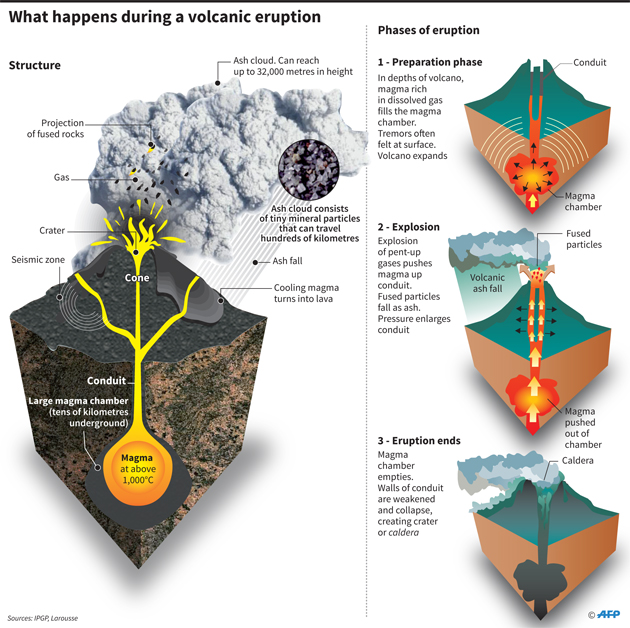
“There’s more magma in the system to be erupted. As long as that supply is there, the eruption will continue,” US Geological Survey volcanologist Wendy Stovall said.
Traditional Hawaiian beliefs say it depends on Pele, the volcano goddess who is said to reside in Kilauea.
“You have to ask Pele,” Steve Clapper said when asked whether he had any idea when he’d return to his Leilani Estates home.
Clapper had to put his ailing 88-year-old mother into a car and leave shortly after hearing an ominous rumbling behind the house. He believes he saw its roof still standing in photos of the area but can’t be sure. Still, the California native was sanguine as he assessed his situation.
“What can you do? You have no control over it,” Clapper said as he started his day at a nearby evacuation shelter. “Pele’s the boss, you know.”
Cherie McArthur wondered what would become of her macadamia nut farm in Lanipuna Gardens, another evacuated neighborhood near Leilani Estates. One of the year’s first harvests had been planned for this weekend.
“If we lose our farm, we don’t know where we’re going to go. You lose your income and you lose your home at the same time,” said McArthur, who’s had the farm for about 20 years. “All you can do is pray and hope and try to get all the information you can.”
About 240 people and 90 pets spent Saturday night at shelters, the American Red Cross said.
Officials let some residents return briefly Sunday to fetch pets, medicine and documents.
The number of lava-venting fissures in the neighborhood grew overnight from eight to as many as 10, Stovall said, though some have quieted at various points. Regardless, USGS scientists expect fissures to keep spewing.
The lava could eventually be channeled to one powerful vent while others go dormant, as has happened in some previous Hawaii eruptions, Stovall said.
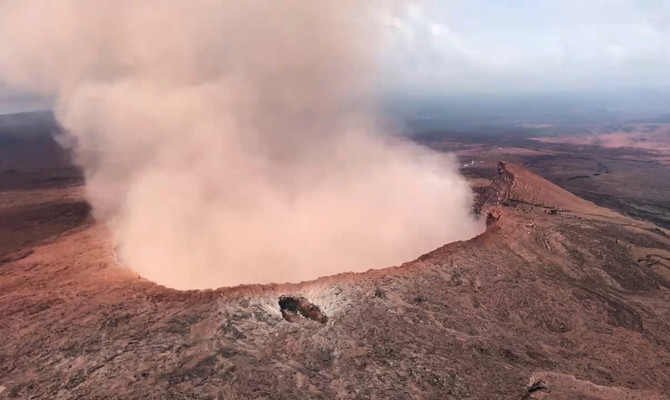
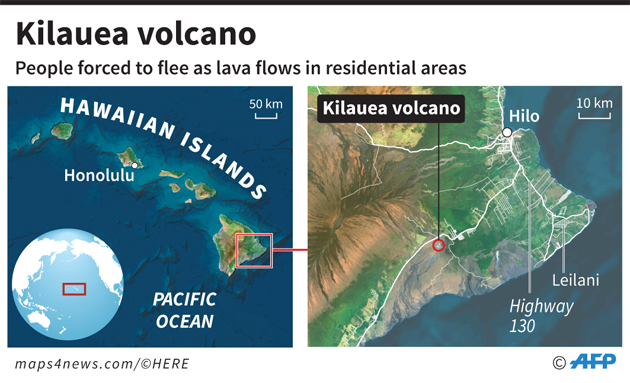
Kilauea (pronounced kill-ah-WAY’-ah), one of the world’s most active volcanoes, has been erupting continuously since 1983. The USGS’s Hawaiian Volcano Observatory issued a notice in mid-April that there were signs of pressure building in underground magma, and a new vent could form on the cone or along what’s known as the East Rift Zone. Leilani Estates sits along the zone .
The crater floor began to collapse Monday, triggering earthquakes and pushing lava into new underground chambers that carried it toward Leilani Estates and nearby communities. A magnitude-6.9 earthquake — Hawaii’s largest in more than 40 years — hit the area Friday.
It set Michael McGuire’s car rocking in his driveway, knocking things off his shelves and shattering glass in his cabinets in an area near Leilani Estates.
He hoped to check on his home Sunday. But he realized it was too soon to be sure when, or if, it would be safe from the moving lava.
“I’m somewhat fatalistic: if it happens, it happens,” he said. “And I’m enjoying life here, so you know, you put up with a lot of things here. This is one of them.”
Noah and Laura Dawn own a retreat center about 3 miles downhill from the most active vents They were clearing out items Sunday and relocating up the coast indefinitely.
“We’re just removing all things of value to us and precious things because I have the feeling it could get real — real, real fast,” Noah Dawn said.


