


LONDON: There is virtually no area of the world that the Lebanese have left untouched. Conflict at home, persecution (or the fear of it) and prospects (or the lack of them) have driven the Lebanese to make their lives elsewhere, in every continent of the world except Antarctica.
Estimates of the size of the Lebanese diaspora vary wildly but the most reliable statistics from the Lebanese government put the figure at 15.4 million, far outstripping the internal population of Lebanon, which is 6 million, which is why the expat vote could be crucial.
Of those, at least half are in South America and more particularly in Brazil, where there are thought to be seven million people of Lebanese birth or descent.
Argentina has 1.5 million and there are significant Lebanese communities in every other Latin American country, ranging from 70,000 in Uruguay to 700,000 in Colombia.
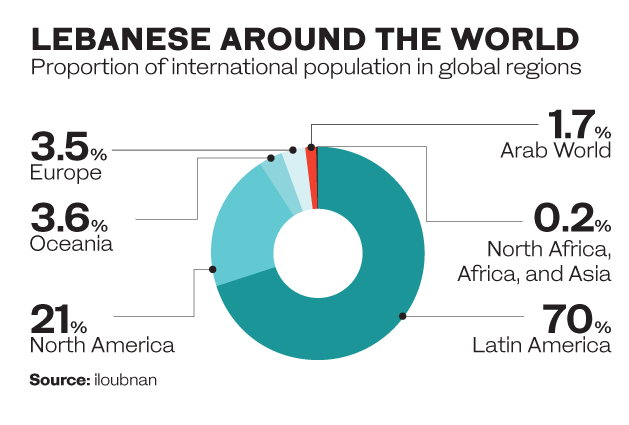 There are 504,000 in the US, where they have produced successful people in every field of endeavour, from medicine to showbusiness. Famous Lebanese-Americans include Rima Fakih, Miss USA 2010, actor Jamie Farr (born Jameel Farah) who played Klinger in the sitcom M*A*S*H and Oscar-nominated Lebanese-Mexican actress Salma Hayek.
Next comes Mexico with 400,000, Venezuela (340,000), Canada and France with 250,000 each and Australia (203,139).
The Lebanese population of the MENA region hovers between 131,000 in Egypt to 100,000 each in Saudi Arabia and the other Gulf states, down to 42,000 in Kuwait.
Ghana, Ivory Coast and Sierra Leone, are home to more than 100,000 Lebanese, with significant populations throughout West and Central Africa.
In Europe, the diaspora is most numerous in France (250,000) followed by the UK (90,000) and Germany (50,000), with significant numbers living in Scandinavia and central and southern Europe.
What drove so many to leave ?
Initially it was trade and economic prospects. The first wave of migration goes back to the early 19th century and spawned strong commercial and social networks among Lebanese migrants, resulting in a reputation for business acumen and entrepreneurship.
From 1860 onwards, emigration soared. Some towns and villages lost up to half their populations. Many migrants arriving in America cited persecution of Christians by the Ottoman Turks, although this was often an exaggeration geared to eliciting sympathy and securing admission to the US. In fact the period of Ottoman occupation from 1861 to 1914 was known as a “long peace” and any violence was by no means restricted to any one religious group. Christians were also exempt from serving in the Ottoman military.
In Lebanon, the silk economy accounted for 60 percent of GDP at the beginning of the 20th century. When it collapsed, many sought better opportunities in the Americas. More latterly, the civil war, from 1975-1990, spurred many more into leaving.
Beirut is increasingly eyeing the diaspora as a valuable resource for investment within the country.
A television advert shown in the US in 2016 was aimed at enticing Lebanese migrants to move back. In 2017, President Michel Aoun advocated granting Lebanese citizenship to the children born overseas to Lebanese parents.
The question of the country’s demographic make-up and how it affects Lebanon’s secular constitution is so sensitive that there has been no census since 1932. Back then, Christians were slightly in the majority.
But it was mostly Christians who left during the civil war. That, coupled with a higher birth rate among Muslims and the presence of large numbers of Muslim refugees from Palestine and now Syria, means the internal demographic has changed. But when expat Lebanese are counted, that skews the numbers back again.


