PESHAWAR: Shahid Khan, who maintains a small kiosk in Peshawar’s congested Peepal Mandi, finds it hard these days to understand why so many people have been buying the famous Pashtun Mazari cap. “I can’t figure it out,” he said. “It’s rough, made by the same material that’s normally used to weave carpets.”
Other shopkeepers in Pakistan’s northern city of Peshawar are struggling as well to meet the increasing demand of this multicolored cap that originated in Afghanistan’s fourth largest city of Mazar-e-Sharif.
Some people have rebranded the “Mazari” cap as the “Pashteen” cap.
According to some accounts, this is related to a random incident when a young rights activist, Manzoor Ahmed Pashteen, met a laborer who complained he could not afford a fancy cap to cover his head. In response, Pashteen decided to swap his headwear with the laborer’s.
This inexpensive cap acquired social prominence soon after Manzoor Ahmed Pashteen launched the Pashtun Tahafuz Movement (PTM), the movement demanding rights for the Pashtun people.
Another shopkeeper, Muhammad Asif, who has been selling different headgear for nearly two decades, said: “Given the rising demand, these caps are now being produced on a much larger scale in Karachi. The Mazari or Pashteen cap has become popular since it’s now a part of people’s politics. I can say that confidently since I also sell similar products that people use in different political rallies.”
Asif also noted that there was a sharp increase in its price, though the Pashteen cap was now mass-produced.
“I like its design,” Shiraz Hussain, who bought the cap for Rs450 ($4), said. “I first saw its image in a newspaper and then in public rallies that were briefly aired on news channels.”
Pashtuns take their headwear quite seriously. Their tribal elders, for instance, are never seen without their turbans, or “lungee,” while attending a jirga. They also view their headdress as a symbol of honor and wisdom, and use it carefully to prevent its desecration.
In this cultural context, the Pashtun territories have also witnessed the rise and fall of different headgear.
Shopkeepers in Peepal Mandi recall, for instance, how the Pakistan cricket team’s green sports cap became popular after the country won the World Cup in 1992.
Some even mention the “Ghazi” cap that surfaced in the settled and tribal areas in the country’s northwest in the wake of a military operation against Islamabad’s Red Mosque in 2007. The cap was named after the mosque cleric Ghazi Abdul Rasheed, who was later killed in the military crackdown. His red cap became famous overnight, and many of his followers in religious circles continue to use it even today.
Among the non-political headpieces introduced in this region are Karakuli and Chitrali caps, primarily designed to keep the user warm in winter.
Noor Bahar Khan, who runs a small shop in Peshawar’s Khyber Bazaar, specializes in making and selling these two types of beret. “Our business booms in winter,” he said. “The prices vary, from 300 to 3,000 rupees.”
Khan, who is now in his late sixties, lamented: “Unfortunately, it doesn’t get too cold in Pakistan these days.”
Meanwhile, in Peepal Mandi, Asif looked happy while selling the “Pashteen” cap, though he said: “I’m gradually beginning to wonder how long this one will remain popular with the people.”


![]()
![]()
![]()
![]()
![]()
![]()
![]()
![]()
![]()

The famous Mazari cap: now politically rebranded to ‘Pashteen cap’
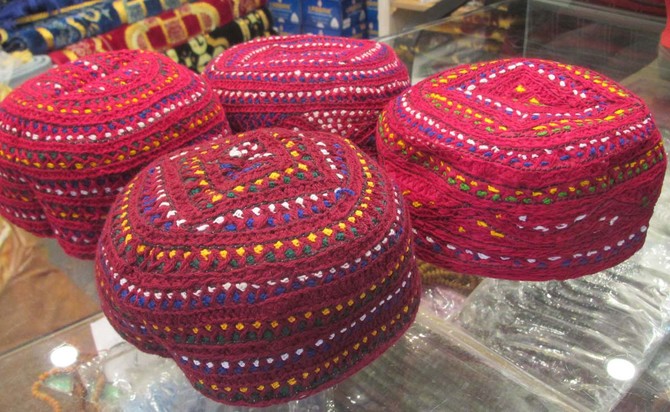

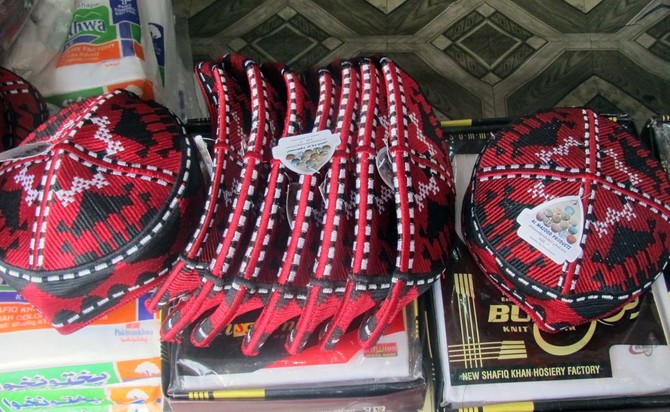
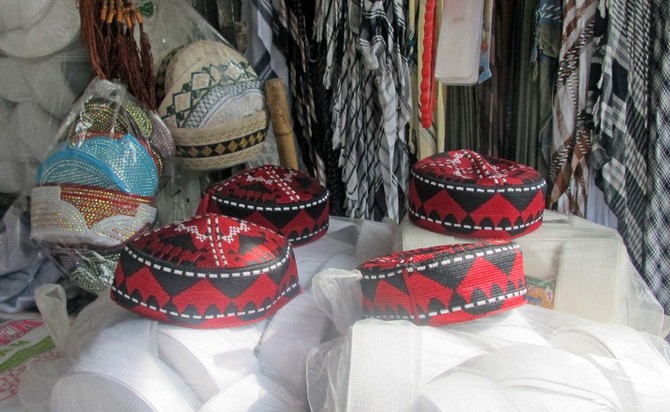

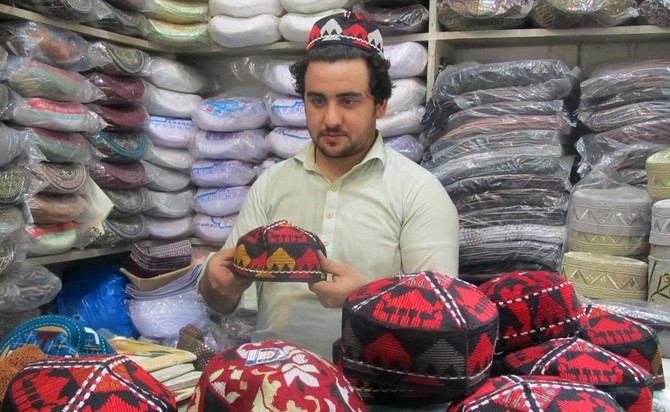
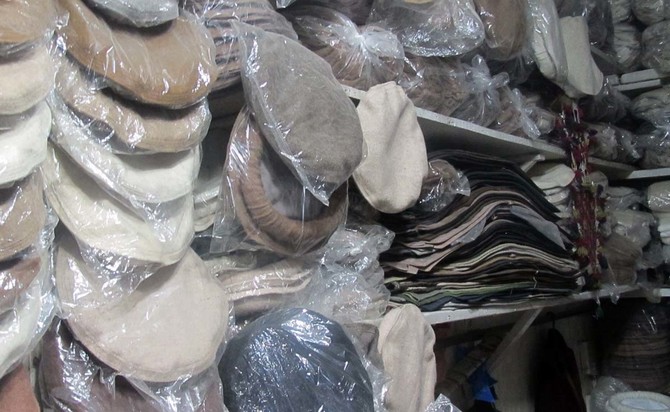
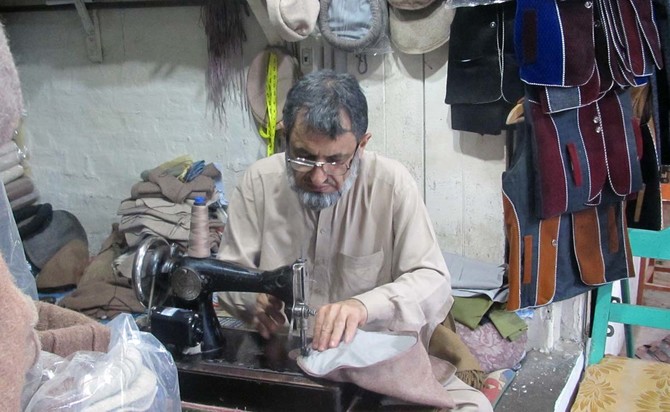
The famous Mazari cap: now politically rebranded to ‘Pashteen cap’
- This inexpensive cap acquired social prominence soon after Manzoor Ahmed Pashteen launched the Pashtun Tahafuz Movement (PTM), demanding rights for the Pashtun people
- The price of the ‘Pashteen cap’ rose significantly with the popularity of PTM


Latest updates


Recommended


© 2026 SAUDI RESEARCH & PUBLISHING COMPANY, All Rights Reserved And subject to Terms of Use Agreement.