Saudi Arabia joins hands with France on sustainable development of Al-Ula

Updated 12 April 2018
Follow

Saudi Arabia joins hands with France on sustainable development of Al-Ula

  • The agreement reflects the Kingdom’s commitment to protect and promote world heritage, sustain the tourism and cultural sector with international partners
  • Both nations will embark on a collaborative project to planning and articulating development the historical sites of Al-Ula

DUBAI: Saudi Arabia’s Royal Commission for Al-Ula signed an agreement of cooperation with France on Tuesday as part of an ambitious development project within the tourism and cultural sector.

The agreement reflects the Kingdom’s commitment to protect and promote world heritage, sustain the tourism and cultural sector with international partners, and reinforce cooperation through concrete actions and structured projects.

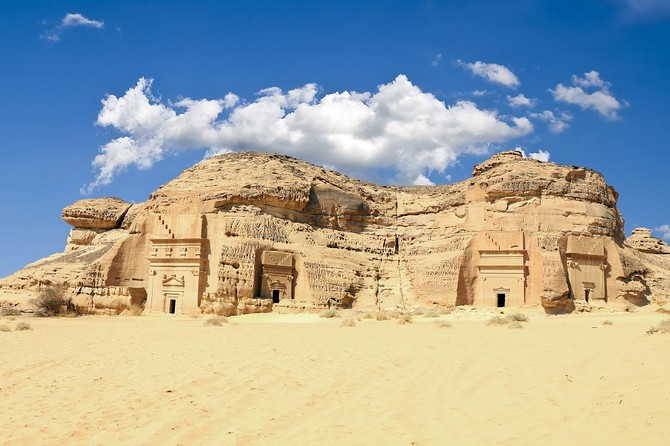
Home to dramatic desert landscapes, rock formations and some of the Middle East’s most significant ancient sites, including those built by Lihyanite and Nabataean civilisations of the first millennium BCE, Al-Ula is concidered a wonder of the ancient Arabian world. In northwest Saudi Arabia, Al-Ula has been a UNESCO World Heritage Site since 2008. 

As one of the Kingdom’s primary cultural development projects, both nations will embark on a collaborative project to planning and articulating development the historical sites of Al-Ula and the necessary infrastructure for tourism in the context of a sensitive transformation of the region.

The agreement was signed in the presence of Saudi Arabia’s Crown Prince Mohammed Bin Salman and French President Emmanuel Macron as well as the Al-Ula governor, the French special envoy to Al-Ula and France’s foreign minister.


Foreign ministers chair Saudi-Omani coordination council meeting in Muscat

Updated 23 December 2025
Follow

Foreign ministers chair Saudi-Omani coordination council meeting in Muscat

MUSCAT: Saudi Foreign Minister Prince Faisal bin Farhan met with Oman’s Foreign Minister Sayyid Badr bin Hamad Al-Busaidi on Monday.

They reviewed bilateral relations between their nations and ways to enhance and develop them across various fields. Additionally, they discussed regional and international developments.

The ministers co-chaired the third meeting of the Saudi-Omani Coordination Council in the Omani capital, Muscat, with the participation of the heads of the Council’s subsidiary committees and the two heads of the Council’s General Secretariat teams.

The meeting comes as an affirmation of the keenness of Saudi and Omani leaders to strengthen ties and advance them toward greater prosperity for both nations.

In his remarks during the meeting, Prince Faisal affirmed that gathering builds on the previous council meeting, held last year in AlUla, and on its positive and fruitful outcomes within the framework of the approved recommendations and initiatives. 

He stressed the importance of continuing the work of the council’s subsidiary committees to complete the necessary procedures to implement the remaining initiatives, and of the General Secretariat’s role in follow-up and in addressing any challenges that may hinder implementation.

He also underscored the importance of developing and enhancing trade relations, stimulating investment, and strengthening cooperation between the public and private sectors.

He also praised the ongoing work to establish and launch the Coordination Council’s electronic platform, which aims to connect all committee work and initiatives to facilitate follow-up on the Council’s progress. 

Al-Busaidi affirmed in his remarks the qualitative progress in relations between the two countries and the notable development witnessed across numerous sectors toward achieving economic integration and enhancing intra-trade and joint investments. 

The Omani foreign minister also highlighted deeper cooperation in the security and judicial fields, as well as the cultural and tourism sectors, noting the advanced and continuous political cooperation, consultation, and coordination on regional and international issues.