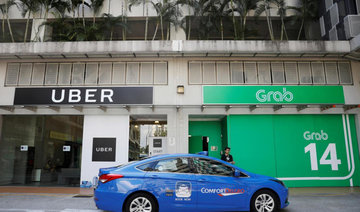
Singapore: Regulatory scrutiny could complicate ride-hailing company Grab’s takeover of Uber Technologies’ Southeast Asian business, but there is little the authorities can do to stop Uber from simply exiting the region, lawyers and analysts said.
Days after the deal was announced last week, antitrust agencies in Singapore and Philippines began to review it, with Malaysia saying it would follow suit.
Antitrust lawyers say Singapore-based Grab could try to mollify regulators by offering concessions such as price restrictions and subjecting itself to greater regulations. It could also argue that consumers still have many ride-hailing options to choose from.
“Rather than throwing out the deal, and especially with potential new entrants coming in, I believe that with the right safeguards, with the right commitments, the deal can still go through,” said Gerald Singham, deputy managing partner at law firm Dentons Rodyk.
If the deal falls apart, Uber could depart Singapore and leave Grab as the dominant player regardless, experts said.
Uber is already winding down its regional operations and has asked customers and drivers to transition to Grab’s platform. Five hundred Uber staffers will also move to Grab.
Market share data on the ride-hailing sector is patchy, but mobile data analytics firm App Annie ranks Grab ahead of Uber in all the big economies in Southeast Asia in terms of monthly active users. The exception is Indonesia, where Tencent Holdings-backed Go-Jek was ahead.
“An antitrust issue is all about how can you minimize a monopoly which is hitting pricing power and is bad for consumers. But the reality here is that consumers have other options with the incumbent taxi operators in all markets,” said a person familiar with the Grab deal who was not authorized to speak to the media.
Uber is selling its Southeast Asia operations, including its food-delivery unit, to Grab after a five-year battle that cost the US company $700 million. In return, Uber will get a 27.5 percent stake in Grab, which is valued at roughly $6 billion.
Grab’s president Ming Maa told Reuters that passengers and drivers had plenty of other transportation options, from taxis to public transport.
And Go-Jek plans to enter Singapore soon in its first international expansion, the Straits Times reported last week.
Kala Anandarajah, who leads the competition and antitrust practice at Rajah & Tann Singapore, said that though barriers to entry in the ride-hailing sector were relatively low in Singapore and Southeast Asia, new entrants had to start off big enough to compete effectively with a potential Grab-Uber entity.
Singapore’s antitrust agency told Reuters it would consider Go-Jek and taxi companies such as ComfortDelgro Corp. as part of the market as it determines competition during its investigation of the Grab-Uber deal.
The interim measures proposed by the Competition and Consumer Commission of Singapore require Uber and Grab to maintain their pre-transaction independent pricing and not share any confidential data.
The commission said on Friday that Uber would put off shutting down its app in Singapore by a week until April 15.
It addded that it was reviewing proposals from both Grab and Uber to address its concerns.
Grab said it had “productive discussions” with the anti-competition agency on the alternative proposals, adding that thousands of former Uber drivers had signed up to Grab’s platform.
Grab has said the deal did not decrease competition and was beneficial to both riders and drivers.
“At this juncture, regulators don’t have much recourse since the assets being transferred from Uber to Grab are of little consequence. So even if the asset transfer is blocked, Grab’s goal, which is to push Uber out of Southeast Asia, has already been achieved,” said Corrine Png, chief executive of research firm Crucial Perspective.
“However, Grab will be careful not to step on the regulators’ toes,” Png added.


![]()

Grab deal with Uber has a rocky road to navigate
Grab deal with Uber has a rocky road to navigate
- If the deal falls apart, Uber could depart Singapore and leave Grab as the dominant player regardless.
- Uber is already winding down its regional operations and has asked customers and drivers to transition to Grab’s platform.

Latest updates





© 2026 SAUDI RESEARCH & PUBLISHING COMPANY, All Rights Reserved And subject to Terms of Use Agreement.