Tripoli: Libya’s National Oil Corporation (NOC) said on Wednesday it had signed a deal with French building and engineering group Artelia to manage the development of an office complex in the eastern city of Benghazi that will house the company’s headquarters.
There have been plans for years to move the state oil firm’s headquarters from the capital Tripoli back to Benghazi, but it remains unclear when such a transfer could happen.
NOC did not say when the complex would be built.
The buildings will include offices for other oil companies and a branch of Libya’s central bank, as well as a hotel complex and a conference center, NOC said in a statement.
It said the deal had been signed by NOC Chairman Mustafa Sanalla and Artelia executive director Alberto Romeo on Friday, and that funding would come from commercial banks. There were no details on the cost of the project.
Most of OPEC member Libya’s oil resources lie in the east of the country, but former leader Muammar Qaddafi moved NOC to Tripoli and starved the eastern region of investment.
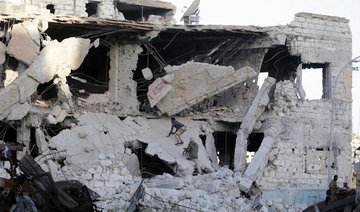
Benghazi now wants greater influence but parts of the city are in ruins after more than three years of fighting linked to a broader conflict that developed in Libya after the country’s 2011 uprising.
Rival factions based in Tripoli and the east have vied for power over the past four years, with some groups in the east making unsuccessful attempts to sell oil independently of Tripoli.
Libya’s oil production, which was crippled by conflict and blockades after 2013, has partially recovered to more than one million barrels per day (bpd) last year.
The NOC recently announced it would organize an oil and gas conference in Benghazi in October.


Libya’s National Oil Corp. signs deal with Artelia for new Benghazi offices

Libya’s National Oil Corp. signs deal with Artelia for new Benghazi offices
- French firm Artelia to manage NOC company headquarters in Benghazi
- Most of Libya’s oil resources lie in the east of the country near Benghazi


Kuwait to boost Islamic finance with sukuk regulation
- The move supports sustainable financing and is part of Kuwait’s efforts to diversify its oil-dependent economy
RIYADH: Kuwait is planning to introduce legislation to regulate the issuance of sukuk, or Islamic bonds, both domestically and internationally, as part of efforts to support more sustainable financing for the oil-rich Gulf nation, Prime Minister Sheikh Ahmad Abdullah Al-Ahmad Al-Sabah said on Wednesday.
Speaking at the World Governments Summit in Dubai, Al-Sabah highlighted that Kuwait is exploring a variety of debt instruments to diversify its economy. The country has been implementing fiscal reforms aimed at stimulating growth and controlling its budget deficit amid persistently low oil prices. Hydrocarbons continue to dominate Kuwait’s revenue stream, accounting for nearly 90 percent of government income in 2024.
The Gulf Cooperation Council’s debt capital market is projected to exceed $1.25 trillion by 2026, driven by project funding and government initiatives, representing a 13.6 percent expansion, according to Fitch Ratings.
The region is expected to remain one of the largest sources of US dollar-denominated debt and sukuk issuance among emerging markets. Fitch also noted that cross-sector economic diversification, refinancing needs, and deficit funding are key factors behind this growth.
“We are about to approve the first legislation regulating issuance of government sukuk locally and internationally, in accordance with Islamic laws,” Al-Sabah said.
“This enables us to deal with financial challenges flexibly and responsibly, and to plan for medium and long-term finances.”
Kuwait returned to global debt markets last year with strong results, raising $11.25 billion through a three-part bond sale — the country’s first US dollar issuance since 2017 — drawing substantial investor demand. In March, a new public debt law raised the borrowing ceiling to 30 billion dinars ($98 billion) from 10 billion dinars, enabling longer-term borrowing.
The Gulf’s debt capital markets, which totaled $1.1 trillion at the end of the third quarter of 2025, have evolved from primarily sovereign funding tools into increasingly sophisticated instruments serving governments, banks, and corporates alike. As diversification efforts accelerate and refinancing cycles intensify, regional issuers have become regular participants in global debt markets, reinforcing the GCC’s role in emerging-market capital flows.
In 2025, GCC countries accounted for 35 percent of all emerging-market US dollar debt issuance, excluding China, with growth in US dollar sukuk issuance notably outpacing conventional bonds. The region’s total outstanding debt capital markets grew more than 14 percent year on year, reaching $1.1 trillion.


