WASHINGTON: Trump administration officials said they’re crafting a new legislative package aimed at closing immigration “loopholes” following the president’s calls for Republican lawmakers to immediately pass a border bill using the “Nuclear Option if necessary” to muscle it through.
“As ridiculous as it sounds, the laws of our country do not easily allow us to send those crossing our Southern Border back where they came from. A whole big wasted procedure must take place. Mexico & Canada have tough immigration laws, whereas ours are an Obama joke. ACT CONGRESS!” President Donald Trump wrote in a series of continual, sometimes-misleading tweets Monday after a weekend in Florida with several immigration hard-liners.
Trump also declared protections for so-called Dreamer immigrants “dead,” accused Democrats of allowing “open borders, drugs and crime” and warned Mexico to halt the passage of “caravans” of immigrants or risk retribution.
“Honduras, Mexico and many other countries that the US is very generous to, sends many of their people to our country through our WEAK IMMIGRATION POLICIES,” he wrote. “Caravans are heading here. Must pass tough laws and build the WALL.”
Trump has been seething over immigration since realizing the major spending bill he signed last month barely funds the “big, beautiful” border wall he has promised his supporters. The $1.3 trillion funding package included $1.6 billion in border wall spending, but much of that money can be used only to repair existing segments, not to build new sections.
Among the measures the administration is pursuing: ending special safeguards that prevent the immediate deportation of children arrested at the border and traveling alone. Under current law, unaccompanied children from countries that don’t border the US would be placed under the supervision of the Department of Health and Human Services and undergo often-lengthy deportation proceedings before an immigration judge instead of being deported.
The administration is also pushing Congress to terminate a 1997 court settlement that requires the government to release children from custody to parents, adult relatives or other caretakers as their cases make their way through immigration court. Officials complain that many children never show up at their hearings.
The proposals appear the same as those included on a White House immigration wish list that was released in October but failed to gain traction during negotiations over the border wall. Such proposals are likely to face opposition from moderate Republicans and Democrats going into the midterm elections. But Trump appears intent on ensuring the issues remain at the forefront of public conversation, even though the omnibus was widely seen as the last major legislation likely passed this year.
Trump spent much of the weekend at his Mar-a-Lago resort, having meals with his family, watching cable news shows and rubbing elbows with conservative commentators including Fox News host Sean Hannity, according to several club members. Also spotted at the club: champion golfer Dustin Johnson, MyPillow maker Michael J. Lindell, boxing promoter Don King and former New York Police Commissioner Bernie Kerik.
Staffers with Trump over the Easter holiday included policy adviser Stephen Miller, one of the chief architects of the administration’s anti-immigration policies
Trump’s past calls to use the “nuclear option” — changing Senate procedure to require a simple majority of 51 votes to override a rule instead of 60— have been repeatedly dismissed by Senate Majority Leader Mitch McConnell, who argues Republicans will welcome the filibuster if they return to being the Senate minority. The current split is 51-49 favoring Republicans.
“Dreamer” immigrants are due to lose coverage under a program that Trump tried to eliminate. Notably, his favored solution for extending protections to them mustered only 39 votes in the Senate, meaning it couldn’t have passed even with the nuclear option.
Trump’s tweets calling on Mexico to halt “caravans” filled with immigrants in the country illegally came after a “Fox & Friends” report Sunday that featured the leader of the union representing border patrol agents predicting that those in the caravan would create havoc and chaos in the US as they wait for immigration reform.
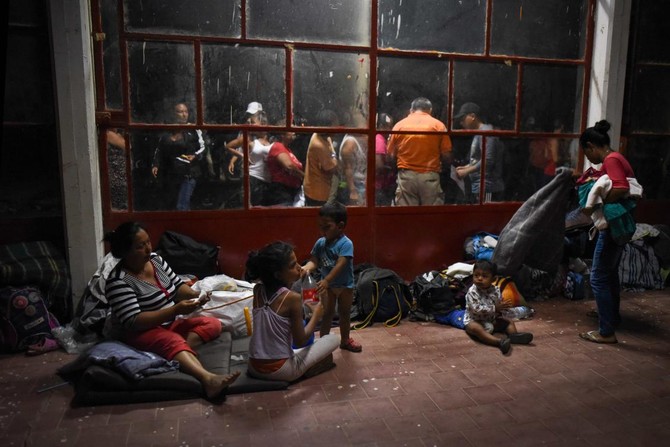
About 1,100 migrants, many from Honduras, have been marching along roadsides and train tracks in the southern Mexican state of Oaxaca.
These “Stations of the Cross” migrant caravans have been held in southern Mexico for at least the last five years. They began as short processions of migrants, some dressed in biblical garb and carrying crosses, as an Easter-season protest against attacks against Central Americans as they cross Mexico.
Individuals in the caravans often try to reach the US border but usually not as part of the caravan. The caravans typically don’t proceed much farther north than the Gulf Coast state of Veracruz. The current march is scheduled to end this month with a conference on migration issues in the central Mexican state of Puebla.


![]()
Trump administration seeks to close immigration ‘loopholes’
Trump administration seeks to close immigration ‘loopholes’
- Trump warned Mexico to halt the passage of “caravans” of immigrants or risk retribution.
- Trump has been seething over immigration since realizing the major spending bill he signed last month barely funds his “big, beautiful” border wall.


Latest updates


© 2026 SAUDI RESEARCH & PUBLISHING COMPANY, All Rights Reserved And subject to Terms of Use Agreement.