Human Rights Watch slams ‘unlawful’ Houthi attacks on Saudi Arabia

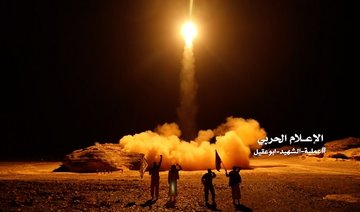
A photo distributed by the Houthi Military Media Unit shows the launch by Houthi forces of a ballistic missile aimed at Saudi Arabia March 25, 2018. (Houthi Military Media Unit/Handout via Reuters)
Updated 03 April 2018
Follow

Human Rights Watch slams ‘unlawful’ Houthi attacks on Saudi Arabia

JEDDAH: Yemen’s Houthi rebels have violated international laws of war in their latest missile attacks on Saudi Arabia, which killed an Egyptian laborer on March 25, Human Rights Watch (HRW) said on Monday.
Once again on Monday, the Houthis tried to target Saudi territories by launching a ballistic missile.
The spokesman for the Arab coalition, Col. Turki Al-Malki, on Monday said the air defense forces of the alliance spotted a missile launched by the Iranian-backed Houthis from Saada in Yemen, reported SPA.
Al-Malki said that the missile was heading toward the town of Dhahran Al-Janoub, deliberately targeting civilian populated areas, but it fell inside Yemeni territories at a distance of about 1.75km from southern Saudi borders.
Last month, the Iranian-backed militia fired seven ballistic missiles into Saudi Arabia.
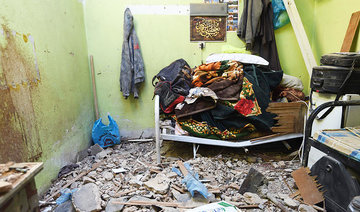
Saudi authorities said their defenses intercepted all seven, but falling debris from one of the missiles killed a migrant worker in the capital Riyadh.
HRW said the missile attacks “violated the laws of war” as they were fired “indiscriminately at populated areas,” calling on the Houthis to cease their attacks.
Over the weekend, Saudi air defenses intercepted another Houthi missile targeting the southern city of Najran.
“The Houthis should immediately stop their indiscriminate missile attacks on populated areas of Saudi Arabia,” said Sarah Leah Whitson, Middle East director at HRW.


Algeria inaugurates strategic railway to giant Sahara mine

President Tebboune attended an inauguration ceremony in Bechar. (AFP file photo)
Updated 02 February 2026
Follow

Algeria inaugurates strategic railway to giant Sahara mine

  • The mine is expected to produce 4 million tons per year during the initial phase, with production projected to triple to 12 million tons per year by 2030
  • The project is financed by the Algerian state and partly built by a Chinese consortium

ALGEIRS: Algerian President Abdelmadjid Tebboune on Sunday inaugurated a nearly 1,000-kilometer (621-mile) desert railway to transport iron ore from a giant mine, a project he called one of the biggest in the country’s history.
The line will bring iron ore from the Gara Djebilet deposit in the south to the city of Bechar located 950 kilometers north, to be taken to a steel production plant near Oran further north.
The project is financed by the Algerian state and partly built by a Chinese consortium.
During the inauguration, Tebboune described it as “one of the largest strategic projects in the history of independent Algeria.”
This project aims to increase Algeria’s iron ore extraction capacity, as the country aspires to become one of Africa’s leading steel producers.
The iron ore deposit is also seen as a key driver of Algeria’s economic diversification as it seeks to reduce its reliance on hydrocarbons, according to experts.
President Tebboune attended an inauguration ceremony in Bechar, welcoming the first passenger train from Tindouf in southern Algeria and sending toward the north a first charge of iron ore, according to footage broadcast on national television.
The mine is expected to produce 4 million tons per year during the initial phase, with production projected to triple to 12 million tons per year by 2030, according to estimates by the state-owned Feraal Group, which manages the site.
It is then expected to reach 50 million tons per year in the long term, it said.
The start of operations at the mine will allow Algeria to drastically reduce its iron ore imports and save $1.2 billion per year, according to Algerian media.