WELLINGTON: Keith Murdoch played just three Tests for the All Blacks, but his name was etched in New Zealand rugby folklore after he became a recluse in the Australian outback following a scandal that ended his rugby career.
The hulking prop, whose death aged 74 was confirmed by New Zealand Rugby on Friday, became the only All Black ever sent home from a tour in disgrace after a 1972 bar brawl.
Rather than face the wrath of the New Zealand sporting public, Murdoch hopped off his flight in Singapore, caught a plane to Darwin and went walkabout for the rest of his life.
“No All Black has been more controversial, more enigmatic and more tragic,” the team’s official website says in its profile of the player.
Murdoch was part of the 1972-73 All Black touring party, a group sports writer Norman Harris described as “an unlovely bunch” — arrogant, boorish and prone to hurling expletives at autograph-hunting fans.
Even among this company, Murdoch was regarded as a wild man, so much so that when the All Blacks arrived in Britain a newspaper cartoon depicted him being taken off the plane in a cage.
Murdoch weighed 110 kilogrammes (242 pounds) and his 1.2-meter (48-inch) barrel chest was so large that the All Blacks’ tailor had to sew panels of extra material in his shirts.
The combination of brawn and snarling attitude was topped off by a Zapata moustache that made Murdoch look like a cartoon villain.
Yet he had every reason to be in a glorious mood after scoring the match-winning try in the All Blacks’ 19-16 victory over Wales at Cardiff Arms Park on December 2, 1972.
The New Zealanders celebrated long into the night at the Angel Hotel near the ground, but Murdoch refused to take no for an answer when told the bar had shut.
He stormed into the kitchen searching for more beers and became involved in a fight with security guard Peter Grant, who ended up on the floor with a black eye.
Murdoch awoke with a hangover expecting to apologize but, as media pressure mounted, within two days he was on a plane back to New Zealand. He never arrived, opting instead to go bush in Australia.
No All Black has been more controversial, more enigmatic and more tragic.
Official website of the New Zealand All Blacks
It was a vanishing act unprecedented in New Zealand, a small nation where All Blacks past and present are feted by adoring fans.
Over the years, he became something of an obsession for New Zealand reporters eager for a scoop about the infamous All Black who went walkabout.
Rugby writer Terry McLean tracked him down at an oil-drilling site near Perth in 1977 only to have a spanner-wielding Murdoch growl “get back on the bus.”
“I got back on the bus,” McLean wrote.
He is known to have briefly returned to New Zealand at least once, in 1979, but author Bob Howitt wrote that his attempt to keep a low profile ended in dramatic fashion.
While Murdoch was visiting a former teammate, the man’s three-year-old boy wandered into the backyard and fell into the swimming pool.
The toddler was close to drowning when Murdoch spotted him and performed mouth-to-mouth resuscitation until he was breathing again.
Rather than using the rescue as a way to redeem his image, Murdoch fled back to Australia as soon as he discovered local media were chasing the story.
Journalist Margot McRae managed a brief conversation with him in 1990, when she found him at Tully, in the remote Queensland rainforest.
He refused to appear on camera but the fleeting encounter made such an impression that McRae later wrote a play about it called “Finding Murdoch.”
“He was a deeply shy person and not very articulate,” she told the BBC.
“There was a real sense of a wound that has never healed.”
His last public appearance was in 2001, when he was called as a witness at an inquiry into the death of a man who went missing shortly after he was caught breaking into Murdoch’s Northern Territory home.
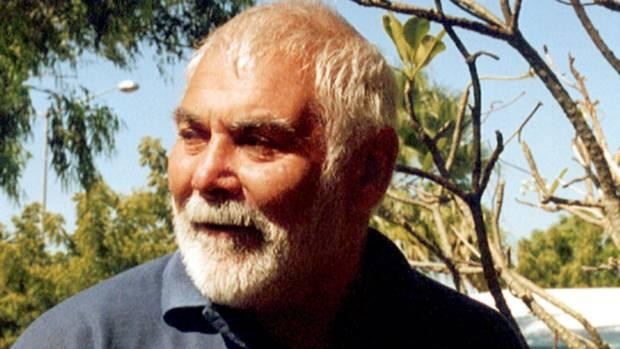
Photographs showed Murdoch — who was eventually cleared of any involvement in the man’s death — slightly stooped and sporting a grey beard in place of the dark moustache, but still exuding an imposing physical presence.
His former teammates, including ex-All Black captain Ian Kirkpatrick, believe Murdoch was harshly treated and have expressed regret they did not threaten to leave the tour in solidarity with him.
He never accepted invitations to join them for tour reunions.
But Murdoch has not been forgotten by the All Blacks.
To this day, whenever they play in Cardiff, a delegation of players visits the Angel Hotel and raises a glass to the memory of the disgraced giant who never made it home.