Saudi Arabia to become major solar power exporter under new plan

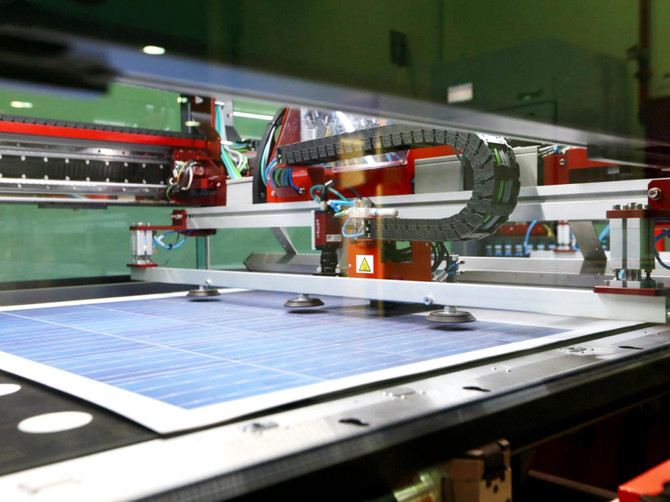
The Saudi solar initiative will diversify the national economy and stimulate investment in non-oil industries. The project will also reduce solar power production costs and create employment opportunities, with up to 100,000 jobs in solar power schemes alone. (SPA)
Updated 03 April 2018
Follow

Saudi Arabia to become major solar power exporter under new plan

  • Kingdom aims to produce 200 gigawatts of solar energy by 2030
  • Up 100,000 new jobs expected in solar power schemes alone

Saudi Arabia has unveiled plans to transform its solar power production, in line with the Vision 2030 strategy to diversify the country’s economy and end its reliance on oil.
Under the Solar Power Project Plan 2030, the Kingdom expects to produce 200 gigawatts of solar energy by 2030, according to the Saudi Press Agency (SPA).
At the launch of the plan, experts said the project will transform the Kingdom into a leading exporter of sustainable energy, thanks to its natural resources and environmentally friendly industries relying on sun, wind, and sand rich in silica.
Solar power will be the world’s largest energy source by 2050, according to the International Energy Agency.
The Saudi solar initiative will help to diversify the national economy and stimulate investment in non-oil industries. The project will also reduce solar power production costs and create employment opportunities for Saudi workers, with up to 100,000 jobs in solar power schemes alone.
Meanwhile, King Saud University in Riyadh has joined a research project with Japan and Peru to monitor changes in the sun and their effects on Earth.
The Kingdom’s history of solar research goes back 38 years, when King Salman opened the research plant at King Abdul Aziz City — the first solar power site in the Kingdom. The plant provided solar electricity to Uyayna, Jubaila and rural centers near Riyadh.
The solar village, part of a Saudi-US partnership, produces 350 kilowatts of electricity through concentrated photovoltaic complexes.
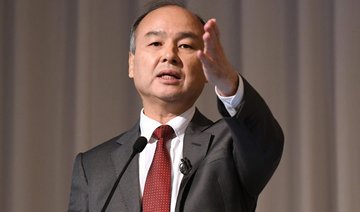
Crown Prince Mohammed bin Salman has outlined Saudi Arabia’s transformation into a “Kingdom of Sustainable Energy” era within five months. In October 2017, Riyadh hosted the beginning of the development of the strategy (Solar Plan 2030) with the participation of the Public Investment Fund and Softbank Vision Fund.
On March 28, during his groundbreaking visit to the US, the crown prince signed a memorandum of understanding with Softbank Vision Fund to create a plant for the project, which would be completed and ready to start production of solar energy by early 2019.
Prince Turki bin Saud bin Mohammed, president of King Abdul Aziz City for Science and Technology, said: “Saudi Arabia’s current energy needs are 75 gigawatts. The 2030 solar plan would enable the Kingdom to export surplus electricity and thus provide alternative energy to the Kingdom’s oil.”


International brands turn to Riyadh to expand cooperation

Updated 6 sec ago
Follow

International brands turn to Riyadh to expand cooperation

  • Capital cements role as hub at World Defense Show

RIYADH: Saudi Arabia's capital is cementing its role as a rising hub in the global defense industry, and the World Defense Show has attracted international brands eager to showcase advanced technologies and expand partnerships in the Kingdom and beyond. 

Held under the patronage of the Saudi leadership, the show — which runs until Feb. 12 — has brought together defense manufacturers, technology innovators and government representatives from around the world.

Arab News spoke to several international exhibitors who underscored the show’s growing importance as a gateway to pursue regional and global cooperation.

Among the returning participants is Passtech Machine Tools, represented by Syed Zahid, its sales manager.

Passtech Machine Tools is participating in the World Defense Show in Riyadh for the third time, says sales manager Syed Zahid. (AN photo by Rahaf Jambi)

The company collaborates with various international brands, providing tools, machines and gauges, including advanced CNC (computer numerical control) machinery from South Korea. 

For Zahid, WDS has proved to be a strategic platform, and he said: “This is our third time. We see it as very, very useful.”

From China, Jihua Group Co. Ltd. showcases advanced navigation devices and integrated systems. Peter Wang, its senior product manager, expressed optimism about expanding cooperation.   

At the company’s booth, Arab News was introduced to several technologies, including what Wang described as a “true-color navigation device.”

Highlighting a wearable system, Wang said it was designed to enhance mobility and operational efficiency.

Jihua Group Co. Ltd. of China, another participant ad WDS Riyadh, showcased advanced navigation devices and integrated systems. (AN photo by Rahaf Jambi)

He emphasized the diversity of visitors and the potential for cross-border cooperation, and added: “I meet different countries’ customers here. I’m very happy and I want to get some opportunities for cooperation.” 

Turkiye is also represented at the event. Masttech, which is attending WDS for the first time, is showcasing its products for visitors.

Deputy General Manager Sitki Tuzun said: “We are here to show all our products. We are producing electromechanical, mechanical and pneumatic mast systems here.”

While the company does not yet have Saudi clients, Tuzun made it clear that the show was a strategic leap toward entering the market.

“We are here for connection and new business cooperation,” he said.

First-time WDS participant Masttech hopes to capture a portion of the Saudi defense market soon. (AN photo by Rahaf Jambi)

The World Defense Show has demonstrated its increasing influence as a platform from which global brands meet regional opportunity.

Beyond static displays, the show serves as a dynamic networking arena, connecting manufacturers, suppliers, and defense stakeholders under one roof.

As Saudi Arabia accelerates efforts to localize its defense industry and invest in advanced technologies, WDS continues to facilitate partnerships, technology transfer and international collaboration — reinforcing Riyadh’s emergence as a central node in the global defense ecosystem.