JEDDAH: The Qatari news network Al Jazeera has prompted a Twitter storm over its coverage of a ballistic missile attack targeting civilians in Saudi Arabia that was launched by Houthi militias in Yemen.
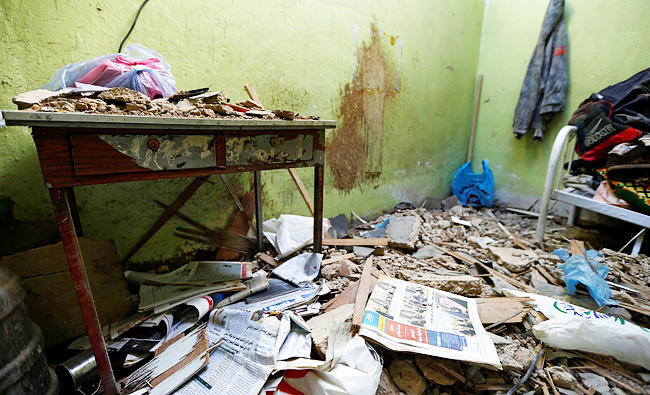
Seven ballistic missiles were fired targeting several cities in Saudi Arabia, three of which were intercepted by the Saudi Defense Patriot systems over the capital Riyadh. The rest were shot down in the skies of Jazan, Najran and Khamis Mushait. The missiles were fired by the Iran-backed Houthi militia in Yemen on Sunday night, the Arab coalition said, leaving one Egyptian civilian dead and two others injured.
The attack prompted widespread condemnation from the UN, UAE, Bahrain, Jordan, Pakistan and others.
Al Jazeera was, however, accused of providing a “platform” for the Houthi militias, having aired comments by the group just “minutes” after the attack.
The network’s breaking news service claimed that the missiles fired at Saudi Arabia hit their targets, despite statements by the Kingdom confirming that the missiles were destroyed by Saudi air defenses.
Al Jazeera also carried statements by Houthi leader Abdulmalik Al-Houthi, in footage shot before the attack, in which he threatened to use advanced missile systems and aircraft against Saudi Arabia.
Muhammad Al-Bukhaiti, a spokesman for the Houthis, told Al Jazeera that the attack was in “response to the bombing of Yemeni cities, and siege of the Yemeni people.”
Al-Bukhaiti called on the Yemeni people to mobilize against “the Saudi aggression.”
Many Twitter users were critical of Al Jazeera’s coverage of the attack, with an Arabic hashtag, translating as “Qatar media support Houthi,” trending.
“The coordination between the Houthis and Al Jazeera is clear and revealing, and the role of Qatar in funding the Houthis is known. So, their betrayal of the alliance in Yemen is remarkable and their days are numbered,” wrote one.
Another Twitter user said that Al Jazeera and the Qatari media in general “has become an integral part of the Iranian media, but this is not surprising, as they are known to provoke sedition and host terrorists on its channels."
It is not the first time that Al Jazeera Arabic has been accused of providing a platform for militant and terror groups.
Earlier this month it came under fire for “normalizing terrorism” in its coverage of an attack on the French Embassy in Burkina Faso.
Ghanem Nuseibeh, founder of Cornerstone Global, a management consultancy focused on the Middle East, claimed Al Jazeera reporting on the Burkina Faso terrorist attack was skewed.
“Al Jazeera Arabic . . . refuses to call Al-Qaeda ‘terrorists,’ instead says ‘whom authorities describe as terrorists,’” he tweeted. “Common with Al Jazeera normalizing terrorism in eyes of its readers.”
Al Jazeera declined to comment when contacted by Arab News.


Al Jazeera under fire for Houthi bias after KSA missile attack
Al Jazeera under fire for Houthi bias after KSA missile attack

BBC slammed for ‘shameful’ cut to ‘free Palestine’ comment at BAFTA Awards
- Broadcaster removes from broadcast part of filmmaker Akinola Davies Jr.’s acceptance speech at the British Academy Film Awards
- Amnesty UK praises filmmaker for speaking up for those ‘facing and fleeing from persecution and mass atrocities’
LONDON: The BBC was accused on Monday of a “shameful” decision after it cut part of an acceptance speech at the previous night’s British Academy Film Awards in which a filmmaker uttered the phrase “free Palestine.”
British-Nigerian director and co-writer Akinola Davies Jr. and his brother, co-writer Wale Davies were collecting the award for outstanding debut by a British writer, director or producer for their film “My Father’s Shadow” when the former made the comment.
The BBC chose not to include the final part of his speech when it broadcast the BAFTAs ceremony later in the evening. However, the corporation did broadcast an inadvertent racist slur shouted by a person with Tourette syndrome while Black actors Michael B. Jordan and Delroy Lindo were presenting an award.
Akinola thanked industry figures and family for their support as he accepted the award, before dedicating it to “all those whose parents migrated to obtain a better life for their children.”
In the final part of his speech, cut by the BBC, he said: “To the economic migrant, the conflict migrant, those under occupation, dictatorship, persecution and those experiencing genocide, you matter and your stories matter more than ever.
“Your dreams are an act of resistance. To those watching at home, archive your loved ones, archive your stories yesterday, today and forever. For Nigeria, for London, Congo, Sudan, free Palestine. Thank you.”
The BBC, which broadcast the ceremony with a two-hour time delay, said the cut was made for timing reasons.
A spokesperson told Deadline: “The live event is three hours, and it has to be reduced to two hours for its on-air slot. The same happened to other speeches made during the night, and all edits were made to ensure the program was delivered to time. All winners’ speeches will be available to watch via BAFTA’s YouTube Channel.”
Human rights campaign group Amnesty UK described the decision by the BBC to cut part of the speech as “shameful.”
It added: “Thank you Akinola Davies Jr. for using your platform to speak out for the rights of migrants and people facing and fleeing from persecution and mass atrocities, from the Congo to Sudan to Palestine.”
In June last year, the BBC was at the center of a row after it broadcast a Glastonbury Festival performance by the duo Bob Vylan, during which the lead singer chanted “death to the IDF” in protest against the Israeli Defense Forces’ assault on Gaza.


