SIALKOT: Foreign Minister Khawaja Muhammad Asif Sunday said that Pakistan is a peace-loving country and keen on establishing cordial relations with its neighboring counties on the basis of equality for maintaining peace in the region.
Talking to APP at his residence, the minister said that our top priority is establishing peace in the country as well as in the region in larger interest of people of the region. But this flexibility and the efforts in this regard should not be underestimated, he added.
Answering a question, the minister said that all-out efforts were being made to develop healthy and durable relations with Afghanistan, Iran, India and Russia as well as other countries of the region.
To another question, the foreign minister said that high-ups of Pakistan and Indian governments are in touch to handle harassment incidents of Pakistani High Commission.
He hoped that efforts in this regard would bear fruit and relationship between the two neighboring countries would become normal.
Pakistan and Russia are enjoying highly cordial relations and Russia is extending cooperation and support to Pakistan in different fields, the foreign minister said, adding that relations between these two countries would be further strengthened with passage of time and both the countries would become closer.
“We want to see Afghanistan as a peaceful and stable country because Pakistan would benefit the most from a peaceful Afghanistan,” he added.
The minister said Pakistan was making hectic efforts for purging the country of menace of terrorism to make it a safe place for its people, adding that Pakistan had rendered great scarifies in the form of precious human lives and suffered economic losses in the war against terrorism.
He said the world should recognize the scarifies rendered by Pakistan in war against terrorism and ignoring the scarifies would be unjust. No country in the world has done more than Pakistan to check the menace of terrorism, he said.
The foreign minister said that megaproject, China-Pakistan Economic Corridor (CPEC), would play an instrumental role in bringing revolutionary changes in the country. He said that the economic stability and prosperity in the country would not only benefit the people of Pakistan but of the region at large.


![]()
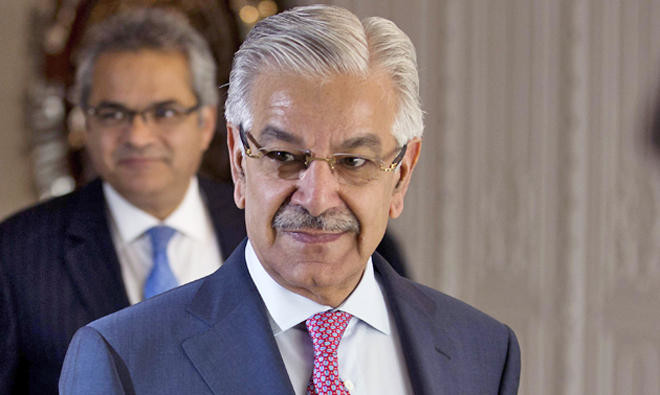
Foreign Minister: Pakistan wants cordial relations with neighbors
Foreign Minister: Pakistan wants cordial relations with neighbors
Latest updates


© 2026 SAUDI RESEARCH & PUBLISHING COMPANY, All Rights Reserved And subject to Terms of Use Agreement.