ANKARA: Turkey’s prime minister said Friday his country was partially reopening its airspace to flights to Iraq’s Kurdish region, after the central government restored authority at airports in the area.
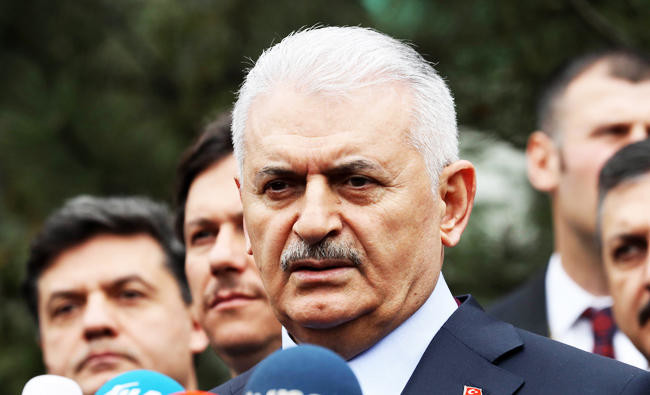
Binali Yildirim said the airspace would be open to commercial and civilian flights to and from the city of Irbil but flights to the city of Sulaimaniyah would not be permitted. He cited security concerns stemming from alleged Kurdish rebel activity targeting Turkey from the Sulaimaniyah region.
“There will be no flight to Sulaimaniyah whatsoever,” Yildirim told reporters in Ankara.
Turkey has shut down its airspace to flights to the Kurdish region following a controversial referendum vote in northern Iraq’s self-ruled Kurdish region six months ago that overwhelmingly backed independence from Baghdad.
The referendum was vehemently rejected by Baghdad, Turkey and Iraq’s other neighbors, ratcheting up tensions in the region.
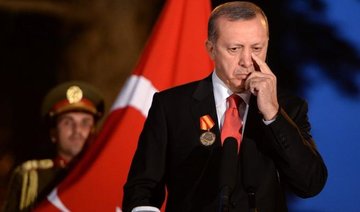
The Turkish prime minister also said that his country would press ahead with military strikes against Kurdish rebels in northern Iraq as long as threats to Turkey continue.
Earlier, Iraq’s Foreign Ministry condemned Turkey’s attacks on what Ankara suspected were Kurdish rebel camps in northern Iraq, along the countries’ shared border. The state-run Anadolu Agency said nine militants were “neutralized” in an operation on Thursday.
The Iraqi ministry described the attacks as “violations” that led to the death of a number of civilians in a statement released late Thursday.
Turkey said this week its military may mount an offensive against the PKK in Iraq’s Sinjar region if the Iraqi government doesn’t act against the group.

Turkey partially permits flights to Iraqi Kurd region
Death toll rises to at least 10 in violence around Iran protests
- The weeklong protests, have become the biggest in Iran since 2022, when the death of 22-year-old Mahsa Amini in police custody triggered nationwide demonstrations
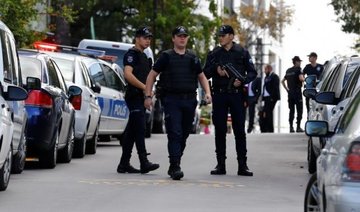
DUBAI: Violence surrounding protests in Iran sparked by the Islamic Republic’s ailing economy killed two other people, authorities said Saturday, raising the death toll in the demonstrations to at least 10 as they showed no signs of stopping.
The new deaths follow US President Donald Trump warning Iran on Friday that if Tehran “violently kills peaceful protesters,” the United States “will come to their rescue.” While it remains unclear how and if Trump will intervene, his comments sparked an immediate, angry response from officials within the theocracy threatening to target American troops in the Mideast.
The weeklong protests, have become the biggest in Iran since 2022, when the death of 22-year-old Mahsa Amini in police custody triggered nationwide demonstrations. However, the protests have yet to be as widespread and intense as those surrounding the death of Amini, who was detained over not wearing her hijab, or headscarf, to the liking of authorities.
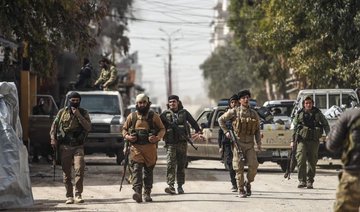
The deaths overnight into Saturday involved a new level of violence. In Qom, home to the country’s major Shiite seminaries, a grenade exploded, killing a man there, the state-owned IRAN newspaper reported. It quoted security officials alleging the man carried the grenade to attack people in the city, some 130 kilometers (80 miles) south of the capital, Tehran.
Online videos from Qom purportedly showed fires in the street overnight.
The second death happened in the town of Harsin, some 370 kilometers (230 miles) southwest of Tehran. There, the newspaper said a member of the Basij, the all-volunteer arm of Iran’s paramilitary Revolutionary Guard, died in a gun and knife attack in the town in Kermanshah province.
Demonstrations have reached over 100 locations in 22 of Iran’s 31 provinces, the US-based Human Rights Activists News Agency reported.
Iran’s civilian government under reformist President Masoud Pezeshkian has been trying to signal it wants to negotiate with protesters. However, Pezeshkian has acknowledged there is not much he can do as Iran’s rial has rapidly depreciated, with $1 now costing some 1.4 million rials. That sparked the initial protests.