Oasis of calm in shattered region, Dubai steps out as art hub

1 / 3
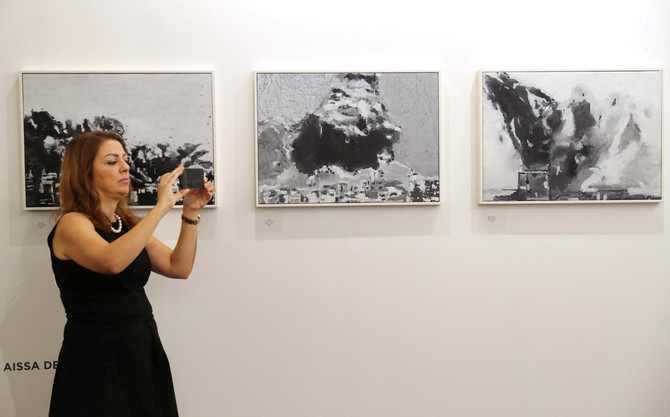
The UAE is in a position to build on its openness and multicultural aspect to lead in the art scene. (Reuters)
2 / 3
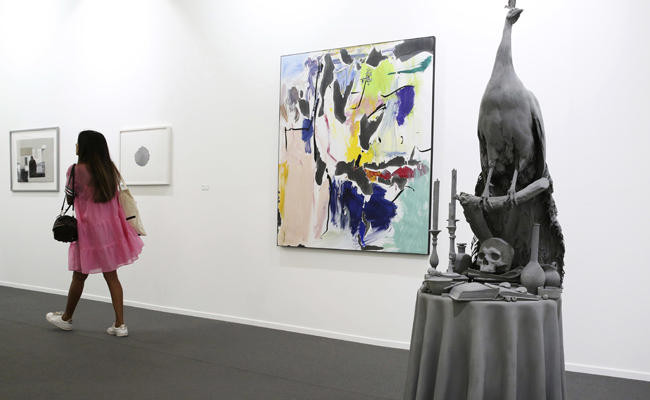
A piece of art called "Vanitas Table (peacock)" by Belgian artist Hans Op de Beeck is on display at Art Dubai, in Dubai, on March 20, 2018. (AP Photo/Jon Gambrell)
3 / 3
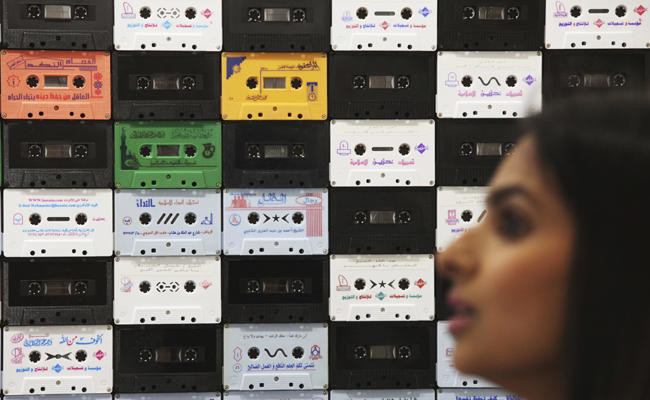
A woman examines a piece of art by Saudi artist Maha Malluh called "Food for Thought '15000'" at Art Dubai in Dubai on March 20, 2018. (AP Photo/Jon Gambrell)
Updated 23 March 2018
Follow

Oasis of calm in shattered region, Dubai steps out as art hub

DUBAI: As traditional centers of modern Arab art in Damascus and Baghdad have imploded amid disastrous wars, the sheeny city-state of Dubai has stepped into the vacuum as a major hub for art sales.
But at the annual Art Dubai fair this week, some Mideast artists among the scores of worldwide participants channeled in paint the chaos swirling around this bubble of calm luxury.
Tucked among the mostly apolitical photography, sculpture and installation art adorning the vast open-plan space, black-and-white paintings of war scenes in the Gaza Strip — devoid of people and any sharp detail — stand out.
“It’s like a monster, isn’t it?” says Palestinian artist Aissa Deebi, holding his arms menacingly above his head in the rough shape of a fireball from an Israeli war plan he painted exploding on top of building.
“I turned images from the TV into oil on canvas, which has its history in this tradition going back to Goya and Picasso,” he added, alluding to the latter’s iconic image of chaos brought on by a bloody air raid on the Spanish town of Guernica.
Myrna Ayad, Art Dubai’s director, said the event featuring artists from 48 countries does not seek to dwell on the region’s miseries, but noted that as Dubai’s star has risen in the art world the art on offer cannot flinch from harsh realities.
“The sad reality is that as Baghdad, Beirut, Damascus and even Cairo have suffered due to political and economic strife, the UAE is in a position to build on its openness and multicultural aspect to lead in the art scene.”
“Conflict and problems aren’t all there is to art in the Middle East and our exhibition celebrates modernists and visionaries from here and all over the world ... artists do make incredible historians and documentarians, though,” Ayad added.
While she refused to name precise target for sales in the three-day event, she noted that works were on offer for between a few hundred and a few hundred thousand dollars: “There’s something for every pocket!”
Ead Samawi knows that well. A partner from the Ayyam Gallery, he has sold most of their handful of war-themed canvases for between thirty and fifty thousand dollars each to clients ranging from the US to Lebanon, and insists profit and painful subjects can go together.
Arranged in a tense jumble of colorful shapes and splotches forming the rough shape of buildings and people, the work of Syrian artist Tammam Azzam evokes the broken cityscapes and refugee throngs from his homeland.
“It’s not commodifying, this is human life: There’s war and migration that happens all over. Artists have always had their distinct, creative way of presenting it that people have been attracted to,” Samawi said.


Recipes for Success: Chef Nutta Laokom offers advice and a prawn pad thai recipe 

Updated 08 January 2026
Follow

Recipes for Success: Chef Nutta Laokom offers advice and a prawn pad thai recipe 

DUBAI: Chef Nutta Laokom did not grow up planning to run a restaurant kitchen. Her earliest memory of cooking is far from polished — a failed attempt at making stir-fried vegetables with her father when neither of them really knew what they were doing.  

But that moment stayed with her. And it sparked a curiosity that eventually became a career. 

Today, Laokom is the head chef at Sip Song, the Thai restaurant at Rixos Premium Dubai JBR, having trained in culinary arts and kitchen management at Dusit Thani College in Thailand. She moved to Dubai in 2019, and has worked with international hospitality groups including IHG and Emirates Flight Catering, experiences that shaped her practical approach to cooking and leadership, she says. Now leading a multicultural team at Sip Song, Laokom believes that tasting, communication and mood matter just as much as technique.  

Sip Song is the Thai restaurant at Rixos Premium Dubai JBR. (Supplied)

When you started out, what was the most common mistake you made?  

Not tasting enough. We work long hours, so sometimes we’re not able to taste every single dish we cook — or our team cooks. And it’s not just about tasting the finished dish — it’s also about tasting all the ingredients we receive in different batches as well. If you miss it even one time, it can sometimes affect the whole dish.  

Let’s take a simple thing we use in Thai cuisine: tamarind paste. Sometimes it’s too sour, sometimes it’s much sweeter, and sometimes it has a hint of saltiness. And this can change your whole dish. So yeah, the mistake I initially made was not tasting enough. 

When you go out to eat, do you find yourself critiquing the food?  

The first thing we have to accept is that taste is personal — there’s nothing right or wrong. It’s simply about whether you like something or you don’t. But if you enter a restaurant as a guest, you can give your opinion to the chef or to the restaurant to help them improve. The most important thing is to do it in a polite way.  

What’s the most common issue that you find in other restaurants? 

Food temperature. And that’s not just about the kitchen — it’s also about how the front-of-house manages the process, from cooking to serving the food within the right time and in the best condition for the guests. We have a very limited window. 

What’s your favorite cuisine or dish to order? 

It depends on my mood. But if I had to choose, I’d say Asian cuisine. As a Thai, I appreciate how Asian food balances multiple flavors, and I find the ingredients used very interesting and diverse.  

What’s your go-to delivery order? 

Delivery is different because you have to make the right decision — when you’re hungry and the food arrives, you can’t fix anything or send it back to the kitchen. So, if we’re talking about Thai food, I usually order papaya salad. It looks simple, but it actually requires many ingredients. If you were to make it yourself, you’d need to buy 10 to 15 ingredients — so it’s better to order it.  

What’s your go-to dish if you have to cook something quickly at home? 

A Thai dish called pad kra pao, which is like stir-fry hot basil. We use only real ingredients and it’s really simple to cook. 

What customer behavior or request most annoys you? 

I think most chefs would say the same thing: it’s when guests change the main ingredients of a dish but still expect it to taste exactly the same. Our job is to make them satisfied, right? We’ll do our best, but the result will obviously be different from the original version. 

What’s your favorite dish to cook and why? 

One time at a gathering my Korean friend taught me how to make gimbap. It’s a rice roll like sushi, but it’s Korean rolls stuffed with spinach and assorted vegetables and egg. Sometimes food isn’t just about eating; it’s about enjoying the process of cooking, especially when you’re with friends or family. That makes the experience much more enjoyable. 

What’s the most difficult dish for you to get right? 

Pad Thai. It’s very complicated because you have to prepare the sauce from scratch, and the thickness can affect the final dish. When cooking the noodles, you must follow each step carefully. There are no shortcuts. If the noodles aren’t soft enough before adding the sauce, the sugar can make them hard. Timing the egg is also important. If it’s added too early or cooked incorrectly, the dish can become mushy. Even with 10 years of experience cooking Thai food, I still make mistakes with this dish.  

As a head chef, what are you like? 

I very rarely shout — almost never. And if I ever do raise my voice, it’s never in front of the whole team. If there’s a mistake, I prefer to speak to the person privately. I don’t believe in correcting people in front of others, because it can affect the team dynamic. I think it’s important to keep the work environment positive. Sometimes we sing, sometimes we dance in the kitchen. I really believe that your mood affects the food. Cooking is an art. When you cook in a good mood, the food turns out better. That’s why I always try to keep myself and my team happy. 

Chef Nutta Laokom’s prawn pad thai recipe  

Prawn pad thai. (Supplied)

Ingredients  

Pad Thai Sauce 

450 g tamarind juice 

310 g palm sugar 

70 g Thai chilli paste (Nam Prik Pao) 

20 g  white sugar granules 

260 g fish sauce 

120 g water 

Prawn Pad Thai 

40 g cooking oil 

30 g shallot sliced 

30 g tofu diced 

5 g dry shrimps (soak in water before use) 

5 g sweet pickled radish 

2 whole eggs 

200 g soaked rice noodles 3 mm. (5 mm. could be used) 

70 g pad Thai sauce 

10 g bean sprout 

Thai green chives baton 

3 fresh prawns 

Lime wedge – garnish 

Roasted peanut crushed – garnish 

Toasted chilli powder - garnish 

 Preparation:  

Pad Thai sauce cooking method: 

Combine all ingredients except the fish sauce and bring to a simmer with low heat until the sauce is thick like corn syrup. 

Add fish sauce when the sauce is still boiling to bring out the bold fragrance. 

Leave the sauce to cool down before use. 

Pad Thai Prawn cooking method: 

Sauté the prawns in heated oil and keep aside. 

Add eggs into the hot oil to make it scrambled and push it aside. 

Add shallot, dry shrimps, tofu and pickled radish to saute until the shallot is soft and fragrant. 

Blanch rice noodles in boiling water for a few seconds then saute along with the ingredients from step 3. 

Add Pad Thai sauce. Stir until the noodles absorb the sauce properly. 

Add sauteed prawn, bean sprouts and chives. Quickly mix with the noodles and remove from the heat. 

Plating:  

Place the noodles at the centre of the plate and the prawns on the side or top. 

Garnish with a small amount of bean sprout, lime wedged, crushed roasted peanut and toasted chilli powder (adjust the amount according to your preferred level of spiciness). 

Squeeze the lime and mix all the garnishes thoroughly then enjoy your flavorful Pad Thai prawn.