WASHINGTON: Legal reforms, a revamp of government agencies, and a crackdown on medium and low-level corruption are all essential if reforms in Saudi Arabia are to succeed, a discussion panel of Saudi academics in Washington said.
The headline-grabbing anti-corruption drive that resulted in more than 200 princes, officials and businessmen being detained in Riyadh’s Ritz-Carlton hotel had helped to highlight the issue of graft in the Kingdom, but bigger problems remain to be tackled, according to the all-Saudi panel.
“The question is, is there the bureaucratic bandwidth to implement the changes in the time frame the government wants. That’s one of the biggest obstacles,” said Mohammed Alyahya, a non-resident fellow at the Atlantic Council, and senior fellow at the Gulf Research Center.
“Let’s take the Ritz-Carlton crackdown for example. On paper that is an excellent initiative to prove that the government is very serious about fighting corruption. You can’t fight mid-level and lower-level corruption without fighting the top-level corruption,” Alyahya said.
“But that is the easy part. The difficult part is putting the institutional mechanisms and oversight frameworks in place, so that you can fight the much more dispersed and voluminous lower-level and mid-level corruption, and that is what costs much more than this top-level stuff that has been caught,” he said
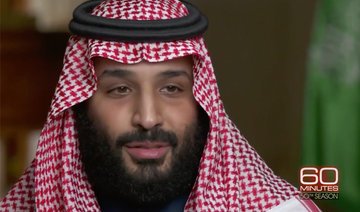
The comments came during a panel debate at George Washington University in Washington on Tuesday, part of a series of events taking place in the US capital to coincide with the visit of Crown Prince Mohammed bin Salman.
The crown prince was at the White House earlier in the day for talks with US President Donald Trump.
The university debate included robust exchanges between the participants, which closely mirror discussions taking place in the Kingdom.
There was broad agreement that Saudi Arabia’s reform program has had positive effects, but also concern about key details of the reforms.
Abdullah Alaoudh, a postdoctoral fellow at Yale Law School, said steps had been taken to modernize the judicial system, most notably a new rule that allows graduates of law schools to become judges. Previously, only graduates in Shariah, or Islamic jurisprudence, could apply. That monopolization of the legal system by the religious establishment is now over.
He also said there had been moves toward creating a more independent prosecution system, with an Attorney General who was independent of the ministry of interior, although more work was needed to create a stronger rule of law.
“The Attorney General announced that there is a new department to fight corruption within the Prosecution (Service), so he is trying to say we are really bringing back independence. That is positive,” he said.
Attendees also questioned the legal due process surrounding the anti-corruption purge. Saudi authorities have said the process was legal and that further relevant information will be released later.


![]()

Legal shake-up will usher in new era in KSA, experts tell Washington debate
Legal shake-up will usher in new era in KSA, experts tell Washington debate
Related


Latest updates


© 2026 SAUDI RESEARCH & PUBLISHING COMPANY, All Rights Reserved And subject to Terms of Use Agreement.