PARIS: A world addled by climate change has seen a four-fold increase in major flooding events since 1980, and a doubling of significant storms, droughts and heat waves, Europe’s national science academies jointly reported Wednesday.
In Europe, where precise data reaches back decades, the number of severe floods has jumped five fold since 1995, according to the report, which updates a 2013 assessment.
“There has been, and continues to be, a significant increase in the frequency of extreme weather events,” said Michael Norton, environmental program director for the European Academies’ Science Advisory Council.
“They underline the importance of avoiding greenhouse gases, which are fundamentally responsible for driving these changes,” he told AFP.
For impacts that cannot be avoided, he added, “this makes climate proofing all the more urgent.”
In Europe, efforts to shore up defenses against river flooding have proven effective: despite an increase in frequency of such events, economic loses on the continent have remained static.
“Rather than just coping with disasters after they strike, we need to shift to proactive management of all drivers of risks,” commented Munich Climate Insurance Initiative director Soenke Kreft, who did not contribute to the report.
In the United States, however, the damage wrought by storms doubled, on average, from $10 billion in 1980 to $20 billion in 2015, adjusted for inflation, according to the report, based in part on data from insurance giant Munich Re’s NatCatSERVICE.
The update also assessed new findings on possible changes in the Gulf Stream, powerful ocean currents running between the Arctic region and the Caribbean that warm the air in northwestern Europe and the US eastern seaboard.
The weakening of the Gulf Stream “is now a credible hypothesis,” said Norton.
“Some of the underlying drivers of extreme weather which were speculative four years ago are looking less speculative.”
The prospect of the Gulf Stream — also known as the Atlantic Meridional Overturning Circulation (AMOC) — slowing, or even shutting down entirely, “must be taken as a serious possibility,” he added.
Scientists have estimated that winters in Britain and much of western Europe would be several degrees Celsius colder under such a scenario.
The study also examined recent disruptions of the polar Jet Stream, a band of west-to-east winds that circulate at bullet-train speed some 10 kilometers above Earth’s surface at the upper boundary of the troposphere.
Recent research has linked severe winters in North America and Europe, as well some extreme summer weather, to Jet Stream fluctuations possibly driven by global warming in the Arctic, where temperatures have risen twice as fast as for the planet as a whole.
“The linkage between climate change and individual weather events — such as the ‘Beast from the East’ — in inherently uncertain,” commented Phil Williamson, a climate researcher at the University of East Anglia.
But the new report “is fully consistent with global trends,” he added. “For example, there have been roughly ten times more warm record-breaking temperatures than cold one in the last 150 years.”
A 2016 study in Climatic Change forecast that, by mid-century, pockets of southern Europe will face at least one severe climate hazard every year of the scale now occurring only once every 100 years.
By 2100, according to these predictions, Europe’s entire Mediterranean seaboard will be confronted annually with extreme droughts, coastal floods or heatwaves.
And a few “hotspots” will be hit every year by two or more such formerly once-in-hundred-years hazards, which also include wildfires, river floods and windstorms.


World sees rapid upsurge in extreme weather: report

World sees rapid upsurge in extreme weather: report

Eruption of Indonesia’s Mount Ibu forces seven villages to evacuate
- Ibu’s activities follow a series of eruptions of different volcanoes in Indonesia, which sits on the Pacific “Ring of Fire” and has 127 active volcanoes
JAKARTA: A volcano on the remote Indonesian island of Halmahera has spectacularly erupted, spewing a grey ash cloud into the sky, and people from seven nearby villages have been evacuated, authorities said on Sunday.
Mt. Ibu erupted on Saturday evening, sending ash 4 km (2.5 miles) high, as streaks of purple lightning flashed around its crater, according to information and images shared by Indonesia’s volcanology agency.
A joint team comprised of police, military and search and rescue officials was dispatched to the area to evacuate residents from surrounding villages, Abdul Muhari, from the disaster mitigation agency, said in a statement.
Photos shared by the disaster agency showed authorities assisting the elderly, while other residents were moved in pick-up trucks and accommodated in emergency tents for the night.
The agency did not provide any information about how many people had been moved, but authorities have recommended that a seven-km (4.35-mile) radius be cleared.
Indonesia’s volcanology agency raised the alert level of the volcano to the highest level on Thursday, after Ibu erupted multiple times earlier this month.
Ibu’s activities follow a series of eruptions of different volcanoes in Indonesia, which sits on the Pacific “Ring of Fire” and has 127 active volcanoes.
Flash floods and cold lava flow from Mount Marapi, one of the most active in West Sumatra province, covered several nearby districts following torrential rain on May 11, killing more than 60 people.
In recent weeks, North Sulawesi’s Ruang volcano has also erupted, spewing incandescent lava. The eruption prompted authorities to evacuate more than 12,000 people on a nearby island.


Despite polls, Biden aides insist Gaza campus protests will not hurt reelection bid
- Protests over Israel’s war in Gaza have broken out at more than 60 colleges and universities this year, disrupted Biden’s events around the country, pushed Democrats in key battleground states to vote “uncommitted” and divided the Democratic party
WASHINGTON: Several top White House aides say they are confident protests across US college campuses against Israel’s offensive in Gaza will not translate into significantly fewer votes for Joe Biden in November’s election, despite polls showing many Democrats are deeply unhappy about the US president’s policy on the war.
The White House optimism on the issue, which is shared by many in the Biden campaign, runs contrary to dire warnings from some Democratic strategists and youth organizers who warn misjudging the situation could cost Biden dearly in a tight race with Republican rival Donald Trump.
Several aides told Reuters they are advising Biden to remain above the fray, rather than directly engage with the relatively small groups of protesters on college campuses, arguing their numbers are too insignificant to harm the president’s reelection campaign.
Faced with a choice between Biden and Trump in November, many officials remain confident even Democrats who oppose US policy will choose Biden. Reuters interviewed nearly a dozen top White House officials in recent days, but only two expressed concern about the impact of the protests and Biden’s handling of the issue.
The issue returns to the spotlight Sunday, when Biden makes the commencement address at Morehouse College, over some objections by students and faculty, and a warning from the college’s president that the ceremony will stop if there are protests.
Most officials Reuters spoke to said they believe housing costs and inflation were the issues top of mind for young voters, not the war in Gaza, pointing to a recent Harvard poll that ranks Israel/Palestine 15th on a list of issues, after taxes, gun violence and jobs. Several aides refer to the protesters as “activists” rather than students.
Asked for comment on the issue, White House senior deputy press secretary Andrew Bates said Biden understands this is a painful moment for many communities and is listening. He has said too many civilians have died in the “heartbreaking” conflict and that more must be done to prevent the loss of innocent lives, Bates added.
Biden and Trump are nearly tied in national polls, and Trump has the edge in the battleground states that will decide the election, multiple recent polls show. On economic issues like inflation, Trump scores higher with voters overall than Biden.
A new Reuters/Ipsos poll found Democrats deeply divided over Biden’s handling of both the war in Gaza and the US campus protests against it, with 44 percent of registered Democrats disapproving of Biden’s handling of the crisis, and 51 percent of his handling of the protests.
Young voters still favor Biden, but support has dropped significantly since 2020, polls show. A Reuters/Ipsos poll in March showed Americans aged 18-29 favored Biden over Trump by just 3 percentage points — 29 percent to 26 percent — with the rest favoring another candidate or unsure if anyone would get their vote.
Two White House officials Reuters spoke to emphasized Biden’s support among young voters is not where it was in 2020 and said they worry the administration is not taking the drop seriously enough.
With over 35,000 Palestinians killed in Gaza since war began in October, US support for Israel’s government could weigh heavily on the presidential election in November, they said.
“There is almost a level of defiance when it comes to some of the president’s closest advisers on this issue,” said a senior White House official with direct knowledge of the matter, who did not wish to be named. “They think the best approach is to simply steer clear and let it pass.”
BIDEN SPEAKS CAUTIOUSLY
Protests over Israel’s war in Gaza have broken out at more than 60 colleges and universities this year, disrupted Biden’s events around the country, pushed Democrats in key battleground states to vote “uncommitted” and divided the Democratic party.
Biden, who is known for saying what he thinks, even when it’s not politically beneficial, has been cautious on the issue of protests over Gaza. He spoke in early May on the importance of following the law, while defending free speech and later on addressed the threat of antisemitism on college campuses.
Both times, he mostly avoided the issue that has sparked the protests — how young Americans feel about his support for Israel. But he also said bluntly that protests will not change his Middle East policy.
Groups organizing the protests say that a recent halt to some weapons to Israel was too little too late, and are planning fresh demonstrations, though the summer break may quieten action on campuses.
Michele Weindling, political director of the climate-focused youth group the Sunrise Movement, said “young people are incredibly disillusioned, they are angry at the way the president has treated this conflict.”
“A huge risk right now is that young voters will completely stay out of the electoral system this November, or deliberately vote against Biden out of anger,” Weindling said.
That has the potential to cost Biden dearly, given 61 percent of the more than half of Americans aged 18 to 29 that voted in the 2020 general election voted Democratic, a Tufts University research group found. The youth turnout was up 11 points from 2016.
GAZA NOT A TOP ISSUE
Republicans both overwhelmingly disapprove of the protests and Biden’s handling of the war, a Reuters/Ipsos poll published this week shows. Some Republicans have called for him to send National Guard troops on to campuses.
But until a day before Biden delivered his first speech on the protests on May 2, he remained unsure he needed to address the issue, two officials said. Biden asked his team to put together “something rudimentary,” so he could edit and change it, which he did that evening, one of the officials said.
He did not make the final decision to speak until the morning, after violence broke out on the UCLA campus, the official added.
The Harvard youth poll showing Israel/Gaza is low on youth concerns is being circulated at internal meetings at the campaign and the White House and is in line with private data the White House has seen, the first official said.
The president doesn’t speak about every issue in the news, on purpose, another White House official said. It “doesn’t always happen, no matter what kind of news it is, whether it’s the news of the day or the week or the month,” he said.



Ukraine says Russian shelling targets civilians in Kharkiv region
- Ukrainian prosecutors said they were investigating as a potential war crime a Russian air strike on a residential area of the regional capital Kharkiv in which six civilians were wounded
KHARKIV: Ukraine said Russian shelling targeted civilians in two cities in the northeastern region of Kharkiv on Saturday while President Volodymyr Zelensky reported successes by troops fighting a renewed Russian assault there.
Ukrainian prosecutors said they were investigating as a potential war crime a Russian air strike on a residential area of the regional capital Kharkiv in which six civilians were wounded, including a 13-year-old girl, 16-year-old male and an eight-year-old.
Moscow denies deliberately targeting civilians but thousands have been killed and injured since its February 2022 invasion of Ukraine.
About 70 km (45 miles) to the northeast in Vovchansk, a city just 5 kilometers (three miles) from the Russian border, prosecutors said Russian shelling killed a 60-year-old woman and injured three other civilians. A 59-year-man was also injured in the village of Ukrainske, they said.
Across the border in Russia’s Belgorod region, Moscow’s defense ministry said its forces shot down a Tochka-U missile fired by Ukraine. A similar missile caused a Belgorod apartment building to collapse last week, killing at least 15 people, Russia said.
Late on Saturday Belgorod regional governor Vyacheslav Gladkov said a Ukrainian drone attack injured a woman and a man in the village of Petrovka. They were treated for shrapnel injuries in Belgorod, he wrote on the Telegram messaging app.
Zelensky said in his nightly video address that Ukrainian forces were on surer footing, particularly in Kharkiv region.
“The occupier is losing its infantry and equipment, a tangible loss, even though, just as in 2022, it was counting on a quick advance on our land,” Zelensky said, referring to Russia’s initial invasion of Ukraine in February of that year.
However, Russia’s defense ministry said its forces captured the village of Starytsia in the Kharkiv region on Saturday, eight days after a new Russian push in the area began.
Zelensky said his forces repelled an assault farther south in the eastern Donetsk region around Chasiv Yar, a city seen as a key target in Russia’s campaign. “Our soldiers destroyed more than 20 units of the occupier’s armored vehicles,” he said.
Reuters could not immediately verify the battlefield accounts.
Regional governor Vadym Filashkin credited special units under the HUR military intelligence agency for the battlefield success, which he said took place on Friday.
“There is not a single occupier in Chasiv Yar,” he said on the Telegram messaging app. “They burned armored vehicles and smashed enemy ranks,” he added in comments accompanying a video showing vehicles exploding.
In the village of Stanislav in the southern region of Kherson, governor Oleksandr Prokudin said a Russian drone strike killed a man about 40 years old and injured a woman.


Tunisia recovers bodies of four migrants off its coast, rescues dozens
- Tunisia has replaced Libya as the main departure point for people fleeing poverty and conflict in Africa and the Middle East
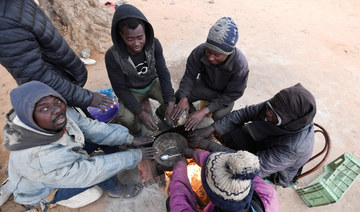
TUNIS: Tunisia recovered the bodies of four migrants off the country’s coast on Saturday, the national guard said, amid an increase in migrant boats heading from Tunisia toward Italy in recent weeks.
The force said the coast guard separately rescued 52 migrants. The national guard arrested nine smugglers, and boats were seized.
At least 23 Tunisian migrants were missing after setting off in a boat for Italy, the national guard said earlier on Saturday.
Tunisia is facing a migration crisis and has replaced Libya as the main departure point for people fleeing poverty and conflict in Africa and the Middle East in the hope of a better life in Europe.


New Caledonia ‘under siege’ as French troops bid to restore order
- The unrest has been blamed on economic malaise, social tensions and — above all — a political fight between mostly Indigenous pro-independence activists and Paris authorities
- New Caledonia has been a French territory since the mid-1800s
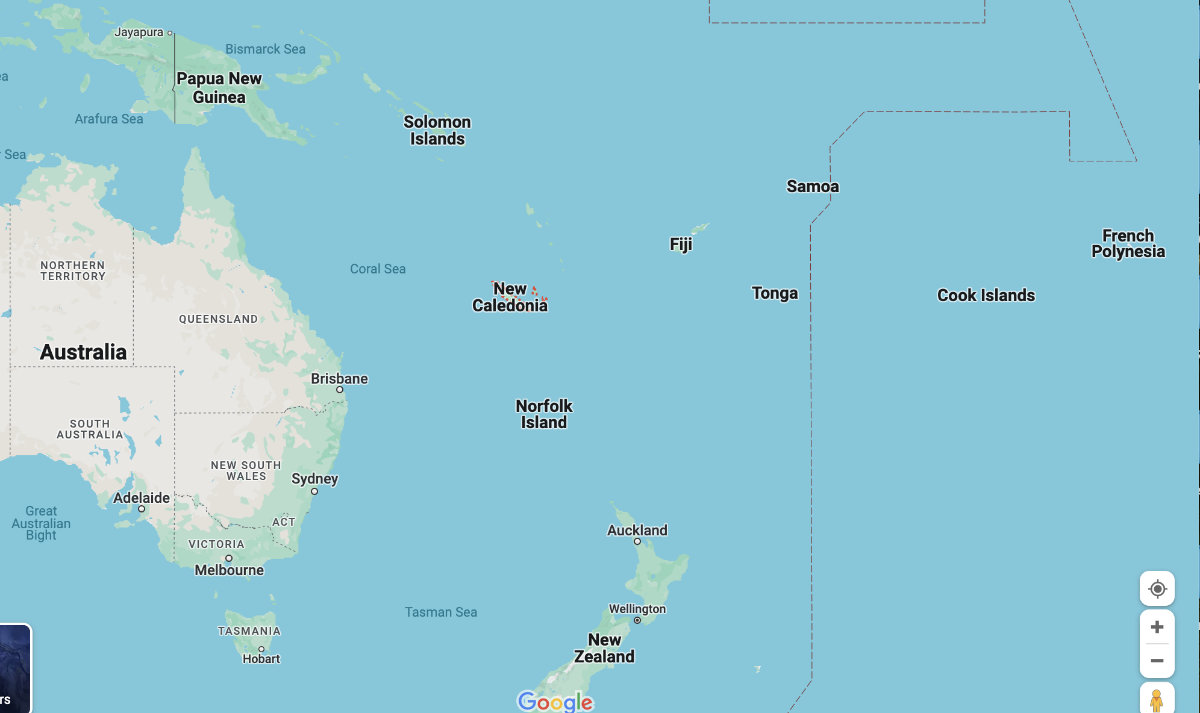
NOUMEA, New Caledonia: French Pacific territory New Caledonia was “under siege” Saturday, the mayor of its capital Noumea said, after another person was killed, bringing the toll to six in six days of unrest.
Two other men were wounded in Saturday’s deadly incident, which occurred in the archipelago’s northern Kaala-Gomen area, General Nicolas Mattheos said.
Hundreds of heavily armed French soldiers and police patrolled the debris-filled streets of Noumea Saturday.
But Philippe Blaise, vice president of the territory’s southern province, said: “Today, the rule of law, security for citizens, are not back in place everywhere in (New) Caledonia.”
And Noumea mayor Sonia Lagarde told news channel BFMTV: “We’re far from getting back to calm.”
Anger is still high over a contested voting reform, even after the arrival of hundreds of military and police reinforcements.
AFP reporters in the city’s Magenta district saw vehicles and buildings torched, with riot police on the scene trying to reassert control.
Overnight, residents reported hearing gunfire, helicopters and “massive explosions” — seemingly gas canisters blowing up inside a burning building.
For days, Helene, 42, has been guarding makeshift barricades in shifts with neighbors as they waited for hundreds of French security forces to be flown in to restore order.
“At night we hear shooting and things going off,” she told AFP. “Helicopters and military planes landing — which is sweet music to our ears.”
Economic malaise
For almost a week, the usually calm oceanside city has been convulsed with violence.
Two gendarmes and three other people, Indigenous Kanaks, have also been killed.
The unrest has been blamed on economic malaise, social tensions and — above all — a political fight between mostly Indigenous pro-independence activists and Paris authorities.
French officials have accused a separatist group known as the CCAT of being behind the riots and have placed 10 of its activists under house arrest.
CCAT on Friday called for “a time of calm to break the spiral of violence.”
Annie, an 81-year-old Noumea resident, said the week’s violence had been worse than that seen during the tumultuous 1980s: a time of political killings and hostage-taking referred to as “The Events.”
“At the time, there weren’t as many weapons,” she said.
Seeking independence
New Caledonia has been a French territory since the mid-1800s.
Almost two centuries on, its politics remains dominated by debate about whether the islands should be part of France, autonomous or independent — with opinions split roughly along ethnic lines.
The latest cycle of violence was sparked by plans in Paris to impose new voting rules that could give tens of thousands of non-Indigenous residents voting rights.
Pro-independence groups say that would dilute the vote of Indigenous Kanaks, who make up about 40 percent of the population.
French authorities have called for talks and insist the situation is now “calmer” and being brought under control.
Around 1,000 security forces began reinforcing the 1,700 officers on the ground from Thursday.
Efforts to negotiate peace have so far stumbled, although French President Emmanuel Macron had begun contacting pro- and anti-independence officials individually on Friday, his office said.
'Azerbaijani actors'
A local business group estimated the damage, concentrated around Noumea, at 200 million euros ($217 million).
The damage to the islands’ reputation may cost even more.
Tourism is a big earner for New Caledonia, but an estimated 3,200 tourists and other travelers have been stranded inside or outside the archipelago by the closure of Noumea’s international airport.
The unrest has also pushed organizers to cancel plans to bring the Olympic flame through New Caledonia on its journey from Athens to Paris — where the summer Games will begin in late July.
“I think everyone understands, given the current context, the priority is consolidating a return to public order and then appeasement,” French Sports Minister Amelie Oudea-Castera said on Saturday.
On Friday, French government agency Viginum said it detected a “massive and coordinated” online campaign pushing claims that French police had shot pro-independence demonstrators in New Caledonia.
Paris pointed to the involvement of “Azerbaijani actors” in the campaign, deepening a diplomatic spat between the two countries.
Azerbaijan has denied accusations of interference in New Caledonia.