LONDON: Britain’s information commissioner says she is using all her legal powers to investigate Facebook and political campaign consultants Cambridge Analytica over the alleged misuse of millions of people’s data.
Commissioner Elizabeth Denham is pursuing a warrant to search Cambridge Analytica’s servers. The company allegedly used data mined from Facebook to help Donald Trump win the 2016 presidential election.
She told BBC on Tuesday she is also investigating Facebook and has asked the company not to pursue its own audit of Cambridge Analytica’s data use. She said Facebook has agreed.
“Our advice to Facebook is to back away and let us go in and do our work,” she said.
Cambridge Analytica said it is committed to helping the UK investigation and offered to share all the information it has asked for. It did not specify whether it would give access to its servers.
Denham said the prime allegation against Cambridge Analytica is that it acquired personal data in an unauthorized way, adding that the data provisions act requires platforms like Facebook to have strong safeguards against misuse of data.
Chris Wylie, who once worked for Cambridge Analytica, was quoted as saying the company used the data to build psychological profiles so voters could be targeted with ads and stories.
Denham launched her investigation after weekend reports that Cambridge Analytica improperly used information from more than 50 million Facebook accounts. Facebook has suspended the company from the social network.
Britain’s Channel 4 used an undercover investigation to record Cambridge Analytica’s chief executive, Alexander Nix, saying that the company could use unorthodox methods to wage successful political campaigns for clients.
He said the company could “send some girls” around to a rival candidate’s house, suggesting that girls from Ukraine are beautiful and effective in this role.
He also said the company could “offer a large amount of money” to a rival candidate and have the whole exchange recorded so it could be posted on the Internet to show that the candidate was corrupt.
Nix says in a statement on the company’s website that he deeply regrets his role in the meeting and has apologized to staff.
“I am aware how this looks, but it is simply not the case,” he said. “I must emphatically state that Cambridge Analytica does not condone or engage in entrapment, bribes or so-called ‘honeytraps’, and nor does it use untrue material for any purposed.”
The data harvesting used by Cambridge Analytica has also triggered calls for further investigation from the European Union, as well as federal and state officials in the United States.


![]()
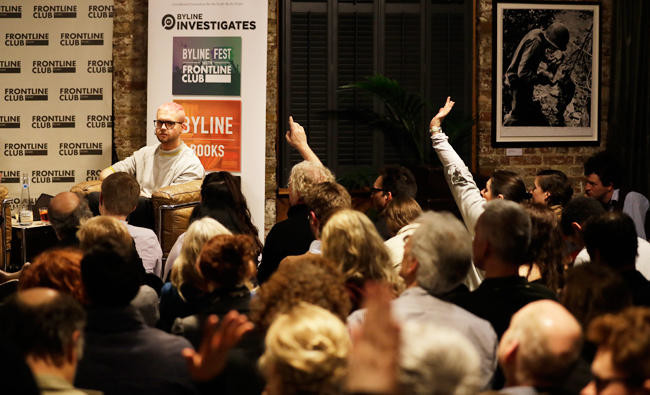
UK investigating Cambridge Analytica, Facebook
UK investigating Cambridge Analytica, Facebook
Latest updates



© 2026 SAUDI RESEARCH & PUBLISHING COMPANY, All Rights Reserved And subject to Terms of Use Agreement.