Malaysia’s leader says Rohingya not just a Myanmar issue

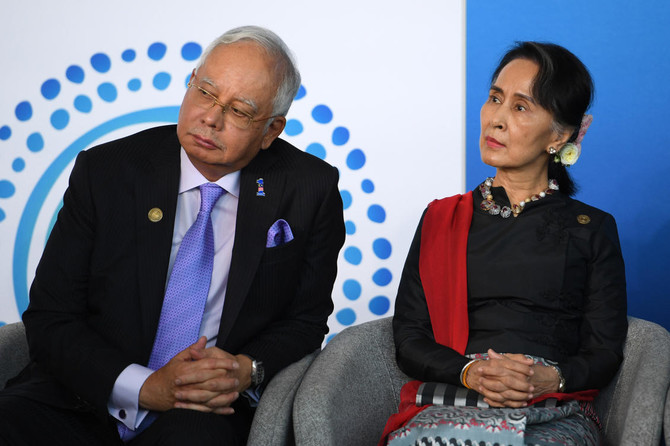
Malaysian Prime Minister Najib Razak (L) and Myanmar State Counsellor Aung San Suu Kyi (R) listen to an address as they attend the New Colombo Plan Reception at the ASEAN (Association of Southeast Asian Nations)-Australia special summit being held in Sydney on March 17, 2018. (Dan Himbrechts/POOL/AFP)
Updated 17 March 2018
Follow

Malaysia’s leader says Rohingya not just a Myanmar issue

SYDNEY: Malaysian Prime Minister Najib Razak says the displacement of Rohingya Muslims is no longer solely a domestic issue for Myanmar, as Southeast Asian nations signed a counterterrorism cooperation agreement at a regional leaders’ conference.
Najib made his comments on Saturday at a meeting of the 10 members of the Association of Southeast Asian Nations that is being hosted by Australia. The meeting has been marked by protests against Myanmar.
In a rare departure from the grouping’s policy of non-interference in the affairs of fellow member nations, Najib said Rohingya fleeing from alleged persecution are a prime target for radicalization from the Daesh group.
Leaders signed the memorandum of understanding on counterterrorism, at a time of increased risk due to militants fleeing Islamic State losses in the Middle East.


WHO says low taxes are making sugary drinks, alcohol more affordable

Updated 5 sec ago
Follow

WHO says low taxes are making sugary drinks, alcohol more affordable

  • The WHO has called for higher taxes on alcohol and sugar-sweetened drinks multiple times in recent years
  • “Health taxes are not ⁠a silver bullet, and they’re not simple,” said Ghebreyesus

NEW YORK: Sugary drinks and alcohol are not being sufficiently taxed and remain affordable, making it harder to tackle the chronic health problems caused by these beverages, according to two reports from the World Health Organization.
The WHO has called for higher taxes on alcohol and sugar-sweetened drinks multiple times in recent years, arguing it would help cut consumption of the products which contribute to diseases such as diabetes, as well as raise money at a time when development aid is shrinking and ⁠public debt is rising.
According to a report from WHO, sugary drinks have become more affordable in 62 countries in 2024 compared with 2022. In a separate report, the health agency said beer has become more affordable in 56 countries during the same period.
“Health taxes are not ⁠a silver bullet, and they’re not simple. They can be politically unpopular and they attract opposition from powerful industries with deep pockets and a lot to lose, but many countries have shown that when they’re done right, they’re a powerful tool for health,” said WHO Director-General Tedros Ghebreyesus.
Last year, the health agency launched the “3 by 35” initiative to push countries to raise the prices of sugary drinks, alcohol and tobacco by 50 percent over ⁠the next 10 years through taxation.
WHO expects the tax initiative to raise $1 trillion by 2035, based on evidence from health taxes in countries such as Colombia and South Africa.
Soda makers such as Coca-Cola and PepsiCo, and Mondelez, which manufactures Oreo cookies, have faced scrutiny from US Health Secretary Robert F. Kennedy Jr., who has pushed the “Make America Healthy Again” agenda, recommending that consumers avoid highly processed foods and eat more protein and less sugar to achieve a healthy diet.