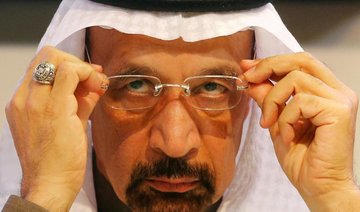
ANKARA: Iranian oil minister Bijan Zanganeh said OPEC was unlikely to change before the end of the year a deal among oil producers to reduce output, Iran’s English language Press TV reported on Thursday.
“Russians can pull out of the deal as they have made no commitment to OPEC to remain in the agreement until the end of 2018. OPEC also can change its decision but I doubt they will do it,” Zanganeh was quoted as saying by Press TV.
Members of OPEC and non-OPEC players including Russia have reduced their output since January 2017 under a pact aimed at supporting prices and reducing oversupply.
The pact currently runs until the end of 2018. Iran is allowed to pump up to 3.8 million bpd under the deal.
Zanganeh told the Wall Street Journal newspaper that OPEC when it meets in June could agree to begin easing current curbs in 2019.
Zanganeh also told the WSJ that Iran wanted OPEC to work to keep oil prices at around $60 per barrel to contain US shale oil production, adding that Iran could produce about 100,000 bpd more. He did not say when Iran could raise its output.

Iran oil minister says OPEC unlikely to change output deal this year

UAE raises $150m in first 7-year Islamic treasury sukuk amid strong demand
JEDDAH: The UAE raised 550 million dirhams ($150 million) from its first 7-year Islamic treasury sukuk, part of a dual-tranche auction that drew strong investor demand and underscored growing appetite for dirham-denominated Islamic debt.
The February auction, conducted by the Ministry of Finance in coordination with the Central Bank of the UAE, attracted total bids of 5.88 billion dirhams for securities worth 1.1 billion dirhams, an oversubscription ratio of 5.3 times, according to the Emirates News Agency, also known as WAM.
The issuance comes amid rapid expansion in Gulf debt markets. Fitch Ratings said last month that the Gulf Cooperation Council’s debt capital market is expected to exceed $1.25 trillion in 2026, driven by project financing needs, economic diversification programs and government funding initiatives.
The ratings agency added that the region remains one of the largest sources of US dollar debt and sukuk issuance among emerging markets, with Islamic instruments accounting for more than 40 percent of outstanding GCC debt.
The newly introduced 7-year tranche alone generated demand of about 3.1 billion dirhams — nearly six times the issuance size — highlighting investor confidence in the UAE’s credit profile and the continued growth of its Islamic finance sector.
“The issuance forms part of the Islamic Treasury Sukuk Program for 2026, as published on the Ministry’s official website,” WAM reported.
Participation was strong across the eight primary dealers, covering both tranches maturing in May 2030 and February 2033.
The auction achieved competitive, market-driven pricing, with a yield to maturity of 3.53 percent for the May 2030 tranche and 3.779 percent for the February 2033 tranche, priced below comparable US Treasury yields at the time of issuance.
The sukuk are listed under the UAE Treasury Islamic Sukuk Program on Nasdaq Dubai, improving investor access in the secondary market, according to WAM.
The UAE’s Islamic finance and debt capital markets have continued to strengthen, with Nasdaq Dubai reporting a record year in 2025 as outstanding sukuk listings exceeded $100 billion. The growth was driven by sustained issuance from sovereign, financial, and corporate entities, alongside strong global demand for Shariah-compliant instruments.
The milestone underscores the UAE’s growing role as a regional hub for Islamic fixed-income products and reflects robust investor confidence in the country’s financial system.