MY LAI: The shudder of artillery fire woke the boy at 5:30 a.m. Three American soldiers appeared at his family’s home a couple of hours later and forced the mother and five children into their bomb shelter, a structure most every Vietnamese home had during the war, to keep them safe.
One soldier set fire to the family’s thatched house while the others tossed grenades into the shelter. Protected under the torn bodies of his mother and his four siblings, 10-year-old Pham Thanh Cong was the only survivor.
It was March 16, 1968. The American soldiers of Charlie Company, sent on what they were told was a mission to confront a crack outfit of their Vietcong enemies, met no resistance, but over three to four hours killed 504 unarmed civilians, mostly women, children and elderly men, in My Lai and a neighboring community. Vietnamese refer to the greater village where the killings occurred as Son My.
“We started hearing the screaming and moaning from our neighbors, which were followed by gunfire and grenade explosions, then the screaming and moaning stopped, and my mother knew that the American soldiers had killed people,” Cong recalled this week. “I was covered with the flesh and hair of my mother and sisters and brother.”
Knocked unconscious with injuries to his head and wounds on his torso from grenade fragments, Cong was saved that afternoon when his father came to retrieve the bodies.
The My Lai massacre was the most notorious episode in modern US military history, but not an aberration in America’s war in Vietnam.
The US military’s own records, filed discreetly away for three decades, described 300 other cases of what could fairly be described as war crimes. My Lai was distinguished by the shocking one-day death toll, the stomach-churning photographs and the gruesome details exposed by a high-level US Army inquiry.
An official policy of free-fire zones — from which civilians were supposed to leave upon being warned — and an unofficial code of “kill anything that moves” meant Vietnamese were constantly at risk.
Estimates of civilians killed during the US ground war in Vietnam from 1965 to 1973 are generally 1 million to 2 million.
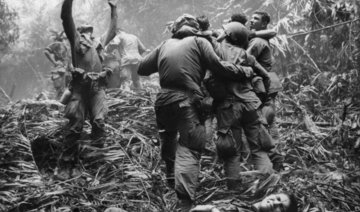
The average US soldier could not be sure who the enemy was, rarely encountering one directly. They were targeted by land mines, booby traps, snipers. They were told to help, but the Vietnamese were rarely welcoming. Quang Ngai province, where My Lai is located, was a hive of communist military activity.
Two days before the massacre, a booby trap killed a sergeant, blinded a GI and wounded several others on a Charlie Company patrol.
Soldiers later testified to the US Army investigating commission that the bloodletting began quickly when Lt. William L. Calley Jr. led Charlie Company’s first platoon into My Lai that morning. One elderly man was bayoneted to death; another man was thrown alive into a well and killed with a hand grenade. Women and children were herded into a drainage ditch and slaughtered. Women and girls were gang-raped.
“They went in with blood in their eyes and shot everything that moved,” recalled Hugh Thompson Jr., an army helicopter pilot who flew support for the mission in My Lai and — along with his two-man flight crew — are the only servicemen known to have actively intervened to try to stop the killing. They evacuated a handful of Vietnamese civilians on the point of being killed by his countrymen. Thompson also was one of several soldiers who became whistleblowers and eventually brought the outrage to public attention.
Calley was convicted in 1971 for the murders of 22 people during the rampage. He was sentenced to life in prison but served only three days because President Nixon ordered his sentence reduced. He served three years of house arrest.
Calley has avoided speaking about the matter with apparently just one exception. In 2009, at the urging of a friend, he spoke to the Kiwanis Club in Columbus, Georgia, near Fort Benning, where he had been court-martialed.
“There is not a day that goes by that I do not feel remorse for what happened that day in My Lai,” Calley said, according to an account of the meeting reported by the Columbus Ledger-Enquirer. “I feel remorse for the Vietnamese who were killed, for their families, for the American soldiers involved and their families. I am very sorry.” He said his mistake was following orders, which had been his defense when he was tried.
Fifty years after the massacre, and almost 43 years after the communist victory reunified Vietnam, most of the rancor is gone, at least publicly, between the nations. They normalized diplomatic relations in 1995, and the United States is now one of Vietnam’s top trading partners and investors. Cooperation on security and military matters has grown to the point where this month a US Navy aircraft carrier made the first visit to a Vietnamese port since the war.
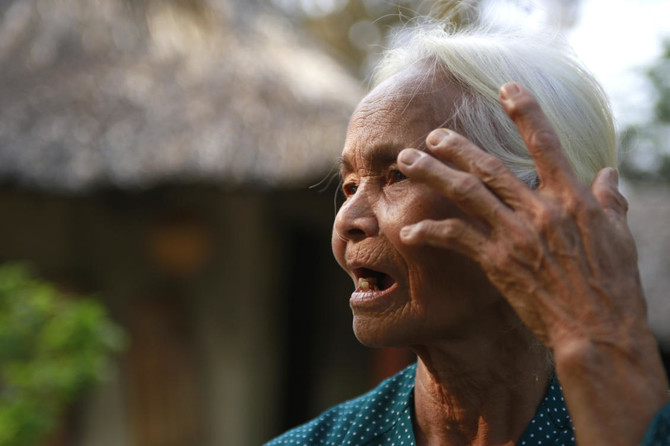
Cong, the young massacre survivor, went on to study and work in local government, and from 1992 until his retirement last year, he headed the My Lai museum, which sits in part of the area where the massacre occurred.
He said he cannot forget the atrocities but he’s willing to forgive the soldiers to build better relations between the two countries.
“We have had enough losses and suffering of war, and we just wish our children and grandchildren would not have to go through those experiences. We desire for peace, we want eternal peace,” he said.


![]()
![]()
![]()
50 years ago, the My Lai massacre shamed the US military


50 years ago, the My Lai massacre shamed the US military
Latest updates



Recommended


© 2026 SAUDI RESEARCH & PUBLISHING COMPANY, All Rights Reserved And subject to Terms of Use Agreement.