NEW YORK: A US citizen was sentenced to 45 years in prison on Tuesday for supporting the militant group Al-Qaeda and helping to prepare a 2009 car bomb attack on a US military base in Afghanistan, less than the life sentence sought by prosecutors.
Muhanad Mahmoud Al Farekh, 32, was sentenced by US District Judge Brian Cogan in Brooklyn federal court. Al Farekh’s lawyer, David Ruhnke, said at the court hearing that Al Farekh would be appealing his conviction.
Before Cogan imposed the sentence, Ruhnke read a letter written by Al Farekh, who did not speak himself. Al Farekh did not directly address the crimes of which he was found guilty, but asked the judge to consider that young men could be misled into violence. Al Farekh said in the letter that he was now opposed to violence.
Assistant US Attorney Richard Tucker urged the judge not to believe the letter, saying Al Farekh remained “unshakably committed to violent jihad” and was “willing to say anything.”
Cogan said the letter was “not an enthusiastic acceptance of responsibility.”
“I just can’t draw anything from that,” he said.
Still, the judge said he was giving Al Farekh some hope of life after prison because he did not believe him to be “totally devoid of humanity,” citing the support of his family.
Cogan said that, with 15 percent off his sentence for good behavior and three years time served, Al Farekh could get out when he is 67.
Al Farekh was found guilty by a jury in September of the charges of conspiring to murder Americans, using a weapon of mass destruction and supporting a foreign terrorist organization.
US prosecutors in 2015 accused Al Farekh, who was born in Texas, of conspiring to support Al-Qaeda by traveling with two fellow students from the University of Manitoba in Winnipeg, Canada, to Pakistan with the intention of fighting US forces.
Al Farekh had helped prepare an explosive device used in a Jan. 19, 2009 attack on a US Forward Operating Base Chapman in Afghanistan, prosecutors said.
Prosecutors said an accomplice detonated one device, injuring multiple people including a pregnant woman, while Al Farekh’s fingerprints were found on packing tape for the second device, which another accomplice carried but failed to detonate.
One of the other university students with whom Al Farekh traveled in 2007, Ferid Imam, has also been indicted, though his whereabouts are unknown.


American sentenced to 45 years prison for role in Al-Qaeda bomb attack
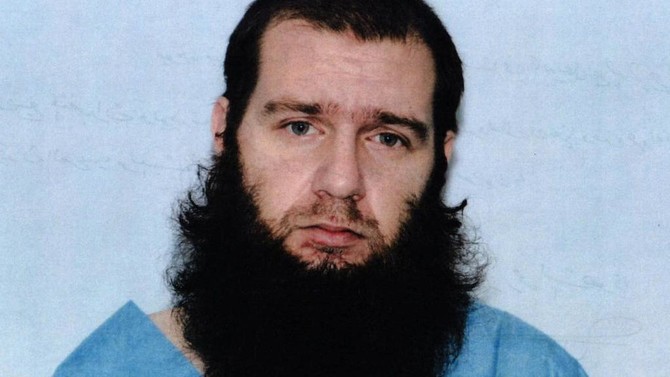
American sentenced to 45 years prison for role in Al-Qaeda bomb attack
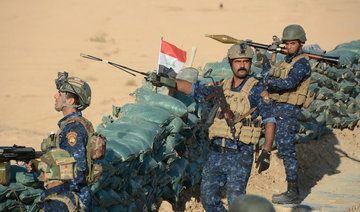


South Sudan officers face court martial over civilian massacre
- The increasingly unstable country is seeing a surge of fighting between government and opposition forces
JUBA: South Sudanese soldiers, including two officers, will face a court martial over a civilian massacre last month, the army spokesman said Wednesday.
The increasingly unstable country is seeing a surge of fighting between government and opposition forces, much of it in eastern Jonglei state where at least 280,000 people have been displaced since December according to the UN.
At least 25 civilians, including women and children, were killed in Ayod County in Jonglei state on February 21, according to the opposition.
Army spokesman Lul Ruai Koang said that two officers, including a major, and several non-commissioned officers, had been arrested and would face charges in the capital Juba, “before they are arraigned before a competent military court martial.”
He said the deaths were attributed to “some elements” under Gen. Johnson Olony, who was filmed in January ordering troops to “spare no lives” in Jonglei.
Koang said the soldiers had “moved out without the knowledge or authorization of the division commander.”
He also said they had been part of a militia group allied to opposition forces, parts of which had not yet been fully integrated into the army.
Military integration was among the core principles of a peace agreement that ended South Sudan’s five-year civil war in 2018 between President Salva Kiir and his long-time rival, Riek Machar, but it was never implemented.
Koang said the army regretted the loss of lives, adding: “We would like to once again remind our forces that their mandate is to protect civilians and their property, not to do the opposite.”
It followed an impassioned plea from the Sudan and South Sudan Catholic Bishops’ Conference on recent civilian killings — in Ayod, and also in Abiemnom County near the Sudan border where at least 169 people were killed on Sunday.
“We implore you to deploy resources to protect vulnerable populations and foster a climate of dialogue and reconciliation instead of violence and revenge, consoling the bereaved and supporting the afflicted,” it said in a statement.


