ISTANBUL: An Istanbul court on Monday began hearing a case against Uber brought by the city’s taxi drivers seeking to have the ride-hailing app blocked, as tensions mount in Turkey over its popularity.
The suit brought by the main association representing taxi drivers for Istanbul is the latest legal headache for the fast-growing but controversial Uber which has already seen its license withdrawn in London.
Dozens of taxi drivers held a noisy protest outside the main courthouse in Istanbul where the case was heard, brandishing placards including “we don’t want the global thief.”
Lawyers for the Taxi Drivers Association told the court they wanted the app blocked in the city. The court said it would wait for a report from the association and adjourned the next hearing until June 4.
Tensions over the growing popularity of Uber have spread in Turkey, in some cases resulting in violence.
On Saturday, shots were fired at an Uber vehicle in Istanbul’s Kucukcekmece district but the driver was unhurt.
Uber drivers have also received false calls from people pretending to be passengers who then beat them up, according to a report in the Turkish newspaper Haberturk last week.
Eyup Aksu, the head of the main taxi drivers guild in Istanbul, slammed Uber as “pirates” and warned that the taxi drivers were ready to act if decisions went against them.
“If the judiciary takes a contrary decision then our patience is sapped. Taxi drivers are ready to do anything for their bread,” he said outside the courthouse.
Taxi drivers gathered at the court threw bottles of water at vehicles they suspected of being driven by Uber drivers, the Dogan news agency said.
The yellow taxis of Istanbul form the transport backbone of the city, with some 18,000 vehicles helping move commuters and tourists in a megapolis where public transport can be patchy.
Some complain Istanbul taxi drivers can be abrasive and prone to ripping off tourists. But most drivers, who usually rent their car from the license holder, are doing their best to earn a living honestly in a tough city.
Taxi drivers around the world have complained that Uber has made inroads into their business but the company’s biggest trouble has been in London where Uber lost its license over criminal record checks for drivers.
It is still allowed to operate in the British capital pending an appeal. New chief executive Dara Khosrowshahi is seeking to clean up the company’s reputation worldwide after replacing ousted co-founder Travis Kalanick last year.


![]()
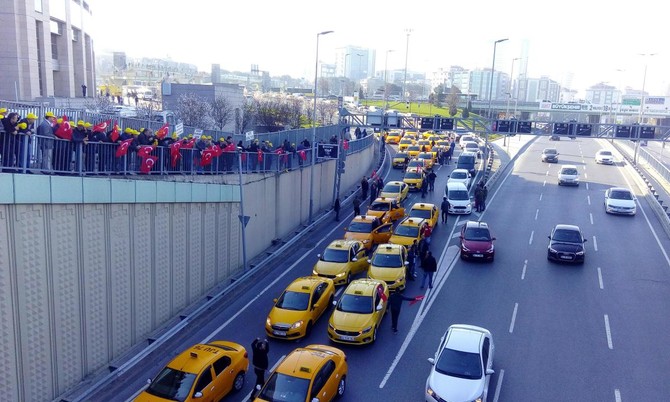
Angry Istanbul taxi drivers seek to block Uber
Angry Istanbul taxi drivers seek to block Uber


Latest updates


© 2026 SAUDI RESEARCH & PUBLISHING COMPANY, All Rights Reserved And subject to Terms of Use Agreement.