BEIRUT: Thousands of Lebanese, Syrian, Palestinian, and Ethiopian women protested in Beirut on Sunday against their mistreatment in the country.
The participants gathered under the slogan “we have many causes but our anger is one” to coincide with the recent International Women’s Day.
Organizers said 4,000 women took part in the protest — double the number of last year.
They called for the imminent reform of existing laws and regulations that they say discriminate against them.
One of the organizers Hayat Morshed told Arab News: “The call for participation was done through Facebook to observe the International Women’s Day.”
The women also renewed calls for a “women’s quota” in parliament.
The Lebanese Parliament had refrained from allocating a set number of seats for women in the new electoral law, while “encouraging” the parties to nominate women among their candidates.
The protests started from the Justice Palace in Beirut and went through neighboring streets escorted by the police.
The women represented a diverse set of groups with varying demands, including custody rights for children in divorces and demands to end domestic violence. Many brought their children with them.
Some of the protesters were veiled and others called for their husbands to be freed from prisons.
They held many slogans such as “it’s a shame to hit your beloved”, “Nobody wins with violence”, “Life for her and life sentence for him”, and “the patriarchal dominance era is over.”
Housemaids, mainly Ethiopian, held slogans saying “your sponsorship system kills workers every day”.
Syrian refugees came from their camps in Bekaa and made reference to women trapped beneath regime bombing in Eastern Ghouta.
The activist from the “Future movement”, Nawal Modallaly, told Arab News: “the protest wasn’t a women-only event, but there were young men and less young men who support women’s causes, which is a good progress in favor of women.”


![]()
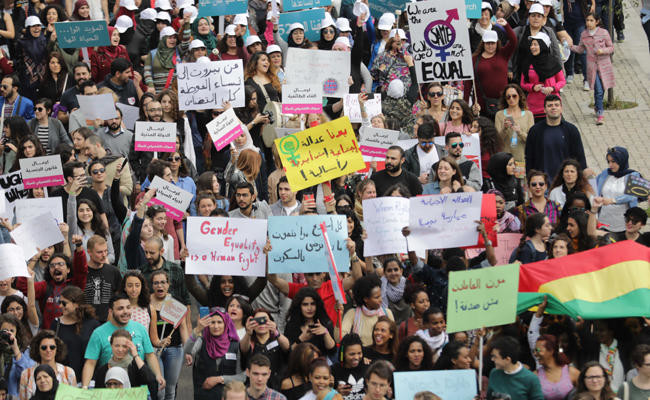
‘Angry’ women take to the streets in Beirut to protest mistreatment
‘Angry’ women take to the streets in Beirut to protest mistreatment

Latest updates


© 2026 SAUDI RESEARCH & PUBLISHING COMPANY, All Rights Reserved And subject to Terms of Use Agreement.